
Big data doesn’t feel dramatic in the moment.
It feels like tapping “accept,” scrolling a feed, or walking past a camera you barely notice.
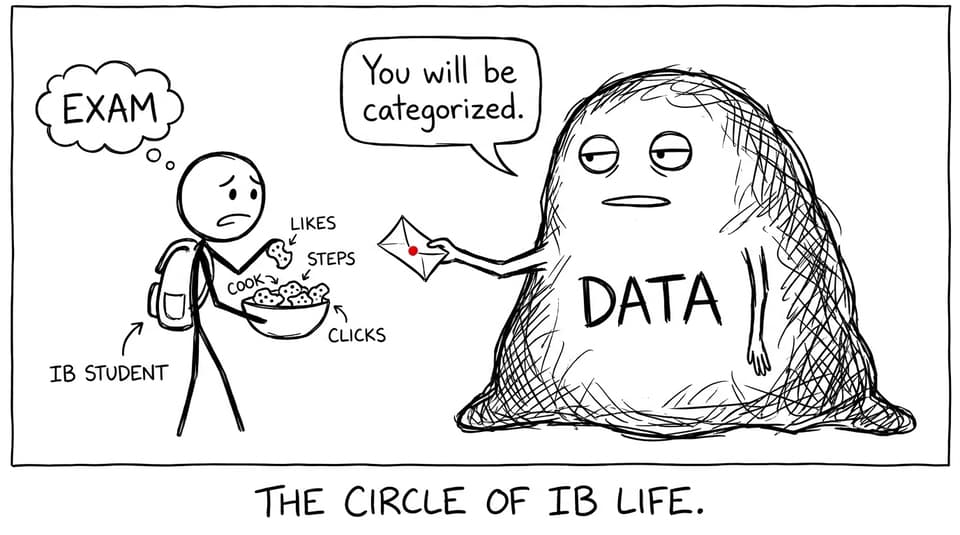
Then, one day, an “automatic” decision lands in your life: what you’re shown, what price you’re offered, whether you’re flagged as a risk, which opportunities quietly move closer or farther away. That is why IB Digital Society treats big data as more than a technical topic. In IB Digital Society, big data is a social force: it sorts people, shapes choices, and redistributes power.
If you’re revising for exams or planning an IA, this guide gives you IB Digital Society-ready case study ideas and a simple way to turn any example into sharp analysis.
Big data in IB Digital Society (what you actually need)
In IB Digital Society, “big data” usually means datasets so large and continuously generated that organizations rely on automated tools to find patterns and make predictions. You can keep it simple using these features:
-
Volume: lots of data points (behavioural, transactional, sensor, location)
-
Velocity: data created and processed quickly (often near real time)
-
Variety: mixed formats (clicks, images, text, GPS traces)
-
Automated analysis: models and algorithms turning data into decisions
The exam focus is rarely “how the model works.” The focus is: what changes when decisions become data-driven? That question sits at the heart of IB Digital Society.
To build your foundation quickly, start with the subject hub and then branch into the syllabus areas you’re currently studying: IB Digital Society resources and Topic 3: Content overview.
A fast checklist for a high-scoring big data case study
Before you commit to an example, run this checklist. It keeps your IB Digital Society writing focused.
-
Name the system (not just the theme): “city predictive policing dashboard,” not “crime and data”
-
Identify the data: what is collected, from whom, and how continuously?
-
Explain the decision: what outcome does the system produce (ranking, flagging, pricing, recommending)?
-
Impacts vs implications: immediate effects vs longer-term consequences
-
Power: who gains control, who loses agency?
-
Ethics: consent, privacy, fairness, transparency, accountability
For structure and technique, keep a revision guide open while you practise: Revision strategies that work for IB Digital Society and How to revise effectively for IB Digital Society.
Why big data matters in IB Digital Society: impacts, communities, power
Big data matters because it nudges decision-making away from individual judgement and toward systems that scale. That shift changes three things that examiners love to see you analyse:
Individuals: convenience traded for control
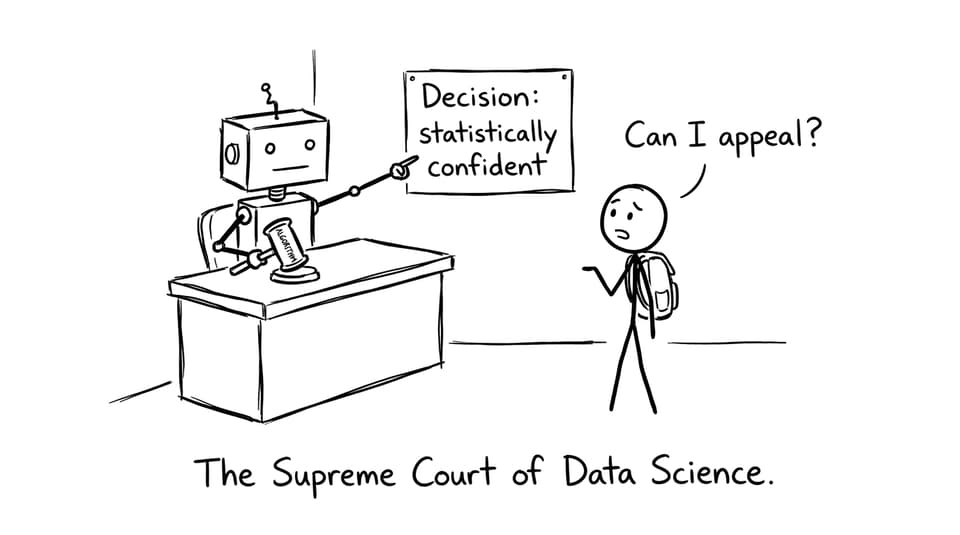
Big data can personalize services, reduce friction, and predict needs. It can also reduce transparency and make it hard to challenge outcomes.
In IB Digital Society, push beyond “privacy is bad” and ask:
-
What does the person understand about collection and use?
-
Is the person being profiled or categorized?
-
Can they appeal, opt out, or correct errors?
Communities: uneven exposure to risk
Communities can experience big data systems differently. Surveillance, enforcement, and misclassification often fall more heavily on certain groups. A strong IB Digital Society response compares winners and losers, and explains why.
Power: whoever holds the dataset holds the leverage
When data collection is centralized, power tends to concentrate. Institutions gain the ability to observe, predict, and steer behaviour at scale. That’s a classic IB Digital Society angle: control doesn’t always look like force. Sometimes it looks like default settings.

IB Digital Society case study ideas: big data you can actually use
You don’t need ten giant examples. You need two or three that are flexible. Here are focused IB Digital Society case study ideas that work across questions.
Recommendation systems and content feeds
System: a platform feed that ranks content using engagement data.
Data: likes, watch time, shares, comment sentiment, network connections.
Why it works for IB Digital Society: You can analyse behaviour shaping, echo chambers, and the ethics of attention engineering.
Angles to evaluate:
-
Benefits: discovery, relevance, community building
-
Risks: manipulation, radicalization pathways, mental health, misinformation spread
-
Power: platform control over visibility and norms
Scoring and automated decision systems
System: risk scores for lending, insurance, hiring, university admissions, or welfare checks.
Data: transaction histories, device data, social graphs, location patterns, previous decisions.
Why it works for IB Digital Society: It naturally links to fairness, transparency, and accountability.
Angles to evaluate:
-
Hidden proxies for sensitive traits
-
Feedback loops (past disadvantage becomes future “risk”)
-
Explainability and the right to challenge decisions
Public services and predictive analytics
System: data-driven tools used in healthcare triage, fraud detection, child protection, or city services.
Data: service histories, demographics, location, prior interventions.
Why it works for IB Digital Society: It forces you to balance efficiency with harm prevention.
Angles to evaluate:
-
Benefits: resource allocation, faster response, cost reduction
-
Risks: over-surveillance, biased datasets, “automation bias” in staff decisions
Location data and community surveillance
System: aggregated mobility data from phones, apps, transport cards, CCTV analytics.
Data: GPS traces, Bluetooth proximity, purchase logs, device identifiers.
Why it works for IB Digital Society: It connects big data to space, place, consent, and social norms.
If you want to widen this into a broader conceptual thread, pair it with: Space and place in a digital world.
How to use big data case studies in IB Digital Society exams
In exams, big data often appears as an unseen system description. Your job is to turn it into a concept-driven argument.
Use this quick paragraph plan:
-
Define big data in context (what is collected + automated processing)
-
Apply a course concept (power, ethics, systems, change, identity)
-
Analyse impacts on individuals and communities
-
Evaluate trade-offs (who benefits, who carries risk, what safeguards exist)
Then practise under exam conditions using targeted questions. RevisionDojo makes this easy with: Digital Society Questionbank and Topic 2 Concepts Questionbank.
How big data can work in your IA (without getting too broad)
Big data can be a strong IA direction in IB Digital Society if you keep the scope tight.
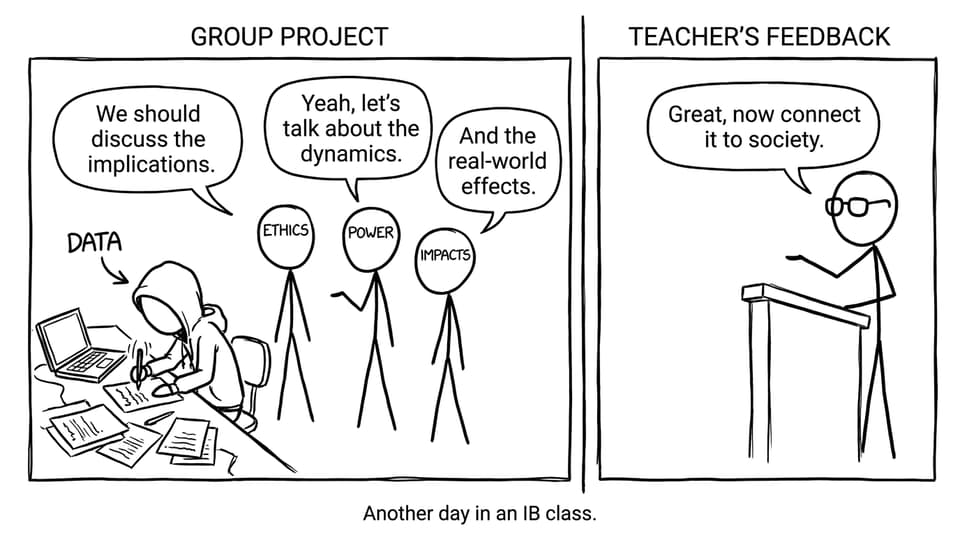
Choose one digital system, one community, and one decision outcome. Then build your inquiry around what changes because of data-driven prediction or personalization.
Two practical guardrails:
-
Don’t try to “cover big data.” Try to explain one mechanism of influence.
-
Collect sources that represent multiple perspectives: the institution, affected users, and critics.
If you need planning support, this helps you sequence work without panic: Which IA should you start first?.
Closing: turn big data into marks, not noise
Big data is everywhere, which is exactly why it’s easy to write vaguely about it. But IB Digital Society rewards the opposite: focused systems, clear impacts, and calm evaluation of power and ethics.
Build two strong IB Digital Society case studies, practise applying them through timed responses, and use RevisionDojo to tighten the loop: Study Notes for clarity, Flashcards for concepts, AI Chat to test arguments, Grading tools to refine structure, and Mock Exams and Predicted Papers to rehearse exam pressure. When you’re ready, anchor your practice with the IB Digital Society hub and the Digital Society Questionbank.
