

A friend once told me they felt more “at home” in a Discord server than in their actual neighborhood.
It sounds like a throwaway comment. But it’s the kind of sentence that quietly contains half the course.
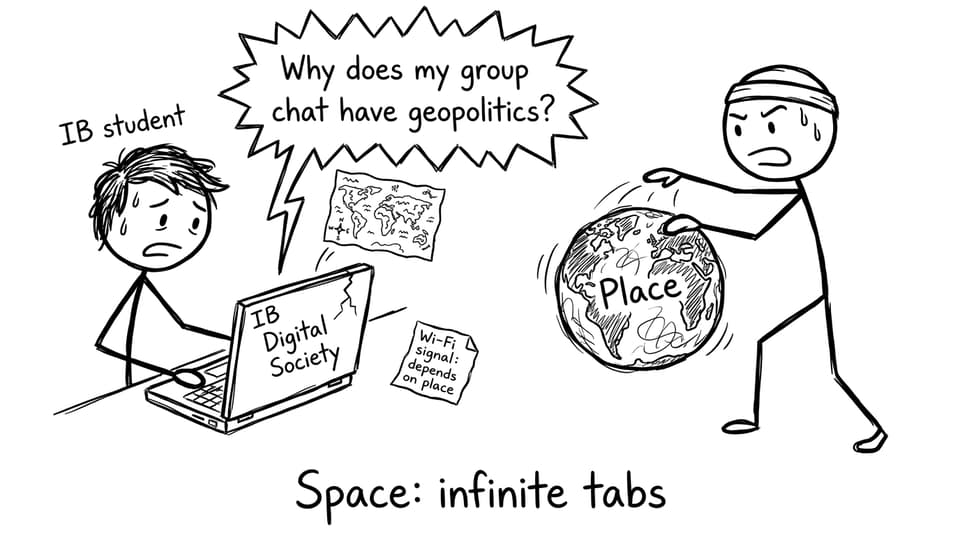
In IB Digital Society, that feeling of belonging (or not belonging) isn’t random. It’s shaped by digital systems that stretch space, compress distance, and still somehow keep place stubbornly important. Understanding IB Digital Society through space and place is one of the fastest ways to turn a vague essay into a sharp, examinable argument.
A quick checklist: what examiners want from IB Digital Society
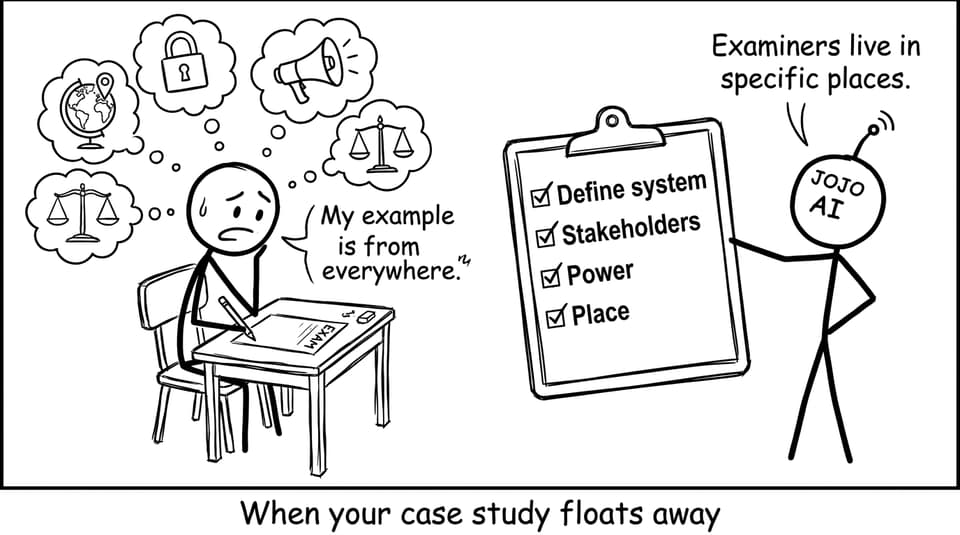
Use this as a calm mental routine before you write about space and place in IB Digital Society:
-
Define space and place in your own words (don’t just repeat the prompt).
-
Name the digital system (platform, algorithm, policy, network, device).
-
Explain the mechanism: what changed about interaction, visibility, or access?
-
Compare impacts across different places (legal, cultural, infrastructural).
-
Evaluate power: who benefits, who is restricted, who is surveilled?
If you want a home base for the course tools and syllabus layout, start with the IB Digital Society resources hub.
What “space” means in IB Digital Society
In IB Digital Society, space is the environment where digital interaction happens.
That can be:
-
Fully virtual (social platforms, online games, forums)
-
Fully physical but digitally shaped (smart cities, sensor networks)
-
Hybrid (school learning platforms, location-based apps, gig work)
Space matters because digital systems reduce the friction of distance. You can collaborate, organize, learn, buy, and protest across time zones. For revision, it helps to connect this idea to other course framing, like What is IB Digital Society?, so your definitions sound anchored rather than improvised.
How to phrase it in an answer
A strong exam line is simple:
In IB Digital Society, digital space expands interaction beyond physical distance, but it also reorganizes visibility, participation, and control.
That last clause is where marks live.
What “place” means in IB Digital Society
Place is space with meaning.
In IB Digital Society, place includes identity, belonging, and the social significance attached to a location or community. Place is why the “same” platform can feel like a safe haven to one group and a threat to another.
Place shapes:
-
Infrastructure (connectivity, device access, cost)
-
Law and regulation (speech rules, privacy protections, bans)
-
Culture and language (norms, humor, taboos, representation)
-
Risk (surveillance intensity, harassment, marginalization)
If you’re revising themes that connect directly to place, the guide on key themes in IB Digital Society helps you keep your paragraphs concept-first.
Digital spaces become social places (and they are not neutral)
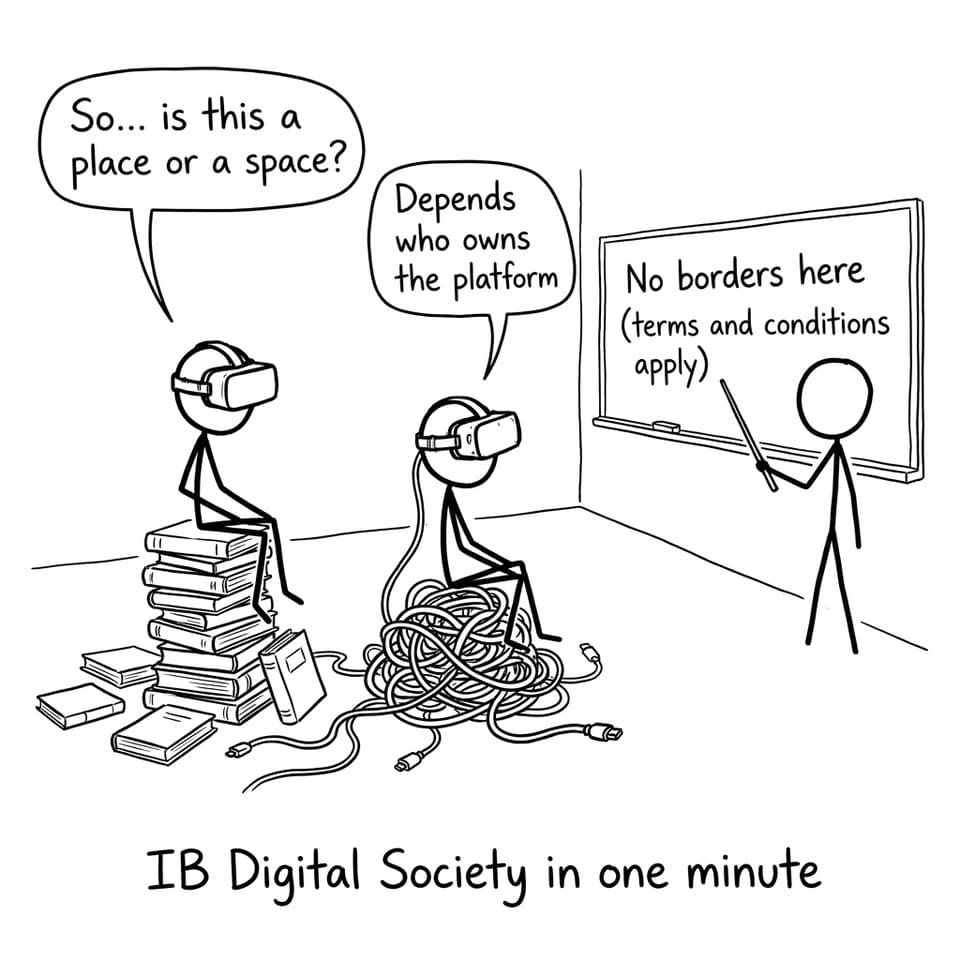
A common student mistake in IB Digital Society is treating platforms like blank stages. But online spaces quickly become social places with norms, hierarchies, and gatekeeping.
A group chat has roles. A forum has status. An algorithm has priorities. Even “trending” is a form of place-making, because it decides what becomes central and what gets pushed to the edges.
That’s why good analysis doesn’t stop at “people connect globally.” It asks: under what rules, owned by whom, with what incentives?
Space, place, and power in IB Digital Society
Power is where space and place become examinable.
When a platform dominates a digital space, it often exports one set of norms worldwide. Meanwhile, the impacts land differently in different places: content moderation, language support, data protection, and state pressure vary sharply.
A practical way to build this into your writing is to use a repeatable lens:
-
Who designs the system?
-
Who sets the rules?
-
Who can appeal or challenge decisions?
-
Who becomes visible, and who becomes risky to be visible?
For students who struggle to make algorithms feel concrete, pair space/place analysis with algorithms explained for IB Digital Society students. Algorithms are often the hidden architecture of digital space.
How to use space and place in exams (without overgeneralizing)
In IB Digital Society exams, “space and place” is rarely a heading in the question. It’s more like an advantage you bring.
When you see a stimulus about a platform, policy, or online community, add one paragraph move:
- Compare two places (or two communities) experiencing the same digital system differently.
Examples of contrasts:
-
Urban vs rural connectivity
-
Different legal regimes
-
Majority language vs minority language users
-
Low-risk vs high-risk political contexts
To strengthen your structure under pressure, RevisionDojo’s ultimate survival guide for IB Digital Society students is useful for command-term planning and reusable paragraph frameworks.
Using space and place in the Internal Assessment
Space and place work especially well in the IB Digital Society IA because the IA rewards focused inquiry, not broad opinion.
Good IA angles often look like:
-
The same platform feature affecting two communities differently
-
A digital policy interacting with local law and culture
-
Access and exclusion shaped by infrastructure or cost
To keep your investigation examiner-friendly, use the IB Digital Society Internal Assessment guide and build your evidence collection around stakeholders, impacts, and evaluation.
If you tend to collect too many sources and lose the thread, the RevisionDojo ecosystem helps you tighten the loop: use Study Notes for clarity, Flashcards for definitions, the Questionbank for exam-style application, and AI Chat when your argument gets stuck mid-draft.
Closing: turning IB Digital Society into a map you can use
Space and place in IB Digital Society are not abstract vocabulary. They’re a map for thinking: where interaction happens, what it means, and who controls the rules.
If you revise this lens deliberately, your exam answers stop sounding like summaries and start sounding like judgments. And when you need that systemized practice loop, RevisionDojo is built for it: Study Notes to get clear, Flashcards to retain, AI Chat to unblock confusion, the Questionbank to drill exam technique, plus Mock Exams, Predicted Papers, a Coursework Library, Tutors, and grading support to turn effort into marks.
For your next session, open the IB Digital Society Topic 3: Content page, pick one subtopic, and practice explaining it through space, place, and power. That’s IB Digital Society revision that actually travels with you into the exam.