

IB Digital Society: Apply Concepts for Higher Marks
You’ve probably had this moment: you read an IB Digital Society question, you recognize the system (a recommender algorithm, facial recognition, a platform’s moderation policy), and you know the concepts (power, ethics, identity, change, systems). So you write them down.
And then the feedback arrives: “Too descriptive.”
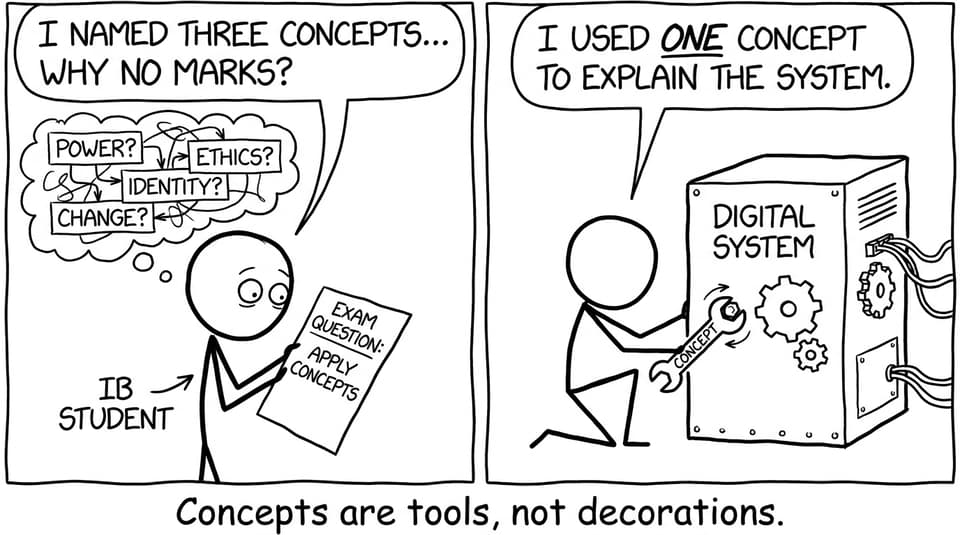
In IB Digital Society, marks don’t rise because you can name concepts. Marks rise because you can use a concept to explain how a digital system works, who it shapes, and why the impact matters. The concept isn’t a label. It’s the lens.
If you want a fast overview of the course expectations, start with What Is IB Digital Society?. Then come back here for the practical method.
The IB Digital Society concept checklist (use this before you write)
Use this 60-second checklist to make your IB Digital Society concepts do work in exams and your IA.
-
Name the digital system (specific platform, feature, policy, or dataset)
-
Describe one mechanism (how the system produces outcomes)
-
Choose 1 concept (2 max) that best explains the mechanism
-
Apply it: link concept language to concrete system features
-
Show impact: individuals and communities
-
Evaluate: trade-offs, responsibilities, and what “better” could look like
When you practise, RevisionDojo makes this loop easy: use Digital Society (DS) resources to move from notes to questions to feedback without losing time.
What “apply a concept” means in IB Digital Society
Applying a concept in IB Digital Society means you can interpret a system through it.
A weak move is decorative: “This relates to power.”
A strong move is analytical: “This system centralizes power by controlling visibility, which shapes what users can know and do; that control benefits some actors while reducing meaningful choice for others.”
Notice what changed: the concept became a tool that explains cause and effect.
To practise that skill quickly, use a question set in the RevisionDojo Questionbank and force yourself to write one paragraph that includes mechanism, impact, and evaluation.
Start with the system, not the concept
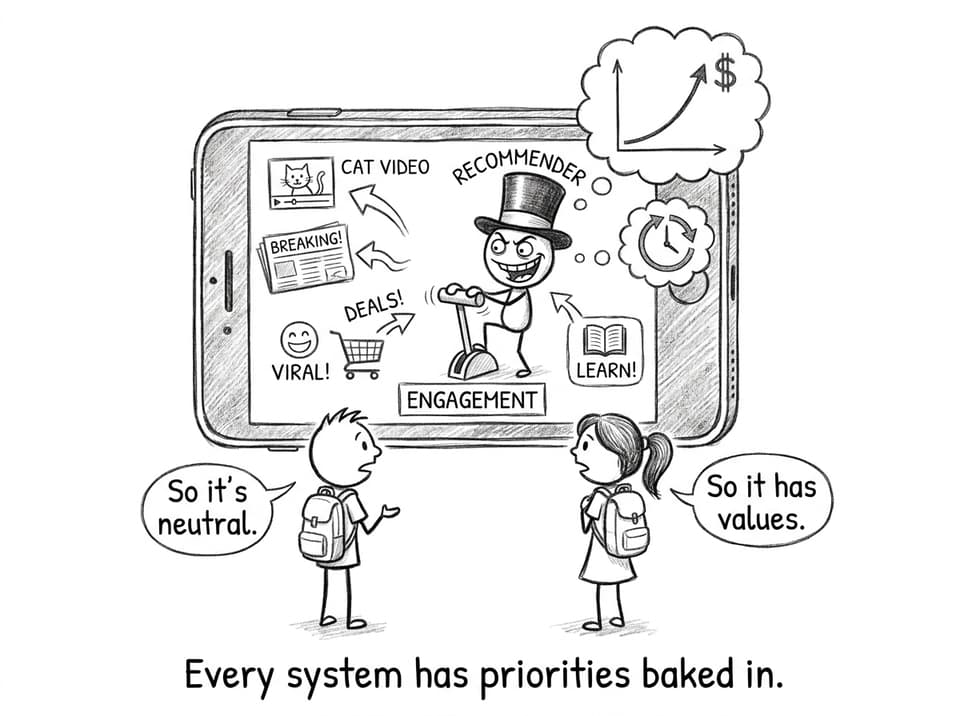
High-scoring IB Digital Society answers usually begin with the digital system because examiners reward specificity. “Social media” is too vague. “A recommender algorithm that ranks posts based on engagement signals” is usable.
Try this order:
-
System feature: “The platform optimizes ranking using watch time and click-through rate.”
-
Mechanism: “That pushes emotionally intense content because it retains attention.”
-
Concept application: “Power shifts toward the platform because it controls visibility and incentives.”
-
Impact: “Creators adapt behavior; communities polarize; misinformation spreads faster.”
-
Evaluation: “The benefit is relevance and retention; the harm is manipulation and uneven accountability.”
If you need a quick content refresher on the course, browse All IB Digital Society posts.
Applying core IB Digital Society concepts (examples you can copy)
Power in IB Digital Society (control, incentives, dependency)
Power is about who can shape outcomes: visibility, data access, rules, and resources.
A strong power paragraph often includes:
-
Who controls system rules (platform, government, vendor, school)
-
What gets controlled (feeds, identity verification, moderation, access)
-
Who benefits and who loses voice
Example sentence starters:
-
“Power concentrates because the system sets the default options users rarely change.”
-
“Users appear free, but dependence on the platform for connection shifts bargaining power.”
Ethics in IB Digital Society (trade-offs, harm, accountability)
Ethics is not “good vs bad.” In IB Digital Society, ethics is justified judgment.
To apply ethics well:
-
Name the ethical tension (privacy vs safety, access vs surveillance, innovation vs harm)
-
Weigh benefits and harms with stakeholders
-
Discuss responsibility (designers, institutions, users, regulators)
For timed practice that improves evaluation, combine questions with feedback using RevisionDojo App: The Smarter Way to Prep for IB Exams.
Identity in IB Digital Society (representation, categorization, visibility)
Identity is about how systems shape self-expression and how others perceive you.
Strong identity application links identity to design:
-
Profiles, verification, and “real name” policies
-
Categorization systems (gender options, location inference, risk scores)
-
Visibility mechanisms (ranking, shadow bans, search results)
Useful phrasing:
- “The system doesn’t just reflect identity; it formats identity through categories that include some users and erase others.”
Change and systems in IB Digital Society (feedback loops over time)
Change is about what shifts in behavior, norms, and structures because the system exists. Systems thinking is about interactions that create unintended outcomes.
Apply change by answering:
-
What was different before?
-
What’s driving the shift (incentives, policy, network effects)?
-
What new patterns appear over time?
Apply systems by mapping:
-
Actors (users, platform, advertisers, regulators)
-
Components (algorithm, data, interface, rules)
-
Feedback loops (engagement drives ranking drives engagement)
Use fewer IB Digital Society concepts, more deeply
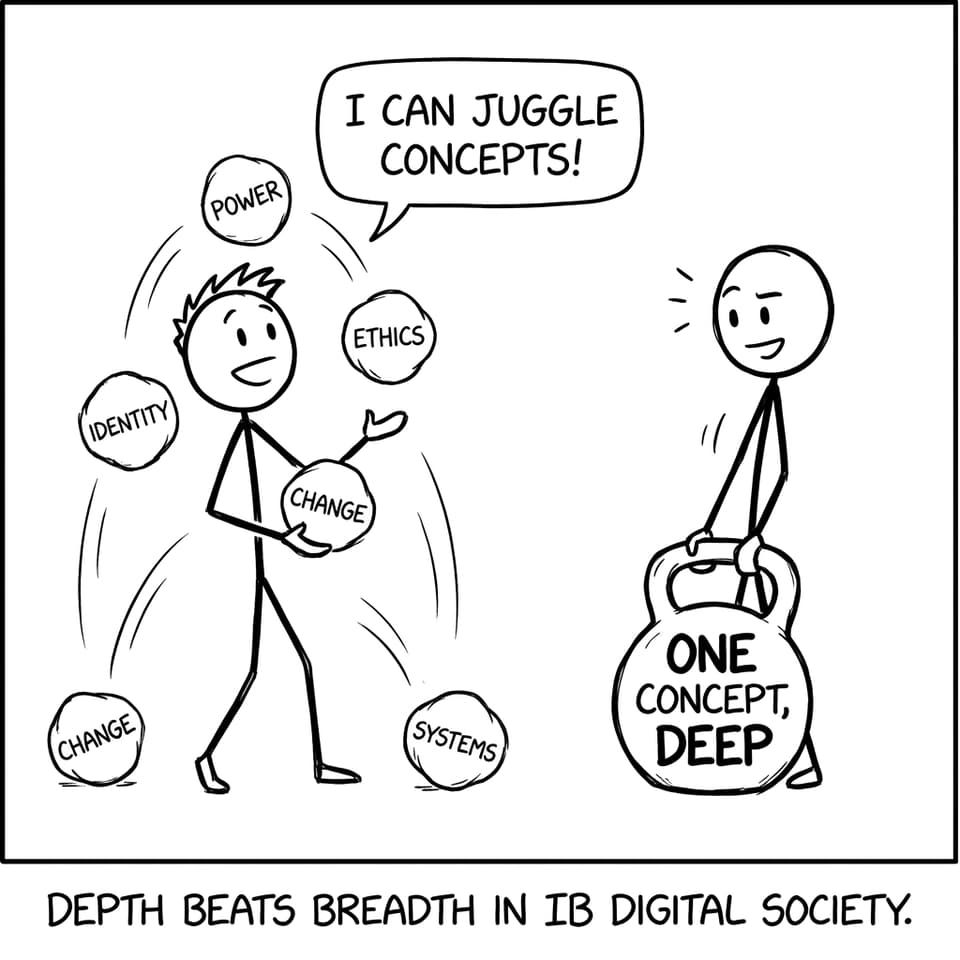
Many students try to mention every concept they remember. It feels productive. It usually reads like a checklist.
In IB Digital Society, depth wins because depth shows reasoning.
A simple rule: one main concept per paragraph. Add a second concept only if it genuinely strengthens the explanation.
To build depth fast, study one concept with spaced recall using IB Flashcards with Spaced Repetition (SRS), then apply it to multiple systems.
A practical exam structure for IB Digital Society (concept-led paragraphs)
When you’re under time pressure, structure prevents panic.
Use this paragraph template:
-
Claim (concept + system): “In this IB Digital Society example, power is concentrated because…”
-
Mechanism: explain the feature and how it works
-
Impact: individuals + communities
-
Evaluation: trade-offs + responsibility
Then train it with real practice and feedback loops. RevisionDojo supports that workflow with Study Notes, Flashcards, AI Chat, Grading tools, Predicted Papers, and Mock Exams inside the Digital Society hub: Digital Society (DS) resources.
For note-first revision, pair it with Digital IB Study Notes: Access Anywhere, Anytime.
Conclusion: make IB Digital Society concepts do real work
IB Digital Society rewards the student who can slow down and ask: What is the system doing, and how does this concept explain the impact? When you treat IB Digital Society concepts like tools, your writing becomes sharper, your evaluation becomes calmer, and your answers stop drifting into description.
If you want to train this consistently, build a simple loop on RevisionDojo: Study Notes for clarity, Flashcards for recall, Questionbank for application, AI Chat and Grading tools for feedback, then Mock Exams and Predicted Papers for timed confidence. Start here: How to Use RevisionDojo for IB Digital Society Success.