

You can tell when a digital system is shaping someone’s life because it happens quietly. One student gets a scholarship link at the perfect moment. Another never sees it. One family’s internet drops for three days and it costs them a grade. Another family doesn’t notice because they have backup.
That gap is exactly what IB Digital Society wants you to notice, name, and analyse.
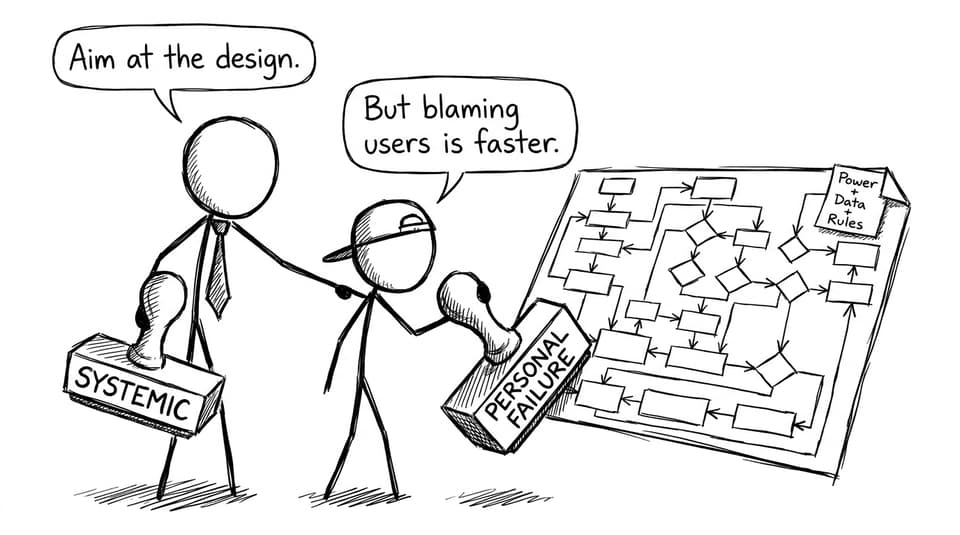
In IB Digital Society, inequality is not a tragic side effect floating around the edges of technology. It is often produced by the system itself: the design choices, the data it collects, the rules it enforces, and the people who get to change those rules.
This guide shows you how to analyse inequality in IB Digital Society with a structure you can reuse in exam questions and your IA.
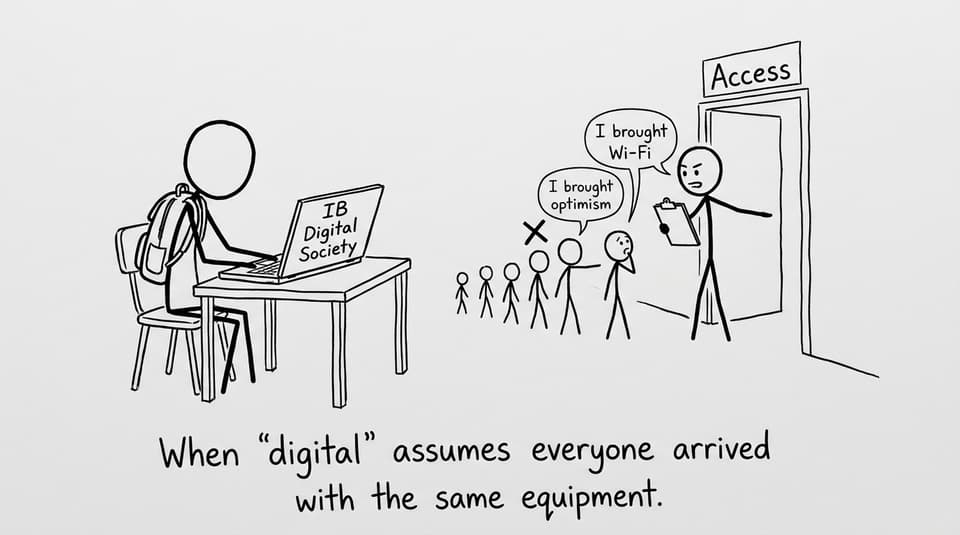
A quick inequality analysis checklist (save this)
Use this as a 60-second plan before you start writing any IB Digital Society paragraph:
-
Name the digital system (platform, algorithm, policy, workflow)
-
Identify stakeholders (who uses it, who is affected without using it)
-
Spot the inequality (access, benefits, harms, voice, power)
-
Explain the mechanism (what feature creates the uneven outcome)
-
Show impacts on individuals and communities
-
Evaluate: is it justified, avoidable, and who is responsible?
If you need to tighten your concept language first, start with IB Digital Society: Key Themes Explained.
What inequality means in IB Digital Society
In IB Digital Society, inequality is the uneven distribution of access, benefits, risks, or power created or reinforced by a digital system.
Two details matter for marks:
-
Inequality is usually systemic, not about individual effort.
-
Inequality is usually patterned: it affects groups differently based on geography, income, language, disability, education, race, gender, migration status, or political position.
A strong answer makes inequality visible by showing how the system produces it.
To ground your understanding of “digital society” itself, revisit Introduction to Digital Society notes.
How digital systems produce inequality (the mechanism is the marks)
Many students write: “This creates inequality because some people don’t have access.” That’s a start, but IB Digital Society rewards the next step: how the system turns differences into outcomes.
Try this sentence frame:
The system creates inequality because [feature/rule/data practice] causes [unequal outcome] for [specific group], which leads to [impact].
Mechanisms examiners love include:
-
Default settings that assume a “standard user”
-
Identity verification requirements that exclude undocumented users
-
Paid features that gate opportunity
-
Language and accessibility design that limits meaningful participation
-
Datafied scoring systems that reward already-advantaged behaviour
If you want a clean way to keep analysis conceptual (not just descriptive), use How to Apply IB Digital Society Concepts Effectively.
Access and the digital divide (but go beyond Wi‑Fi)
Access is the most visible form of inequality in IB Digital Society, but access is not only “internet vs no internet.” It includes:
-
Quality (speed, reliability, data limits)
-
Devices (shared phone vs personal laptop)
-
Skills (digital literacy, language confidence)
-
Accessibility (screen readers, captions, UI design)
-
Safety (whether using the system creates risk)
Your job is to explain the consequence chain. For example: unreliable connectivity can reduce attendance in online learning, which reduces feedback loops, which reduces grades, which reduces future opportunity. That’s inequality compounding over time.
For a deeper foundation and a ready-made case-study lens, see Digital Inequality and the Digital Divide Explained for IB.
Data inequality: who gets represented, who gets misread
Data feels objective until you ask: “Objective for whom?” In IB Digital Society, data often reflects existing inequality because:
-
Some groups are underrepresented (not captured, opted out, inaccessible)
-
Some groups are over-surveilled (captured too much, too harshly)
-
Categories are badly defined (forcing people into labels that don’t fit)
-
Data is used outside its original context (purpose creep)
In exams, name the data practice and link it to outcomes. For instance, if an education platform trains recommendations on students who have stable home study spaces, it may misread students with caregiving responsibilities as “unmotivated” rather than “overloaded.” That is inequality produced by the measurement itself.
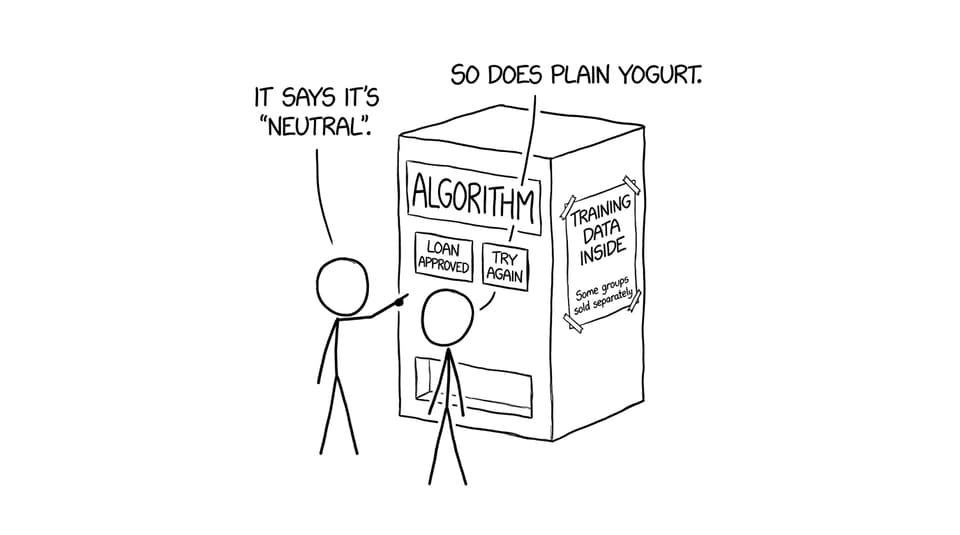
Algorithmic inequality: automated decisions that feel invisible
Algorithms can amplify inequality because they scale decisions quickly, often without meaningful explanation or appeal.
Ask three exam-friendly questions:
-
Consistency: do similar users get similar outcomes?
-
Bias pathways: where could bias enter (training data, labels, proxies)?
-
Accountability: who can challenge the output, and how?
Then connect to power. If the platform controls both the scoring model and the appeal process, inequality becomes locked in.
Individual vs community impacts (a simple way to hit higher bands)
High-scoring IB Digital Society responses separate what happens to a person from what happens to a group.
Individual-level inequality
Focus on agency, opportunity, and lived experience:
-
reduced choice (you must accept the system’s terms)
-
reduced mobility (blocked from jobs, learning, services)
-
emotional or psychological harm (stress, stigma, self-censorship)
-
inability to contest or correct decisions
Community-level inequality
Focus on patterns that reshape life over time:
-
exclusion of linguistic minorities from public services
-
reinforcement of existing socio-economic segregation
-
normalisation of surveillance in specific neighbourhoods
-
long-term effects on participation, trust, and social cohesion
When you write, use plural nouns: “gig workers,” “rural students,” “immigrant communities,” “disabled users.” That signals you understand inequality as a structured pattern.
Inequality, power, and ethics (the strongest triangle in IB Digital Society)
Inequality gets sharper when you ask who holds power:
-
Who designs the system?
-
Who sets defaults?
-
Who profits?
-
Who gets to demand transparency?
-
Who can opt out without penalty?
Then evaluate ethically. Your evaluation should be reasoned, not emotional:
-
Is the unequal outcome necessary for the system’s goal?
-
Is it proportionate to the benefit gained?
-
Are harms avoidable through alternative design?
-
Is responsibility shared (company, government, users), and how?
To see how inequality appears in a real-world context, Digital Labor and the Gig Economy in IB Digital Society is a strong example-rich route.
How to write an exam paragraph on inequality (a reusable mini-template)
When a prompt mentions fairness, access, AI, platforms, or participation, you can almost always use inequality in IB Digital Society.
Use this structure:
-
Claim: identify the inequality and the affected groups.
-
Mechanism: explain the system feature producing it.
-
Impact: individual + community.
-
Evaluation: trade-offs, responsibility, and what could reduce the inequality.
To practise under exam conditions, RevisionDojo’s Digital Society resources hub is built for the loop that actually improves marks: Study Notes for clarity, Flashcards for definitions, Questionbank for exam-style practice, and Grading tools to see what your writing is missing.
Using inequality in your IA (keep it tight)
Inequality is powerful in the IB Digital Society IA because it forces you to define stakeholders and compare impacts.
Three rules:
-
Pick one system feature (not “social media” broadly).
-
Identify at least two groups affected differently.
-
Collect evidence that helps you analyse mechanisms, not just outcomes.
If you want step-by-step guidance, use IB Digital Society (DS) Internal Assessment Guide, plus Using Evidence Effectively in the IB Digital Society IA to avoid the common “quote dumping” trap.
Closing: inequality is a lens, not a topic
Once you start seeing inequality in IB Digital Society, you notice it everywhere: in the “simple” login screen, in the invisible data labels, in the automated rule that decides who gets a second chance.
Bring that lens into your revision. Practise turning any case study into stakeholders, mechanism, impact, and evaluation. Then use RevisionDojo to tighten the skills that earn marks: Questionbank practice, Study Notes for precise concepts, Flashcards for definitions, AI Chat for unblocking confusion, Mock Exams and Predicted Papers for timed prep, and Grading tools to turn feedback into a plan.
If you want one starting point, open the IB Digital Society Resources hub and build your next practice answer using inequality as your core lens.