This site uses cookie tracking technologies. Learn more in our Cookie Policy.
IB Digital Society: Algorithms Explained for Exams | RevisionDojo
Join 600k+ Students Already Crushing Their Exams
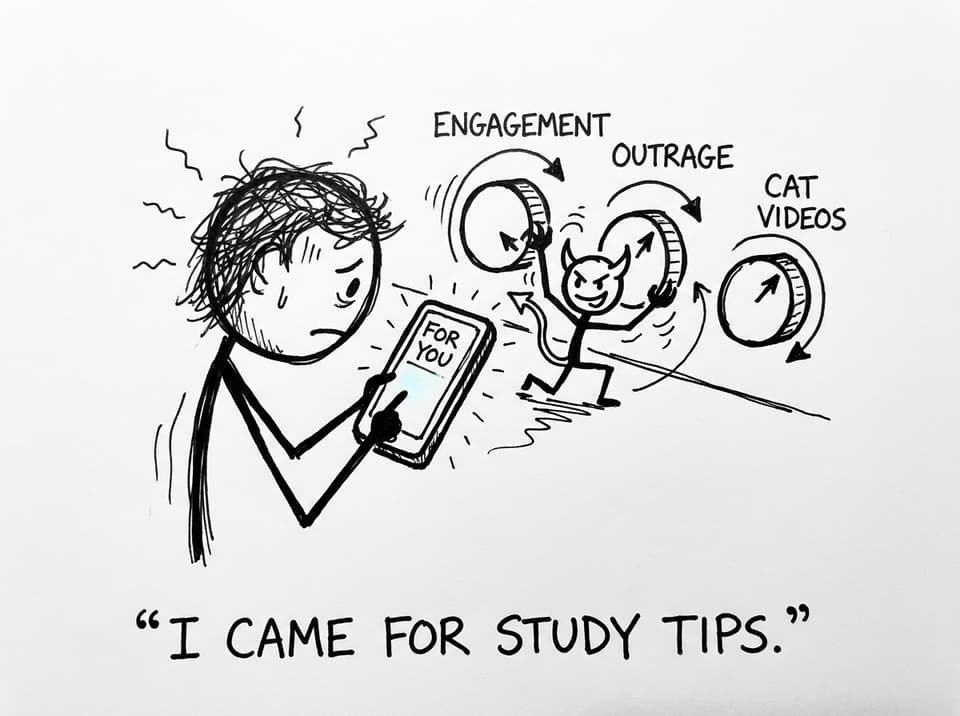
In the last week before exams, a strange thing happens. You open your phone to take a break, and it takes you instead: one more video, one more thread, one more recommendation that somehow feels like it was made for your exact mood.
That feeling is the point. And in IB Digital Society, that feeling is also a syllabus topic.
Algorithms are often taught as something technical and distant. But IB Digital Society treats algorithms as decision-making systems that shape attention, opportunity, and trust. You do not need to code. You do need to explain how algorithmic choices affect people and communities, and then evaluate those effects with calm, evidence-based reasoning.
A tiny algorithm gremlin turns the outrage dial
IB Digital Society algorithm checklist (the fast version)
Use this when you see algorithms in an unseen example, an inquiry, or your internal assessment.
Define the algorithm as a rule-based or data-driven decision process (not “just code”).
Identify the goal (engagement, efficiency, safety, profit, accuracy). In IB Digital Society, goals matter.
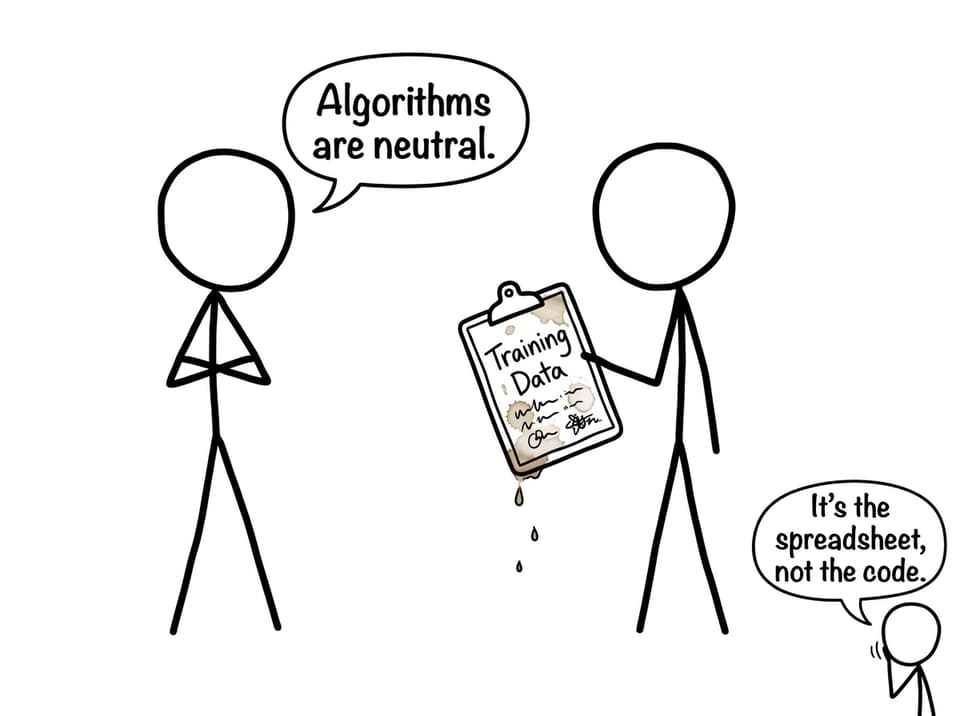
Discuss bias: where it can enter (data, design, deployment).
Separate impacts (visible outcomes now) from implications (long-term shifts in norms and autonomy).
For targeted practice on algorithm questions, use RevisionDojo’s Questionbank for the algorithms unit: 3.2 Algorithms Questionbank.
What an algorithm means in IB Digital Society
In IB Digital Society, an algorithm is best described as a set of rules or processes a digital system uses to sort information, make a prediction, or automate a decision. That decision might be tiny (which post appears first) or life-changing (who gets screened out of an application process).
The key move is to treat the algorithm like a policy. It encodes priorities. It operationalizes values. It scales those values quietly.
Algorithms appear anywhere a system must decide “what next?” at scale. In IB Digital Society, you can group common examples into three buckets:
Recommendation and ranking
Feeds, search results, trending lists, suggested friends. These systems decide visibility. Visibility becomes influence.
Automated decision-making
Credit scoring, school admissions triage, hiring filters, content moderation flags. These systems decide access.
Prediction and optimization
Navigation apps predicting traffic, platforms predicting churn, retailers predicting demand. These systems decide resource allocation.
When you write about these in IB Digital Society, keep the focus on social outcomes: whose voice is amplified, whose opportunities shrink, and how accountability works when decisions are distributed across machines and institutions.
To connect algorithms to other high-frequency themes, pair your case studies with RevisionDojo’s explanations of the course lens: Key Themes in IB Digital Society Explained.
How algorithms shape behavior: the feedback loop you can explain in two sentences
A simple but high-scoring insight in IB Digital Society is the feedback loop:
The system recommends content based on past behavior.
Your future behavior adapts to what you are shown.
That loop can create echo chambers, accelerate outrage, or normalize certain ideas as “what everyone thinks,” because the system keeps rewarding what performs well.
Power, control, and the “black box” problem in IB Digital Society
Power in IB Digital Society is not only about who has the most followers. It is also about who controls the rules of the environment.
Algorithms create power when:
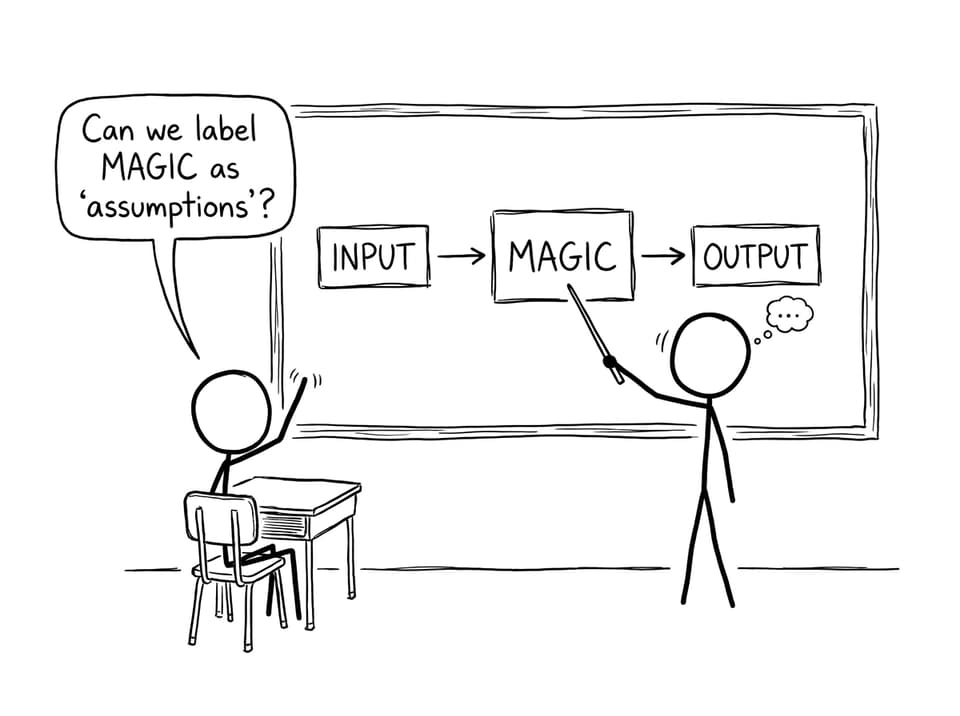
Decisions are opaque (users cannot see why something happened).
Scale hides harm (small biases become large patterns).
Appeals are weak (you cannot challenge a result effectively).
Optimization replaces judgment (efficiency becomes the default “good”).
This is where strong evaluation lives: not “algorithms are bad,” but “this system shifts power toward platform owners and away from users because transparency and contestability are limited.”
Design: choosing proxies that correlate with protected characteristics.
Deployment: different groups experiencing different error rates.
A useful nuance for exam answers: bias is often systemic rather than intentional. The harm is still real, but your analysis becomes more credible when you explain how it emerges.
Implications are long-term: loss of autonomy, normalization of automated judgment, reduced trust in institutions, shifting cultural norms.
Ethical evaluation works best when you weigh values that conflict. For example: safety vs privacy, personalization vs manipulation, efficiency vs fairness.
Closing: why IB Digital Society cares about algorithms
The quiet truth about algorithms is that they rarely feel like control. They feel like convenience.
That is why IB Digital Society asks you to slow down and name what is happening: a decision system is sorting the world, and its choices have consequences. If you can explain the mechanism, analyse power and bias, and evaluate ethics with balance, you will write clearer exam answers and stronger coursework.
Build that skill with RevisionDojo’s Study Notes, Flashcards, AI Chat, Grading tools, and the Questionbank for IB Digital Society. The goal is not to fear algorithms. It is to understand them well enough to think independently when they shape what you see next.