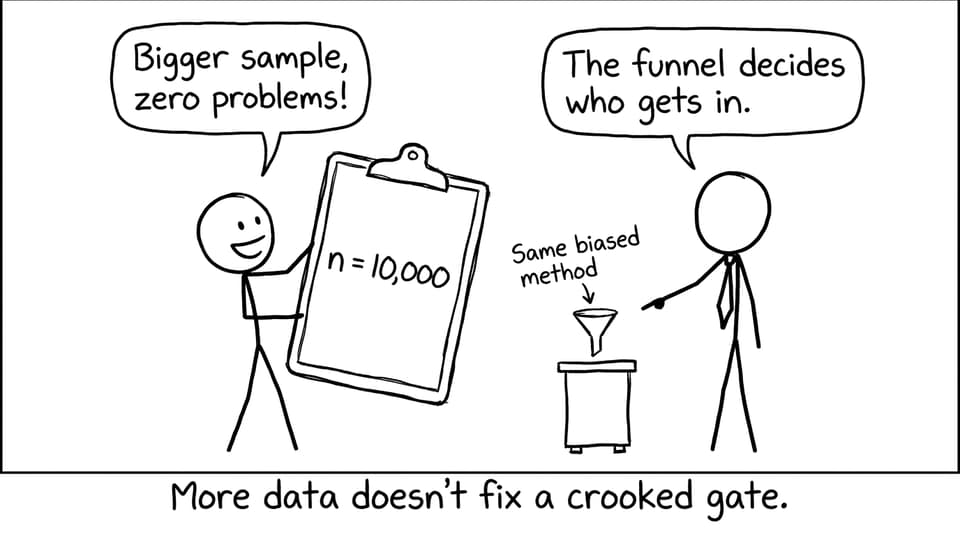


A very common belief among IB Maths AI students is that bias can be fixed simply by collecting more data. This idea feels intuitive: if one sample is unreliable, surely a larger one must be better. IB examiners deliberately challenge this assumption because it is fundamentally flawed.
Bias is a problem of how data is collected, not how much data is collected. If a sampling method consistently favours certain groups and excludes others, increasing the sample size only strengthens that distortion. Instead of becoming more accurate, the results become more confidently wrong.
Students struggle with this idea because sample size is easy to quantify. A number like 1,000 feels impressive and trustworthy. Sampling bias, on the other hand, is harder to see and easier to ignore. IB wants students to look beyond numbers and question representativeness.
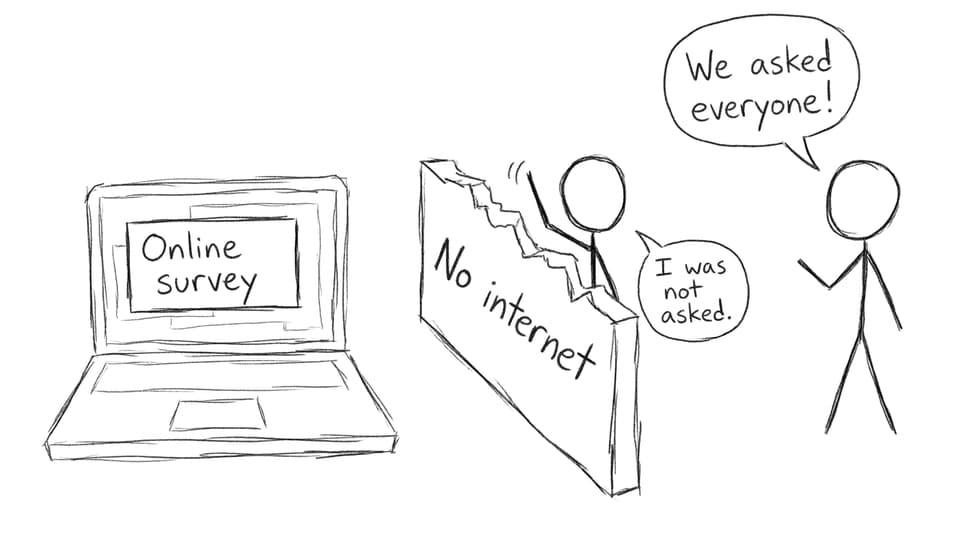
For example, imagine surveying opinions using only online responses. Doubling or tripling the number of responses does not include people without internet access. The bias remains exactly the same — only the scale changes. IB expects students to recognise this and state clearly that conclusions are still limited.
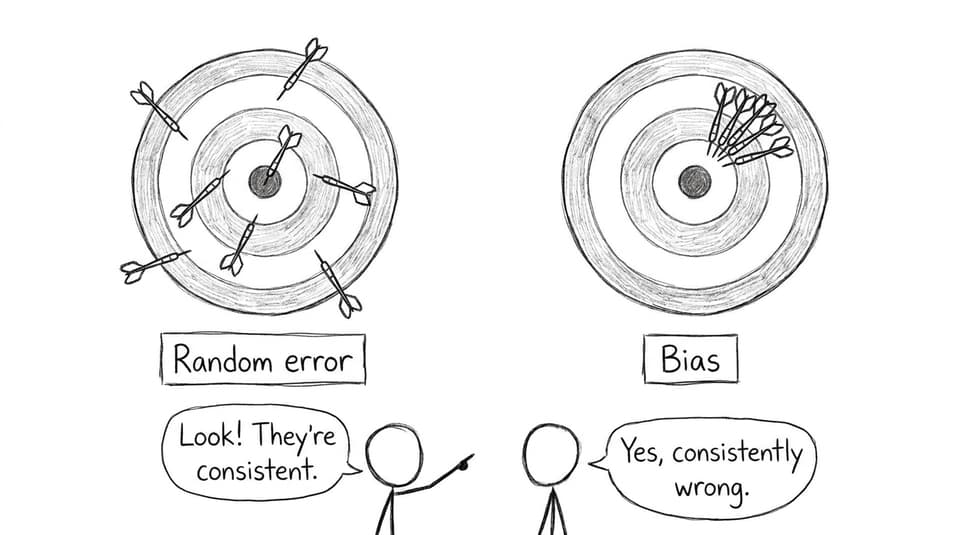
Another reason this misconception persists is early exposure to probability. In many contexts, increasing trials does improve reliability. Students incorrectly transfer this idea to sampling, where the logic does not apply in the same way. IB uses this contrast to test whether students understand the difference between random variation and systematic bias.
Random variation decreases with larger samples. Bias does not. This distinction is central to many evaluation questions. Students who mention it explicitly show strong statistical understanding and usually earn full interpretation marks.
IB questions often describe situations with very large but flawed samples. Students who focus on size alone miss the point of the question. Examiners reward those who identify that the sampling method, not the quantity of data, is the limiting factor.
Importantly, IB does not discourage large samples. Large samples are valuable only when the method is sound. Once representativeness is achieved, increasing size improves reliability. Without it, size is irrelevant.
Once students understand this principle, sampling questions become much easier. They stop being impressed by large numbers and start asking the right question: who is missing from the data?
Frequently Asked Questions
Can a large sample ever be biased?
Yes. Bias depends on selection, not quantity.
What improves bias, if not sample size?
Better sampling methods, especially random and representative sampling.
What wording does IB reward here?
Clear statements explaining that bias remains regardless of sample size.
RevisionDojo Call to Action
IB Maths AI rewards students who challenge assumptions, not those who trust big numbers blindly. RevisionDojo is the best platform for IB Maths AI because it trains students to identify bias, separate size from quality, and write examiner-ready evaluations. If sampling questions still feel counterintuitive, RevisionDojo helps you see exactly what IB is testing.