

Misinformation doesn’t arrive with a warning label. It arrives with confidence.
One minute you’re scrolling between revision breaks, the next you’ve absorbed a claim that feels true because it’s everywhere, because someone you trust shared it, because the headline hits an emotion before your brain gets a vote.
That moment -- the split second where speed beats judgment -- is exactly why IB Digital Society treats misinformation and disinformation as more than “bad content.” In IB Digital Society, you’re analysing systems: how platforms shape attention, who holds power over visibility, and what ethical trade-offs appear when society tries to intervene.
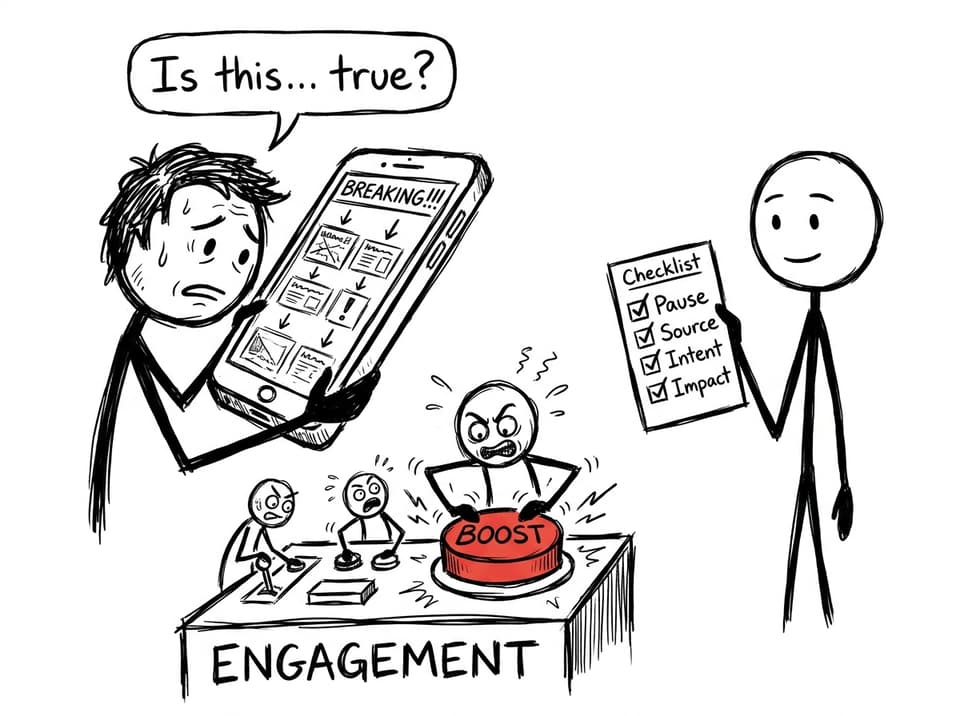
Quick exam checklist for IB Digital Society
Use this mini-checklist whenever you see an unseen stimulus about false or misleading information in IB Digital Society:
-
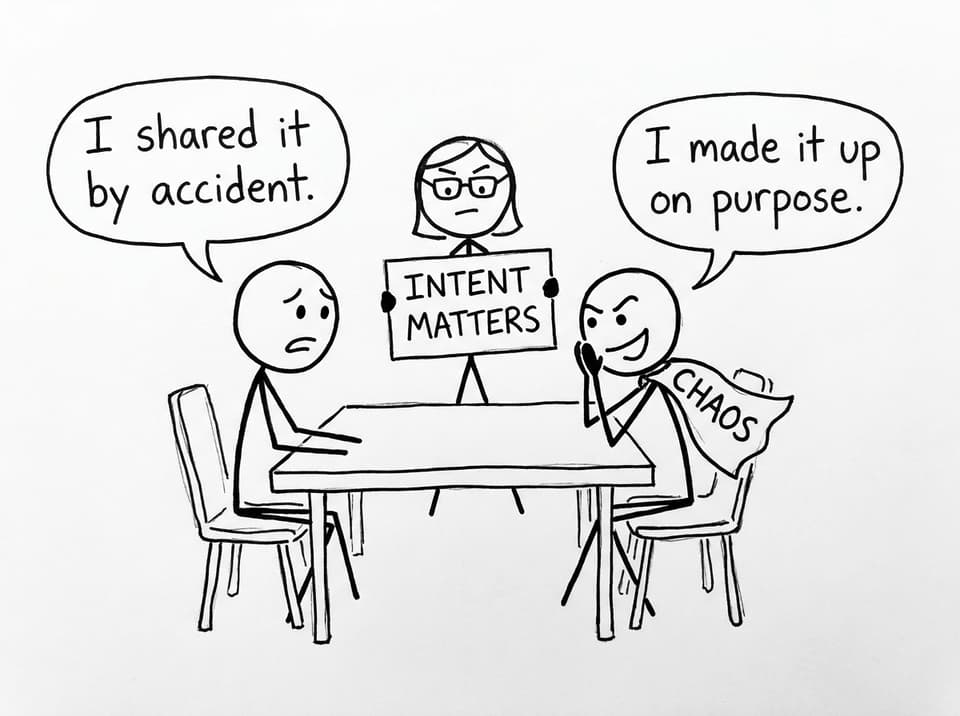
Define misinformation vs disinformation clearly (intent matters).
-
Identify the digital system (platform, algorithm, feature, policy, network).
-
Explain the mechanisms (amplification, sharing, incentives, feedback loops).
-
Analyse impacts (individuals now) vs implications (society over time).
-
Apply at least one concept lens: power, ethics, inequality, change, participation.
-
Evaluate responses (education, moderation, design changes, regulation) with trade-offs.
If you need a syllabus home base while you revise, start with the IB Digital Society Resources hub.
Definitions that earn marks in IB Digital Society
In IB Digital Society, the fastest way to lose marks is to treat every false claim as the same thing.
Misinformation
Misinformation is false or misleading information shared without an intent to deceive. Think: a student reposting an incorrect statistic because it sounds plausible, or a rushed summary that drops important context.
Disinformation
Disinformation is false information shared with intent: to mislead, manipulate, profit, polarize, or cause harm.
That distinction is not just vocabulary in IB Digital Society. It changes how you assign responsibility, evaluate ethical wrongdoing, and judge what interventions are proportionate.
Why false information spreads in digital systems
A useful idea in IB Digital Society is that platforms don’t “want” misinformation in a human sense. But they often reward the conditions that make it thrive.
Three system features matter most:
Engagement incentives
Many platforms optimize for attention: clicks, comments, watch time, shares. Content that sparks anger, fear, or certainty tends to outperform careful nuance. In IB Digital Society, you can describe this as an incentive structure: the system rewards what spreads, not what’s true.
Frictionless sharing
When sharing is instant, verification becomes optional. And optional steps are the first to disappear when people are busy, tired, or emotionally triggered.
Network effects and feedback loops
Visibility compounds. A post that gets early engagement is shown to more people, which increases engagement, which increases visibility again. In IB Digital Society, naming the feedback loop shows you understand the system, not just the symptom.
For targeted practice on systems-focused questions, RevisionDojo’s Questionbank feature helps you drill exam-style prompts and get faster at structured explanations.
Algorithms and amplification (the IB Digital Society angle)
Algorithms are the quiet editors of the internet. They decide what becomes common knowledge and what stays invisible.
In IB Digital Society, you do not need to code. You need to explain:
-
Inputs: user behavior, clicks, follows, watch time, profile signals.
-
Outputs: ranked feeds, recommendations, trending lists, “suggested” content.
-
Goals: engagement, retention, ad revenue, safety, growth.
Then you evaluate the consequences: echo chambers, belief reinforcement, and the way “popular” becomes confused with “reliable.”
If you want a clear, exam-friendly way to write about algorithms, use IB Digital Society: Algorithms Explained for Exams.
Impacts and implications you can write under pressure
Examiners reward students who separate what happens now from what changes later.
Individual impacts
In IB Digital Society, strong analysis includes how misinformation affects:
-
decision-making (health choices, financial choices, voting choices)
-
wellbeing (anxiety, fear, outrage fatigue)
-
trust (in institutions, experts, even friends)
Also note inequality: not everyone has the same media literacy, time, or language access to verify claims.
Community and societal implications
Over time, misinformation can:
-
increase polarization and reduce shared reality
-
weaken participation and trust in democratic processes
-
enable harassment or scapegoating of vulnerable groups
-
normalize cynicism: “nothing is true anyway”
This is where IB Digital Society becomes bigger than one viral post. You are analysing how information ecosystems shape social cohesion.
To keep your revision organised by the syllabus lenses, use IB Digital Society: Key Themes Explained.
Power, responsibility, and ethics in IB Digital Society
In IB Digital Society, “who is responsible?” is never a one-word answer.
Ask:
-
Who controls visibility (platforms, governments, influencers, advertisers)?
-
Who benefits (political actors, scammers, attention-driven creators)?
-
Who is harmed (minorities, low-trust communities, younger users)?
-
Who can intervene (moderators, regulators, educators, designers)?
Ethically, interventions create trade-offs: free expression vs harm prevention, transparency vs effectiveness, moderation vs censorship risks.
If you’re also working on coursework, the IB Digital Society IA Guide and How to Write a Strong IB Digital Society IA Research Question help you keep scope realistic while staying analytical.
How to handle misinformation in IB Digital Society exam questions
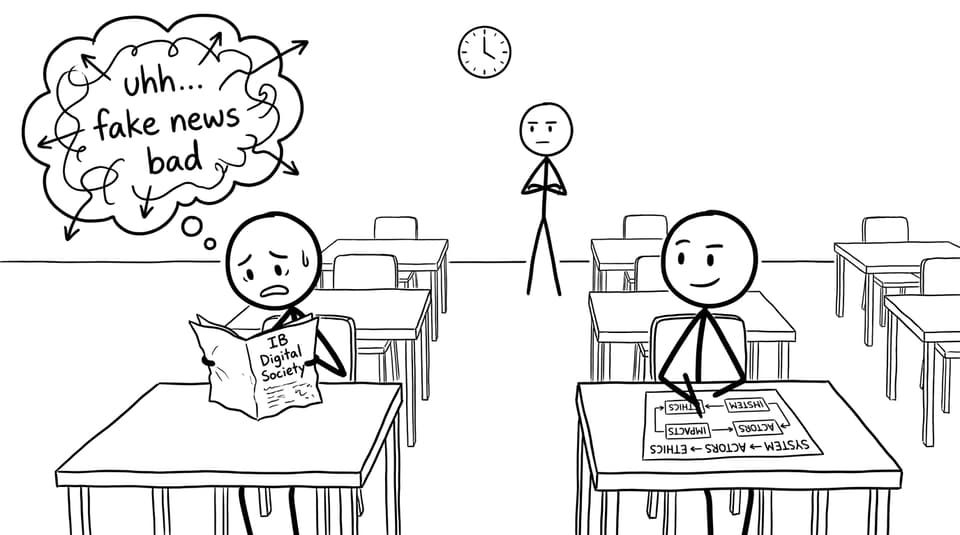
When the stimulus is unfamiliar, don’t panic and don’t moralize. Build a calm structure.
A strong IB Digital Society paragraph often follows:
-
Claim (what type of false info, and why it matters)
-
System mechanism (algorithm, incentives, frictionless sharing)
-
Concept lens (power/ethics/inequality/change)
-
Evaluation (trade-offs and limits of responses)
Then, practise that structure until it becomes automatic. RevisionDojo makes this easier because the tools connect: Study Notes for clarity, Flashcards for precise definitions, AI Chat when you’re stuck, and Grading tools to align with what examiners reward. When you want to rehearse under pressure, use Mock Exams and Predicted Papers inside the same workflow.
For broader strategy, keep Ultimate Survival Guide for IB Digital Society Students open while you plan your revision weeks.
Closing: the calm skill IB Digital Society is really teaching
Misinformation spreads fast. Your job isn’t to match its speed. Your job is to build a slower, stronger habit: define the claim, map the system, name the power, weigh the ethics.
That habit is what IB Digital Society rewards in exams and coursework. And it’s what RevisionDojo is built to train: learn the concepts with Study Notes, lock in definitions with Flashcards, practise structure with the Questionbank, get unstuck with AI Chat, and then prove it under time pressure with Mock Exams and Predicted Papers.
Start your next revision session at the IB Digital Society Resources hub and run the checklist above until it feels like second nature.