

When everyone around you seems to be choosing the same IB subjects, a quiet fear shows up: What if the “unpopular” option costs me marks, support, or university offers? It can feel like you’re stepping off the well-lit path and into the dark.
But the truth is calmer than the rumour mill.
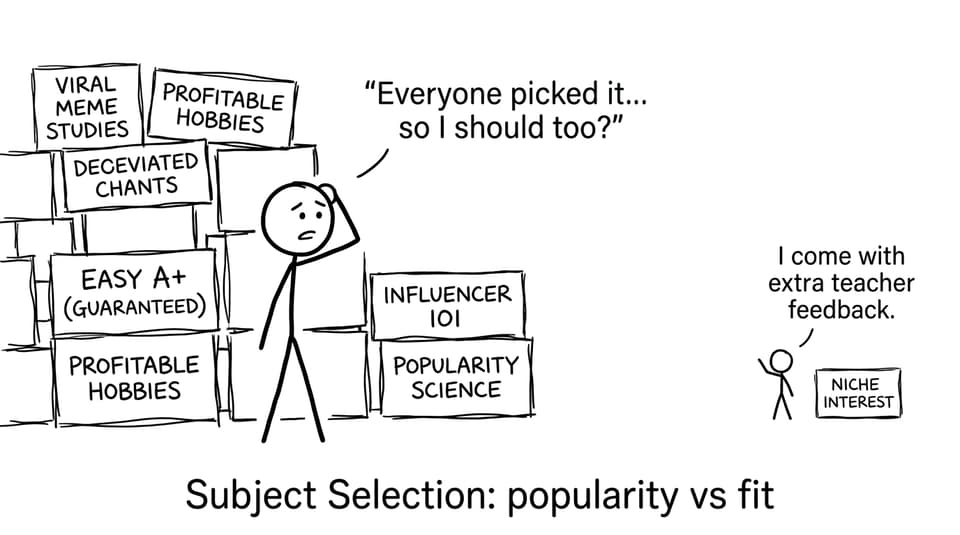
In IB, Subject Selection is not a popularity contest. It’s a decision about fit: how you think, what you can practise consistently, and how well you can meet assessment criteria. In fact, a less popular subject can become an advantage when you treat it like what it really is: a smaller room with the same exam rules.
Quick checklist for smart Subject Selection
Use this before you second-guess your Subject Selection:
-
Am I choosing based on genuine interest, not crowd pressure?
-
Do I understand how the subject is assessed (not just what it covers)?
-
Do I have a plan for practice questions, feedback, and timed exam training?
-
Does this subject support my intended degree direction (where relevant)?
-
Can I access structured revision tools even if my class is small?
A practical next step is browsing RevisionDojo’s Subject Selection hub for decision guides and trade-offs you might not have considered: Subject Selection articles.
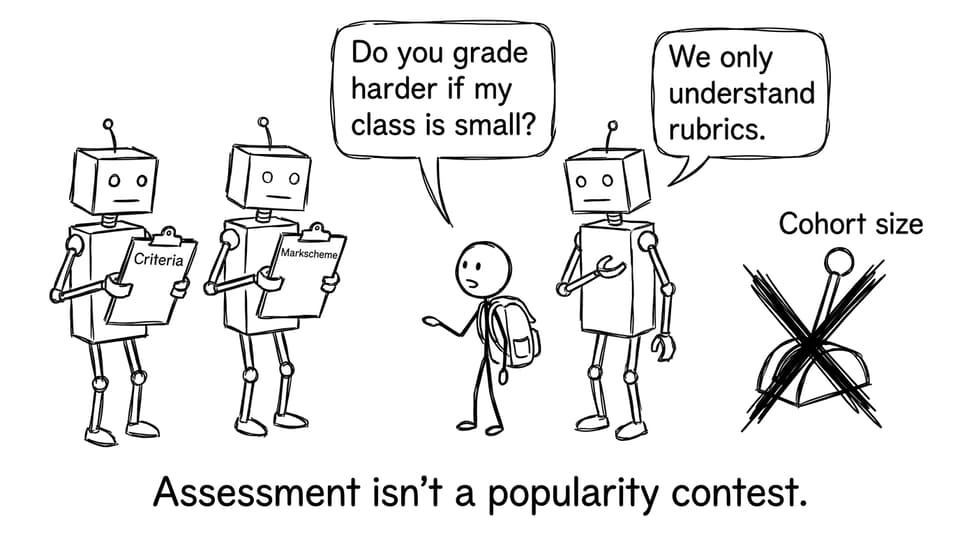
Subject Selection myth: “Smaller subjects are graded harder”
This myth survives because it sounds plausible. If fewer students take a subject, people assume it must be marked more strictly.
But IB grading is built around consistency, not popularity. Across subjects, students are assessed with:
-
published assessment criteria
-
standardized markschemes
-
moderation processes designed to keep marking aligned
Grade boundaries shift based on performance patterns, not because a subject is “niche.” If your answer meets the criteria, you earn the marks. The examiner is not sitting there thinking about how many students chose your course.
If you want your preparation to match that reality, build your revision around assessment logic: practise exam-style questions, check what earns marks, then refine. RevisionDojo’s Questionbank is designed for exactly that kind of markscheme-focused repetition.
The hidden advantage of niche Subject Selection: you’re easier to teach
There’s a strange benefit to a smaller cohort: you can’t disappear.
In big, popular classes, it’s easy to blend into the middle. In smaller subjects, teachers often know your strengths and gaps with more precision. That can mean:
-
more individual feedback
-
clearer guidance on IA/coursework direction
-
more opportunities to ask “small” questions without feeling rushed
-
higher-quality discussion because fewer voices are competing
This matters because so many IB points come from execution, not just knowledge. Knowing the content is one thing. Knowing how to present it under exam conditions is what moves a 5 to a 6, or a 6 to a 7.
To support that execution, RevisionDojo pairs content with systems: Study Notes for clarity, then IB Flashcards for daily recall that doesn’t depend on how big your class is.
Universities don’t reward popularity, they reward coherence
Students often treat Subject Selection like a game of signalling: “If it’s popular, it must look better.” But universities usually care about three things more than subject trendiness:
-
performance (your final scores)
-
relevance (does it support your intended pathway?)
-
coherence (do your choices make sense together?)
A strong score in a specialized subject can read as focus and commitment, especially if it matches what you want to study later. Even if it doesn’t match directly, it can still demonstrate valuable skills: analysis, research, evaluation, creativity, precision.
If you’re weighing options within groups, RevisionDojo’s guides help you think in terms of assessment fit rather than reputation, for example: How to Choose the Right Group 4 Subject for You and Choosing the Right IB Group 3 Subject.
Why students struggle in less popular subjects (and how to prevent it)
When niche subjects go badly, it’s usually not because the subject is obscure. It’s because preparation becomes unstructured.
Common traps include:
-
relying on class notes alone
-
misunderstanding command terms and what “evaluate” or “discuss” requires
-
revising by rereading instead of retrieving
-
doing timed practice too late
The fix is boring, but powerful: build a repeatable loop.
-
Learn the idea quickly (notes)
-
Recall it actively (flashcards)
-
Apply it in exam questions (question bank)
-
Get feedback aligned with criteria (grading)
-
Repeat until mistakes stop repeating you
RevisionDojo is built around that loop. If you want a simple workflow, start here: RevisionDojo App: The Smarter Way to Prep for IB Exams.
Make Subject Selection strategic: fit beats fame
Good Subject Selection usually feels slightly unglamorous in the moment. It’s the choice that matches your real habits.
Choose the less popular subject when:
-
you genuinely enjoy the way the subject thinks
-
you’re willing to practise consistently (even 20 minutes a day)
-
your school can teach it well enough that you can ask for feedback
-
it balances your diploma workload rather than stacking the same skill demands
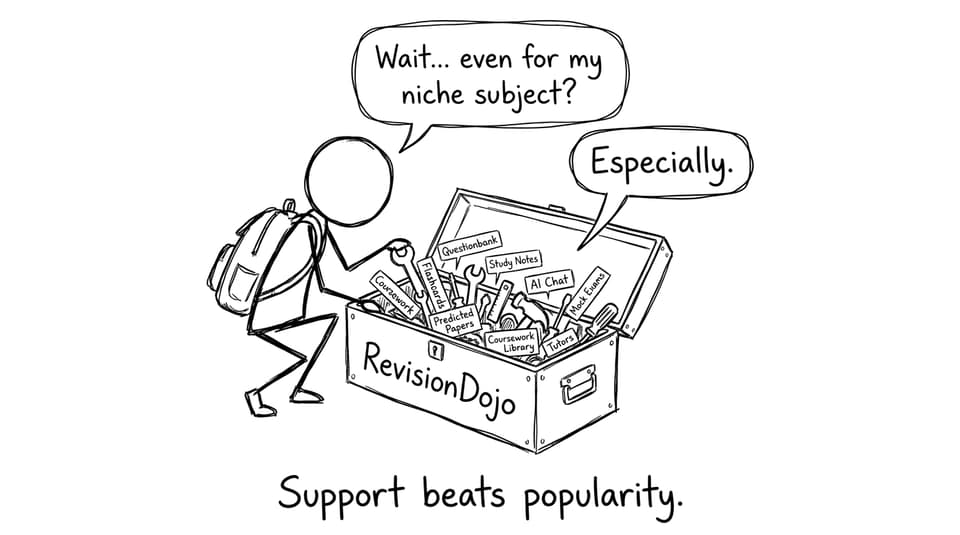
And if you’re worried about resources, replace scarcity with structure. RevisionDojo supports niche and popular pathways through tools that don’t depend on class size: Questionbank practice, Study Notes, Flashcards, AI Chat, Grading tools, Predicted Papers, Mock Exams, a Coursework Library, and Tutors.
For timed practice that feels like the real thing, you can also add RevisionDojo’s IB Predicted Papers into your plan, and learn how to use them wisely here: IB Predicted vs Specimen Papers: What They Mean.
Conclusion: Subject Selection is about fit, then follow-through
The crowd makes Subject Selection feel like a referendum on your future. But IB success is quieter than that: it’s built from understanding criteria, practising under pressure, and getting feedback that changes what you do next.
So if a less popular subject fits you, don’t treat it like a disadvantage. Treat it like a clearer lane.
If you want that lane to feel supported, build your routine with RevisionDojo: start with RevisionDojo for IB, then anchor your prep with Study Notes, the Questionbank, and daily IB Flashcards. With the right system, Subject Selection stops being a fear and becomes a plan.