
The moment you pick your IB subjects, your future can feel weirdly close. Not in a dramatic, movie-trailer way. More like staring at a menu where every option sounds fine… until you realize you have to eat it for two years and then be examined on it.
That’s why Group 3 matters. These Individuals and Societies courses don’t just “fill a slot” in your timetable, so they train how you argue, analyze evidence, write under pressure, and connect ideas to real life. For many students, Group 3 is where a career direction first becomes practical.
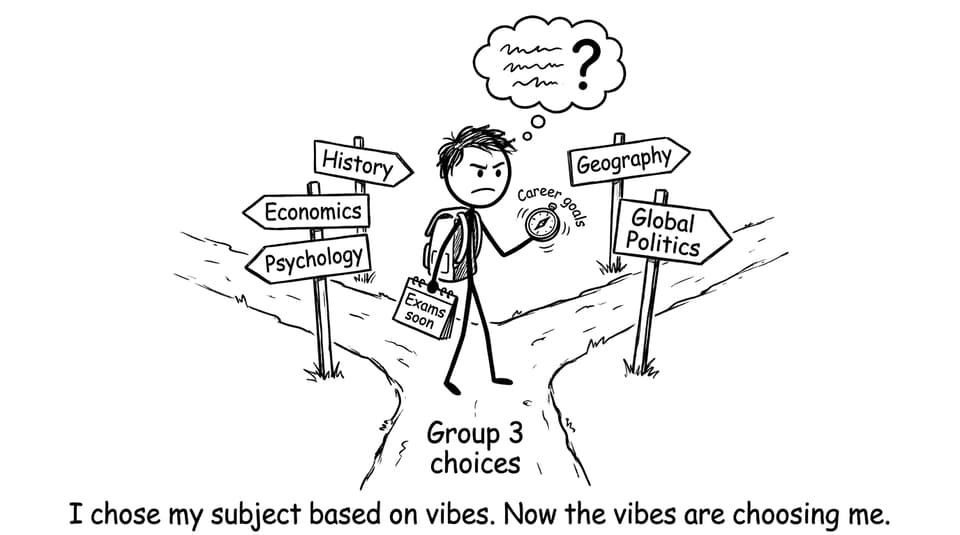
Group 3 subject choice checklist (fast but honest)
Before you commit to a Group 3 subject, run through this quick filter:
-
Career signal: Does it match the kind of thinking your degree will demand (arguments, data, research, policy)?
-
Assessment fit: Essays, data response, case studies, or experiments: what actually suits you?
-
Content weight: Some Group 3 subjects reward broad reading; others reward clean frameworks.
-
University expectations: Some degrees prefer specific Group 3 choices (or at least the skills they build).
-
Support system: Do you have a plan for notes, practice questions, and feedback?
If you already feel stretched, read this: How to balance Group 3 subjects with other IB requirements. It’s a surprisingly calming way to see your weeks on paper.
Match Group 3 subjects to your career goals
Choosing Group 3 is easiest when you stop asking “Which is easiest?” and start asking “Which will train me for what I want next?”
Law, politics, journalism, and humanities
If your future involves persuasion, interpretation, and defending a position, Group 3 should strengthen structured argument.
-
Best-fit picks: History, Global Politics, Philosophy
-
Why it works: You practice evidence selection, counterarguments, and writing that sounds certain even when the topic isn’t.
For History students, pair your subject choice with exam technique early: How to ace IB History Paper 1 and Paper 2 exams and build a consistent workflow using IB History resources.
Economics, finance, and business
This is the Group 3 lane where clear models and real-world application meet. You’ll be rewarded for precision, diagrams, and evaluation.
-
Best-fit picks: Economics, Business Management
-
Why it works: You learn to explain outcomes, trade-offs, incentives, and strategy.
If you’re leaning Economics, don’t guess your revision plan. Use: Methods for effective IB Economics revision plus Understanding IB Economics. Both help you make the subject feel “learnable,” not endless.
Psychology, counseling, and health-related pathways
If you’re curious about why people behave the way they do (and you don’t mind detail), this Group 3 direction can be deeply satisfying.
-
Best-fit picks: Psychology, Social and Cultural Anthropology
-
Why it works: You build research literacy, evaluation skills, and the ability to write balanced conclusions.
To see how Psychology is structured and how to practice it well, start here: IB Psychology resources and check how standards shift over time with IB Psychology grade boundaries.
Environment, sustainability, and geography-adjacent careers
If you like systems, places, and big-picture change, Group 3 can become your “thinking subject” that connects science, policy, and society.
-
Best-fit picks: Geography, Environmental Systems and Societies (ESS)
-
Why it works: You learn to use case studies, interpret patterns, and evaluate solutions.
If you’re unsure about ESS category rules, clarify it here: Is ESS considered a Group 3 or Group 4 subject?. For Geography skill-building, use IB Geography resources and this must-have: How to analyze IB Geography data effectively.

How to make any Group 3 subject easier to revise
Here’s the quiet truth: most students don’t struggle with Group 3 because they’re “bad at the subject.” They struggle because the subject asks for organized thinking under time pressure.
A clean system helps:
-
Build a weekly plan (small, consistent sessions beat panic revision).
-
Create one-page case study or example sheets.
-
Practice exam-style questions early using a Questionbank.
-
Use Flashcards for definitions, theorists, and key examples.
-
Get feedback on writing (especially evaluation) with AI Chat and grading tools.
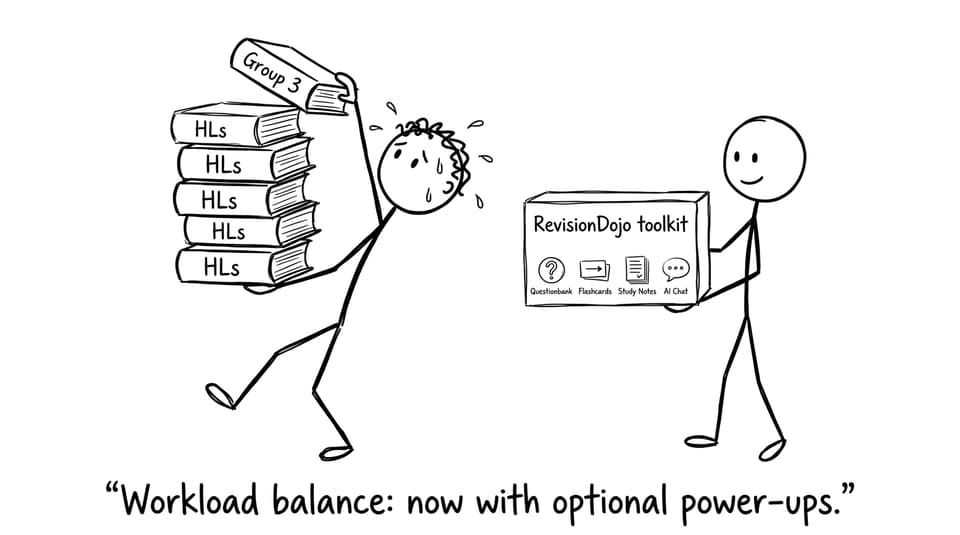
RevisionDojo was built around that system: Study Notes to reduce overload, Questionbank practice to sharpen exam instincts, Predicted Papers and Mock Exams to simulate the real thing, and a Coursework Library plus Tutors when you need human guidance.
For note structure that actually supports essay writing, use: Effective note-taking strategies for IB Group 3 subjects.
Closing: Pick a Group 3 you can grow into
A good Group 3 choice is rarely about chasing the “best” subject. It’s about choosing the kind of thinking you want to practice for two years, and the kind you can still execute when you’re tired, busy, and close to exams.
If you want a clear next step, open RevisionDojo and build your plan: use Study Notes to get organized, Flashcards to make recall automatic, and the Questionbank plus Mock Exams to turn knowledge into marks. Your Group 3 subject can absolutely support your career goals, but only if your revision system supports you first.