
Choosing your HLs can feel like standing at a fork in the road with six signposts, three deadlines, and one friend whispering, “Pick the hardest ones, it looks better.” In the IB, that moment matters because HL subjects quietly shape your weekly workload, your confidence, and (sometimes) your university options. But here’s the calmer truth: most students don’t need the “perfect” HL lineup. They need a workable one, a set of HL choices they can sustain through Internal Assessments, TOK, the EE, and exam season without burning out.
This guide breaks down how to choose HLs wisely in the IB: how to check prerequisites, balance strengths and interests, avoid common traps, and build a subject combo you can actually revise for.
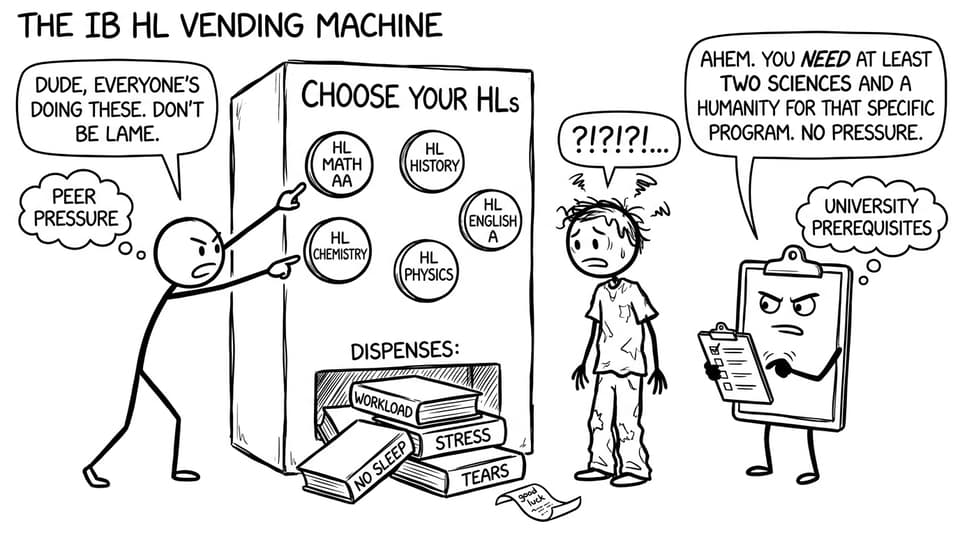
What HL means in the IB (and why it feels heavier)
In the IB Diploma Programme, Higher Level subjects go deeper and run longer than Standard Level. A common benchmark is 240 teaching hours at HL vs 150 at SL. That gap isn’t just extra content. It often means:
-
More complex exam questions and longer responses
-
More reading, more writing, and more time needed to reach a “7-level” standard
-
More pressure to keep up consistently, not just in the final months
Most students take three HLs. Some take four, but it’s usually a strategic decision, not a default.
If you want a quick refresher on how the subject groups work in the IB, see International Baccalaureate (IB) and How Many Subjects Do You Take in the IB?.
IB HL subject choice checklist (use this before you commit)
If you only do one thing, do this. A good IB HL decision usually survives these questions:
-
Prerequisites: Do your target degrees require specific HLs?
-
Strength: Are you already strong enough to handle HL pacing?
-
Enjoyment: Will you still care when the topic gets difficult?
-
Workload realism: Can you manage this alongside EE, TOK, CAS, and IAs?
-
Revision plan: Can you picture how you’ll practice for exams each week?
That last one matters more than students expect. HL choices aren’t just “what you’ll learn.” They’re “what you’ll be revising repeatedly.”
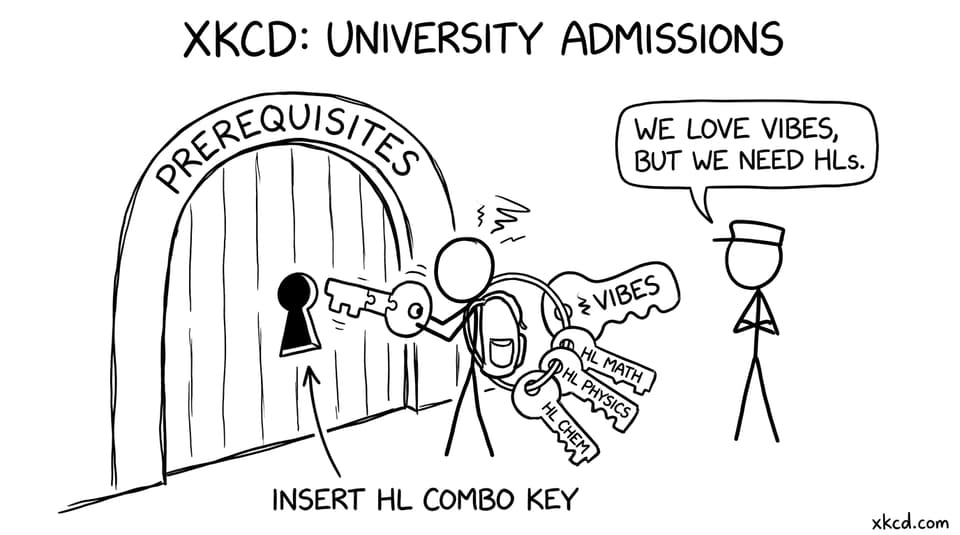
Start with university prerequisites (the non-negotiables)
Some HL choices in the IB are flexible. Others are doors. If you need the door, you need the key.
Common patterns (always verify for your specific universities):
-
Engineering often expects HL Math and sometimes HL Physics
-
Medicine commonly prefers HL Chemistry and/or HL Biology
-
Economics/Business at more selective programs may want HL Math or HL Economics
In systems like the UK, missing a required HL can weaken your application even if your predicted total score is strong.
If you’re not sure what you want yet, this helps you keep options open: Which Subjects Should I Take at IB if I Don’t Know What to Do Yet?. And if you’re having career conversations at home, How Do I Talk to My Child About IB Subject Choices and Careers? is surprisingly useful even for students.
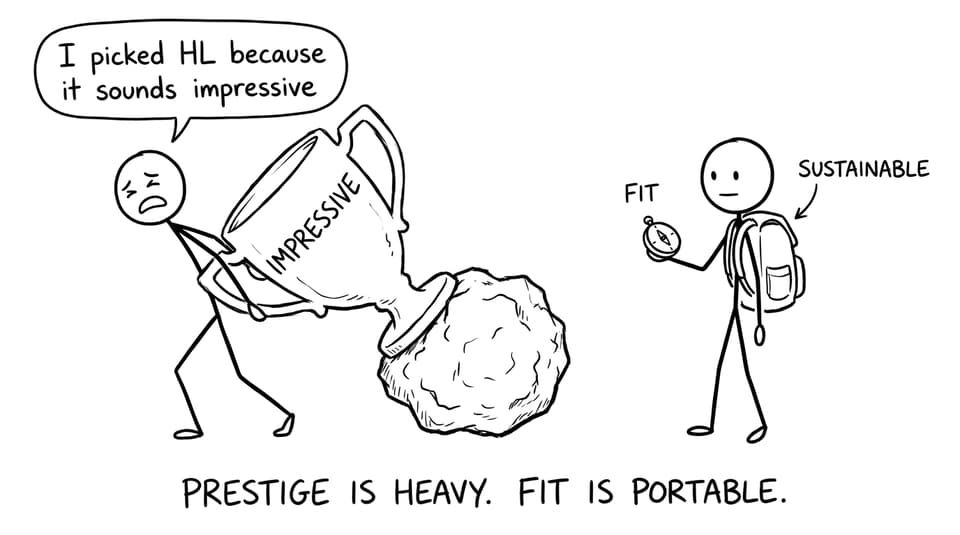
Choose for “fit,” not prestige
A lot of IB students pick HLs as a performance, trying to signal ambition. But HLs aren’t a resume line. They’re 18 months of Tuesday afternoons.
Ask yourself:
-
When I do well in this subject, is it because I genuinely understand it, or because I’m currently being carried by short-term memory?
-
When I do badly, do I recover quickly, or do I avoid it for a week?
-
Does this subject reward the kind of effort I can realistically sustain?
“Impressive” HLs can become expensive if they cost you sleep, consistency, and confidence. Universities like strong results. Your future self likes manageable weeks.
Balance your IB HLs with the rest of the Diploma
HL choices don’t live alone. In the IB, you’re also carrying:
-
Extended Essay planning and drafting
-
TOK writing and discussion
-
CAS commitments
-
IAs across multiple subjects
A healthy HL set is one you can revise for even when coursework peaks.
A practical rule that works for many students:
-
Two HLs you genuinely enjoy (they give you momentum)
-
One HL that is strategic for university or keeps options open
If you’re thinking about stacking sciences, read Can You Mix Standard and Higher Level Subjects in IB Group 4? to understand what’s possible and what becomes heavy fast.
Quick guidance by IB subject group at HL
These aren’t “easy vs hard” labels. They’re workload personalities.
Group 1 (Language A) at HL
HL Language A can be brilliant if you like close reading and argument building. It can also feel relentless if you dislike writing under time pressure. If you enjoy constructing interpretations and refining essays, HL can be a strength multiplier in the IB.
Group 3 (Individuals and Societies) at HL
Subjects like History, Economics, and Global Politics can be great HL choices if you like essays, evaluation, and linking evidence to arguments. The risk is density: content loads can creep up, and you can fall behind without steady weekly revision.
Group 4 (Sciences) at HL
HL sciences reward consistent practice and comfort with application, not just memorization. Labs and IAs can add “invisible time.” If you’re doing a science EE too, be honest about your capacity.
Group 5 (Math) at HL
HL math is often the most prerequisite-driven choice in the IB. If you need it for STEM, it’s worth the grind. If you don’t need it, don’t choose it as a flex.
If you want a reality check on perceived difficulty, see IB Hardest Subjects Ranked (2026). Use it for awareness, not fear.
Should you take 3 HLs or 4 HLs in the IB?
Three HLs is the default because it’s sustainable. Four HLs can work, but only if the extra HL has a clear purpose.
Consider four HLs only if:
-
Your school supports it and your timetable is realistic
-
You’re consistently performing strongly across all four subjects
-
You’re not using the fourth HL to compensate for uncertainty
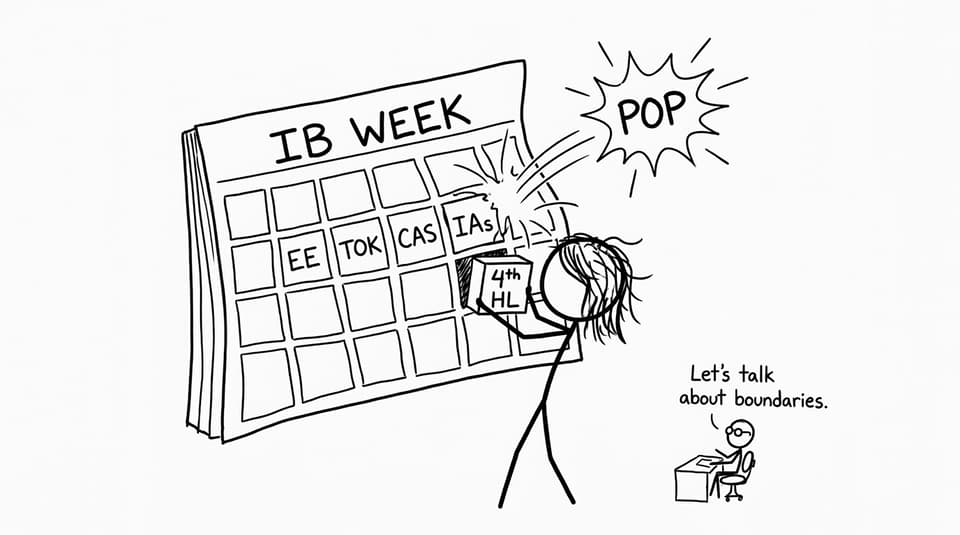
A fourth HL often steals time from the very things that raise grades: repeated practice, feedback, and rest.
Sample IB HL combinations (based on common degree directions)
Always check requirements, but these combos show the logic universities often expect:
-
Medicine direction: HL Chemistry + HL Biology + HL Math (or another supporting HL depending on region)
-
Engineering direction: HL Math + HL Physics + HL Chemistry
-
Law direction: HL English A + HL History + HL Global Politics (or another essay-heavy Group 3)
-
Business/Economics direction: HL Economics + HL Math + HL Language (or another strong writing HL)
-
Psychology direction: HL Psychology + HL Biology + HL English A
-
Humanities direction: HL History + HL English A + HL Language B or another Group 3
If you want a broader decision guide for the IB, this is helpful alongside this article: What IB Subjects Should You Take?.
How RevisionDojo helps you choose HLs (and revise them well)
HL decisions become easier when you can “test drive” what revision will feel like.
RevisionDojo is built for exactly that kind of practical clarity:
-
Use the Study Notes to see how deep HL content goes, without hunting across resources.
-
Use Flashcards to keep HL definitions, case studies, and methods alive in small daily sessions.
-
Use the Questionbank to practice by topic and level, so you learn what HL exam questions actually demand. Start here: Questionbank.
-
Use AI Chat when you’re stuck and need a fast explanation that gets you back to practice.
-
Use Grading tools to tighten essays and structured responses against markscheme expectations.
-
Use Predicted Papers and Mock Exams to rehearse timing and stamina when exams get close.
-
Use the Coursework Library to reduce the background stress that often makes HLs feel harder.
-
Use Tutors when you want a human diagnosis and a plan.
If you want a practical method for building exam readiness, read IB Question Bank: How to Use It Effectively and RevisionDojo App: The Smarter Way to Prep for IB Exams.
Closing: choose IB HLs you can finish strong
The best HL choices in the IB aren’t the ones that sound impressive in a hallway conversation. They’re the ones you can revise steadily, recover from setbacks in, and walk into exams with a calm kind of familiarity.
If you want to make your HL decision with less guesswork, use RevisionDojo to preview the reality: explore Study Notes, stress-test topics in the Questionbank, lock in recall with Flashcards, and use AI Chat or Tutors when you need fast clarity. Your future score isn’t built by choosing perfectly once; it’s built by practicing well, week after week, in the IB subjects you chose wisely.