



The moment you realize art class has deadlines
There’s a specific kind of silence that happens when you open your sketchbook and remember this isn’t just “making art.” It’s IB Visual Arts. The subject that asks you to create like an artist, think like a critic, and write like a curator, oftenoften in the same week.
For many IB students preparing for exams and submissions, the hardest part isn’t talent. It’s translation: turning messy experiments into clear evidence, and turning personal taste into analysis an examiner can follow.
This guide breaks down what IB Visual Arts is, what you’re assessed on, and how to prepare without losing the joy that probably drew you to the course in the first place.
IB Visual Arts at a glance (save this checklist)
Here’s the simplest overview of IB Visual Arts:
-
It’s a Group 6 IB DP subject focused on practical art-making and critical investigation.
-
You take it at:
-
SL: 150 hours
-
HL: 240 hours
-
-
You’re assessed through three core components:
-
Comparative Study (external)
-
Process Portfolio (internal, moderated)
-
Exhibition (internal, moderated)
-
If you want more topic-specific guidance after reading, start with All IB Visual Arts posts and build your plan from there.
What is IB Visual Arts, really?
At its best, IB Visual Arts is a long conversation between you and your own work.
You make something. Then you ask why you made it that way. Then you look at artists who solved similar problems differently. Then you return to your piece and change it, not because someone told you to, but because you now see more options.
This is why the course rewards growth and decision-making, not just polished final outcomes. Examiners want to see that your work evolved through experimentation, research, and reflection. RevisionDojo supports this style of learning with tools that make your progress easier to track: Study Notes for key concepts, Flashcards for terminology, and AI Chat to pressure-test your explanations when your brain is tired.
The three assessed components of IB Visual Arts
Comparative Study (the “art detective” part)
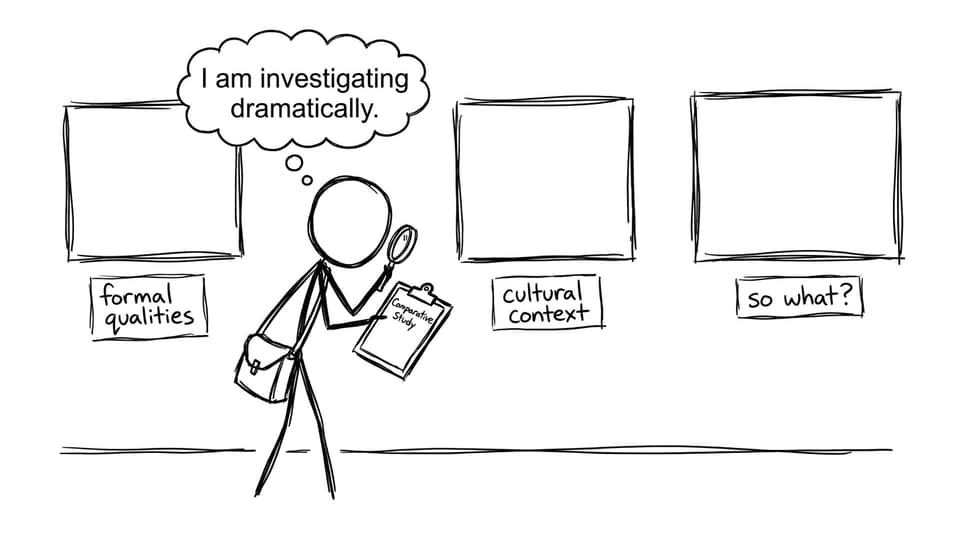
The Comparative Study asks you to analyze and compare three or more artworks from different artists, and ideally across different cultures, contexts, or time periods. You’re not just describing what you see. You’re showing that you can discuss:
-
Formal qualities (composition, materials, technique)
-
Function and purpose (what the work does, and for whom)
-
Cultural context (the forces and settings shaping meaning)
-
Links to your own work (how the research influences your practice)
If cultural context feels vague, use How to Integrate Cultural Context into Your IB Visual Arts Comparative Study as a structure.
Process Portfolio (the evidence of your thinking)
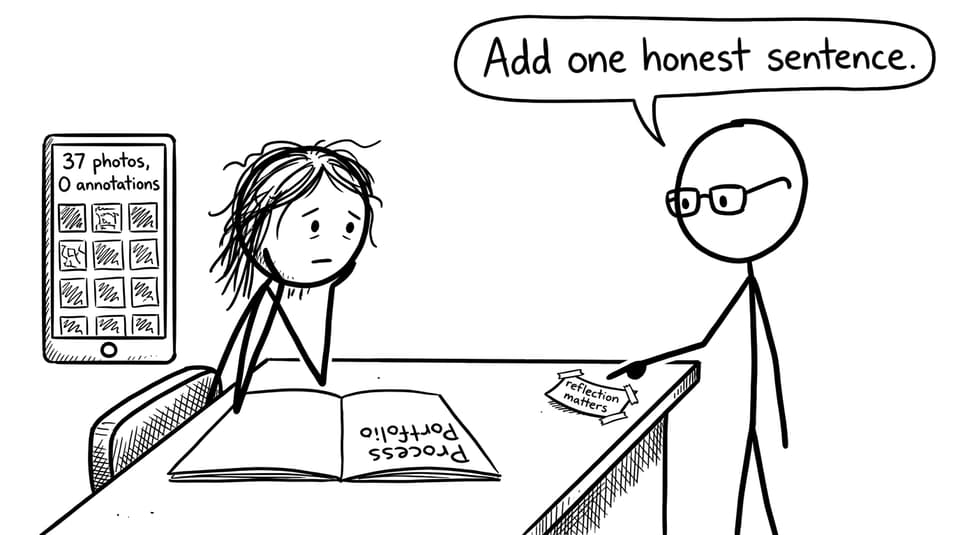
The Process Portfolio is where IB Visual Arts becomes legible. It’s a curated record of how you develop ideas: experiments, tests, revisions, and reflections.
Strong portfolios usually show:
-
A range of media and techniques
-
Clear experimentation (including attempts that failed)
-
Relevant artist research and influence
-
Short, specific reflection on what changed and why
To avoid the common “pretty pages, unclear thinking” problem, follow How to Structure Your IB Visual Arts Process Portfolio and cross-check with How to Show Experimentation in Your IB Visual Arts Process Portfolio.
Exhibition (the final curated argument)
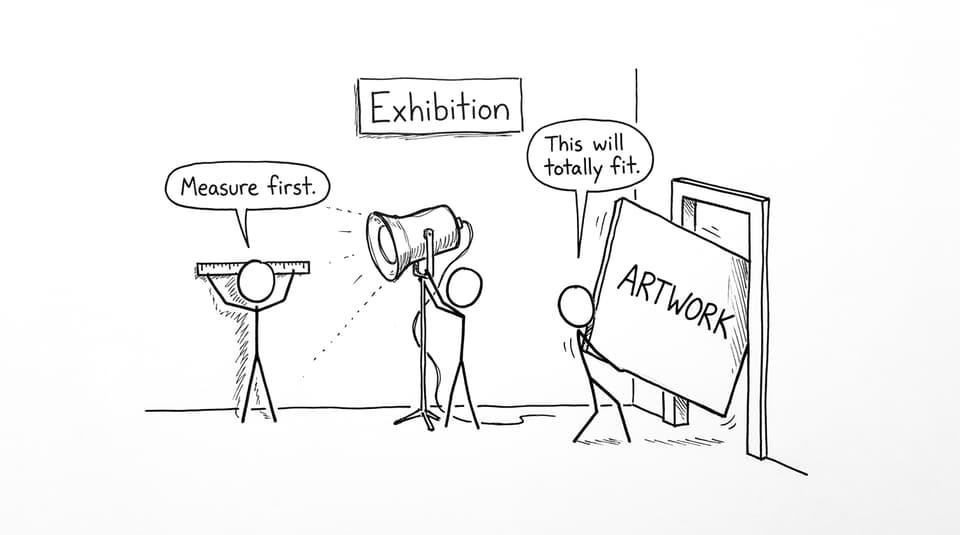
The Exhibition is your final presentation: a coherent selection of resolved artworks, supported by a curatorial rationale.
The big misconception is that it’s a highlight reel of everything you’ve made. In IB Visual Arts, the exhibition is closer to an argument: these works belong together, and your rationale explains the thread.
For practical guidance, see:
How to score higher in IB Visual Arts (without copying a style)
High marks in IB Visual Arts tend to come from clarity:
-
You can explain what you were trying to do
-
You can show how you tested options
-
You can justify why you chose the final solution
That’s why understanding criteria matters. Keep these open while you refine:
If you’re choosing direction and feeling overwhelmed, Best Marked Art Styles in IB Visual Arts can help you see what examiners reward (hint: intentional choices, not trends).
RevisionDojo also helps you practice exam-style thinking across subjects: use the Questionbank to sharpen analysis habits, Grading tools to self-check explanations, and Mock Exams and Predicted Papers to keep your schedule realistic. If you need human feedback, RevisionDojo Tutors can help you turn “I like it” into “I can justify it.”
The quiet advantage of taking IB Visual Arts
IB Visual Arts teaches you something rare: how to make choices, explain them, and refine them under pressure. That’s not just “art.” That’s a transferable skill you’ll use in university, interviews, and any work that requires taste plus reasoning.
If you’re preparing now, don’t aim for perfection. Aim for a clear story: what you tried, what you learned, and how that learning shaped the final work. Build that story with RevisionDojo’s Study Notes, Flashcards, AI Chat, and Grading tools, andand when you’re ready to push for the top band, use Mock Exams, Predicted Papers, and Tutors to sharpen your strategy.
Because the goal of IB Visual Arts isn’t to prove you were born talented. It’s to prove you became intentional.