
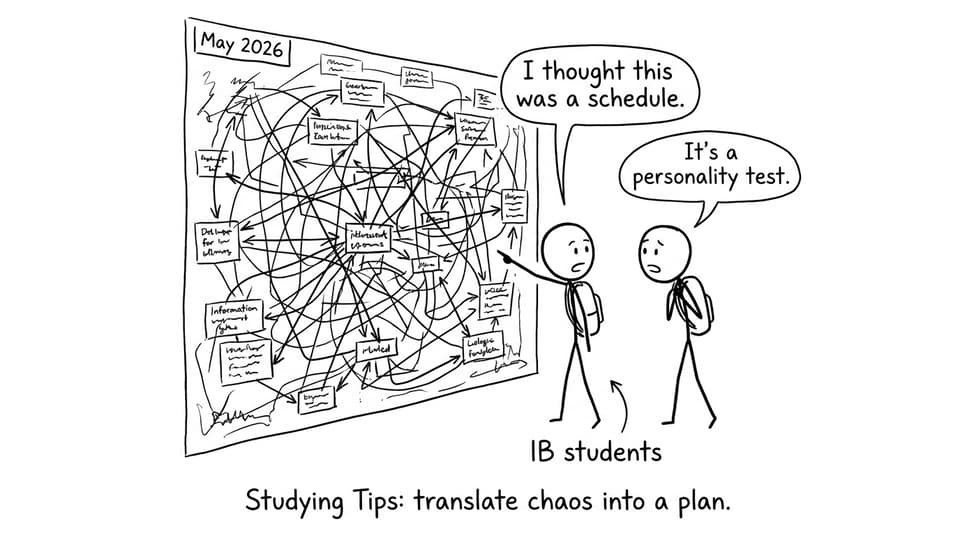
The first time you see the IB May 2026 exam schedule, it rarely feels like “a timetable.” It feels like a weather forecast for your nervous system: a few calm days, a few storms, and one week where everything seems to happen at once.
That reaction is normal. The schedule is designed for global coordination, not personal convenience. Which is exactly why Studying Tips matter more here than motivation. If you understand the structure early, you stop improvising. And when you stop improvising, you stop burning energy on decisions you could have made once.
IB May 2026 exam schedule overview (what you actually need)
The IB May 2026 exam schedule runs across four weeks, with exams held Monday to Friday in morning and afternoon sessions.
A few key realities shape how it feels:
-
The timetable aims to reduce global clashes, not to space out your hardest subjects.
-
Some students will face back-to-back exam days.
-
Some days can include two papers.
-
There are no exams on 1 May.
If you want one set of Studying Tips to anchor everything: treat the schedule like a map, then build a routine that makes the map survivable.
To turn dates into a practical plan quickly, many students start with the RevisionDojo Study Planner and work backwards from each paper.
Week-by-week breakdown of the IB May 2026 exam timetable
You do not need to memorize every paper date today. You need to understand the rhythm of the month so your revision intensity matches the real demand.
Week 1: languages and early momentum
Week 1 often features a lot of language papers and the first wave of subject exams (including early science entries and Business Management Paper 1 for many students).
Why Week 1 is tricky:
-
Language exams can look “familiar,” so students under-prepare.
-
Adrenaline is high, so you might overwork and carry fatigue forward.
Studying Tips for Week 1: keep revision light but sharp. Use short, daily recall and small practice sets instead of long marathon sessions.
A calm way to do that is: Notes for clarity, then questions for proof. RevisionDojo makes that loop simple with RevisionDojo App: The Smarter Way to Prep for IB Exams.
Week 2: humanities and writing fatigue
Week 2 often brings heavier writing loads for many students (History papers, Computer Science papers, ESS, and longer HL components depending on your subjects).
This is where “I know the content” can collapse into “I cannot produce it fast enough.”
Studying Tips for Week 2: shift from learning to execution.
-
Practice under time.
-
Train outlines and structures.
-
Focus on command terms and mark allocation.
If you want a strong practice-first workflow, use the IB Question Bank | How to Use It Effectively guide, then drill weaknesses inside the Questionbank feature page.
Week 3: science + math pressure week
Week 3 is commonly the pressure point because it often includes major Science papers and Mathematics AA/AI Paper 1 for many cohorts, plus other high-stakes subjects like Economics.
This is the week where students rarely lose marks because they “didn’t study.” They lose marks because they’re tired, rushed, and trying to carry too much working memory at once.
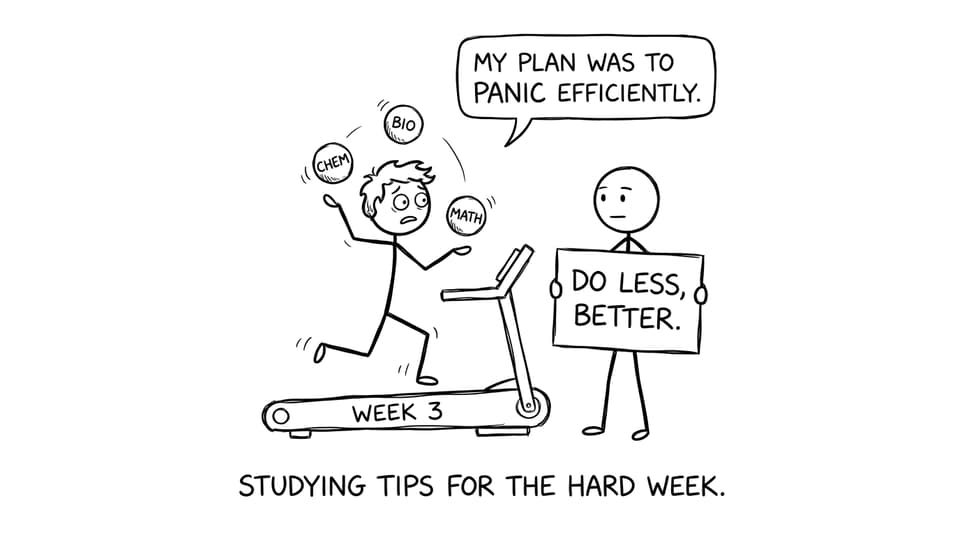
Studying Tips for Week 3: do less, better.
-
Reduce new learning.
-
Increase timed practice.
-
Protect sleep like it is part of the syllabus.
A repeatable weekly routine that works here is outlined in IB Exam Week-by-Week Survival Guide. And if you need the mechanics of exam training, IB Mock Exam Tips: Expert Strategies for Better Performance is a strong reference.
Week 4: finishing papers with a tired brain
By Week 4, the schedule can look “lighter” on paper, but mentally it’s the heaviest. This is where students try to fix everything at once, right when cognitive stamina is lowest.
Studying Tips for Week 4: switch to targeted review.
-
Reattempt only your most frequent mistake patterns.
-
Use shorter sessions.
-
Keep routines boring and consistent.
If you want a practical template for exam-season stamina, borrow the daily structure from How to Study for IB Exams: Step-by-Step Guide.
Understanding IB exam zones and start times (avoid the dumb stress)
IB exams operate using exam zones (A, B, and C). Your zone is assigned by your school and affects the local start times for the morning and afternoon sessions.
Three things to remember:
-
Start times vary by zone.
-
Start times do not shift for daylight savings.
-
You cannot choose your zone.
Studying Tips that save real stress: confirm your zone, your local start time, and your reporting time early. Then write it down somewhere you will actually see the night before.
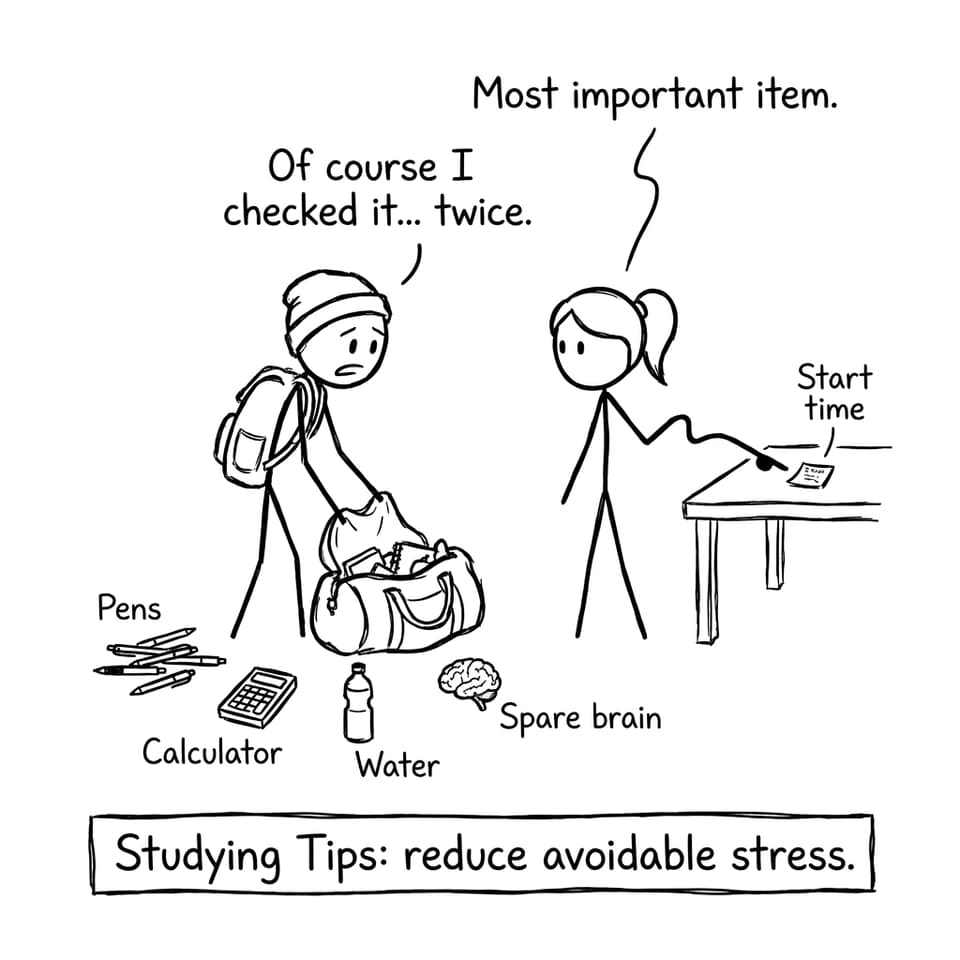
For a clean night-before routine that reduces preventable mistakes, read What to Do the Night Before IB Exams.
How to turn the May 2026 IB timetable into a real revision plan
Most students do not fail because they lack effort. They fail because the effort is unallocated. The timetable stays on a screen, and revision becomes a daily decision. Daily decisions are expensive.
Use this simple planning checklist:
-
List your papers in date order (include SL/HL and paper numbers).
-
Mark “pressure blocks” (back-to-back days, two-in-one days, or long writing streaks).
-
For each paper, pick the top 3 topics that historically cost you marks.
-
Assign each topic to a specific week before the exam.
-
Schedule one timed session weekly per high-priority subject.
These Studying Tips become easier when your resources are connected. RevisionDojo is built as a single IB system: Study Notes to learn fast, Flashcards to keep recall alive, Questionbank to build exam accuracy, AI Chat (Jojo) to unblock confusion quickly, Grading tools to get rubric-aligned feedback, plus Predicted Papers and Mock Exams to rehearse pressure.
If you want an approach that feels sustainable rather than heroic, borrow the structure in Plan Final IB Revision With the Official Timetable and combine it with Studying Tips: Build a Personal Study Schedule with Jojo.
Common mistakes students make with the IB May 2026 exam schedule
Students don’t usually make “bad” mistakes. They make reasonable ones that compound.
-
Revising in the order they enjoy, not the order of exams.
-
Treating all weeks as equal intensity.
-
Doing lots of notes and too little timed practice.
-
Ignoring recovery, then crashing in the pressure week.
If you feel stuck in the “I studied all day but nothing sticks” cycle, the fix is usually tighter loops: recall, practice, review, repeat. This is explained well in IB: I Study All Day but Remember Nothing.
FAQ
When do the IB May 2026 exams start and end?
The IB May 2026 session runs across four weeks, beginning in late April and finishing in May. Your personal start and end dates depend on the subjects you take and your school’s exam zone. Some students finish earlier because their subjects cluster in earlier weeks, while others carry exams into the final days. This is why scanning only the first week can give a false sense of security. A good planning move is to list your own papers in chronological order and mark the heavy clusters. Those clusters are where your Studying Tips should become most structured: shorter sessions, more timed practice, and protected sleep.
Can IB exams be moved if I have back-to-back papers?
In general, no: the IB schedule is fixed and does not move simply because a student has consecutive exams or a dense week. The timetable is built to coordinate a global cohort and prioritize fairness across time zones. That can feel harsh, but it also means you can plan with certainty. Your best leverage is not negotiation, it’s preparation and pacing. Use the schedule to identify your pressure blocks early, then reduce decision-making during those periods. Effective Studying Tips here look boring: a repeatable routine, a clear stop time, and practice that matches the paper style.
Which week is usually the hardest in the IB May 2026 exam timetable?
For many students, Week 3 tends to feel the most demanding because it often includes major science and mathematics papers, plus other high-stakes subjects depending on your combination. The difficulty is not only content, it’s cognitive load: long papers, close spacing, and accumulated fatigue. Students often underestimate how much performance depends on sleep and routine by this point. The strongest Studying Tips for that week are to finish heavy learning earlier, then shift into timed rehearsal and mistake-pattern review. If you want a practical structure, run one timed session weekly in the lead-up, then shorten and sharpen revision during the week itself. In RevisionDojo, you can combine Mock Exams, Predicted Papers, and Questionbank practice in one loop so your effort stays targeted.
Finish the schedule with a plan, not a panic
The IB May 2026 exam schedule is not designed to feel gentle. It’s designed to run smoothly for the entire world at once. Your job is not to “survive it with motivation,” but to build a system that keeps working when you’re tired.
Take the timetable, mark your pressure blocks, and use Studying Tips that reduce daily decisions: Flashcards for recall, Questionbank for accuracy, AI Chat for quick clarity, and timed Mock Exams and Predicted Papers for realism. When those tools live in one place, you spend less time searching and more time improving.
Start building your plan now with the RevisionDojo Study Planner, then keep your routine steady until exam day feels familiar.