



Getting a 7 in IB Visual Arts can feel like chasing something that keeps moving. One week your work feels bold and original. The next, you realise you also need screenshots, annotations, citations, and a curatorial rationale that explains your choices like you planned them all along.
That tension is the heart of IB Visual Arts. It rewards creativity, yes, but it also rewards evidence. Examiners can’t grade your intention. They grade what you show, what you explain, and how clearly you connect your process to your outcomes.
The honest answer: is IB Visual Arts hard to get a 7 in?
A 7 in IB Visual Arts is hard, but not because you need to be “the best artist in the class.” It’s hard because the subject asks you to be three people at once: the maker, the researcher, and the editor of your own story.
Most students who miss a 7 don’t lack talent. They lose marks in predictable places: thin reflection, weak comparisons, messy presentation, or a body of work that doesn’t feel intentional. The good news is that these are fixable with a clear plan and consistent documentation.
If you want a broader foundation first, start with What is IB Visual Arts? and keep the course structure in your head as you build.
Quick checklist for a 7 in IB Visual Arts
Use this weekly. It keeps IB Visual Arts from turning into a last-minute scramble.
-
My theme can be said in one sentence without sounding vague.
-
I have consistent documentation of experiments (including failures).
-
My artist research changes what I do next (not just what I write).
-
My Comparative Study compares form and context, not biographies.
-
My Exhibition selection feels curated, not collected.
-
My writing is specific: choices, reasons, impact.
For a full mark-focused breakdown, bookmark IB Visual Arts Assessment Criteria Explained Simply.
What the 7 is made of: the three assessed components
In IB Visual Arts, your grade comes from three components:
Comparative Study (20%)
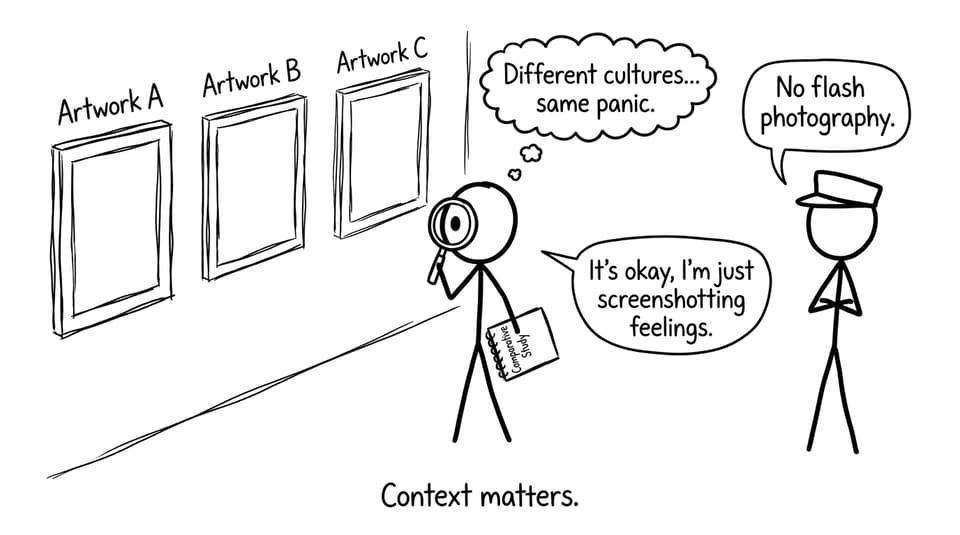
This is where you prove you can look closely and think clearly. You compare at least three artworks, across different contexts, and make meaningful connections to your own work.
High-scoring Comparative Studies tend to do two things well: they compare using consistent categories (formal qualities, function, meaning, context), and they end with reflection that genuinely influences studio decisions.
If your screens are drifting into “museum brochure voice,” use Comparative Study Structure Explained Step by Step for IB Visual Arts and How to Prepare for the IB Visual Arts Comparative Study to tighten them.
Process Portfolio (40%)
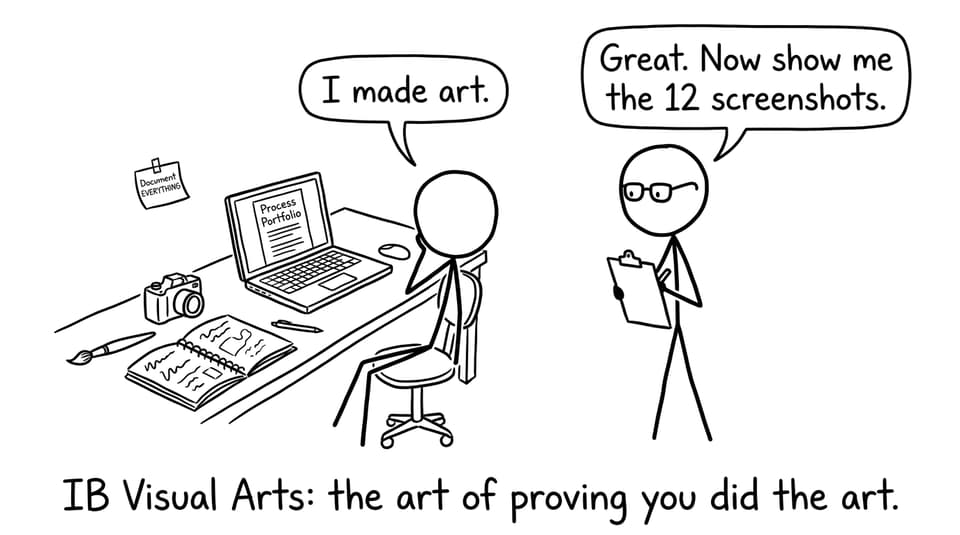
This is often where 7s are won or lost in IB Visual Arts. Not because it requires perfection, but because it requires proof: experimentation, decision-making, reflection, and development over time.
A strong portfolio is basically a trail of thinking. It shows what you tried, what failed, what you learned, and what you refined. If you only upload your best-looking outcomes, you may accidentally hide the very thing examiners want most: growth.
Use How to Show Experimentation in Your IB Visual Arts Process Portfolio and How to Structure Your IB Visual Arts Process Portfolio to make your screens read like a coherent journey.
Exhibition (40%)
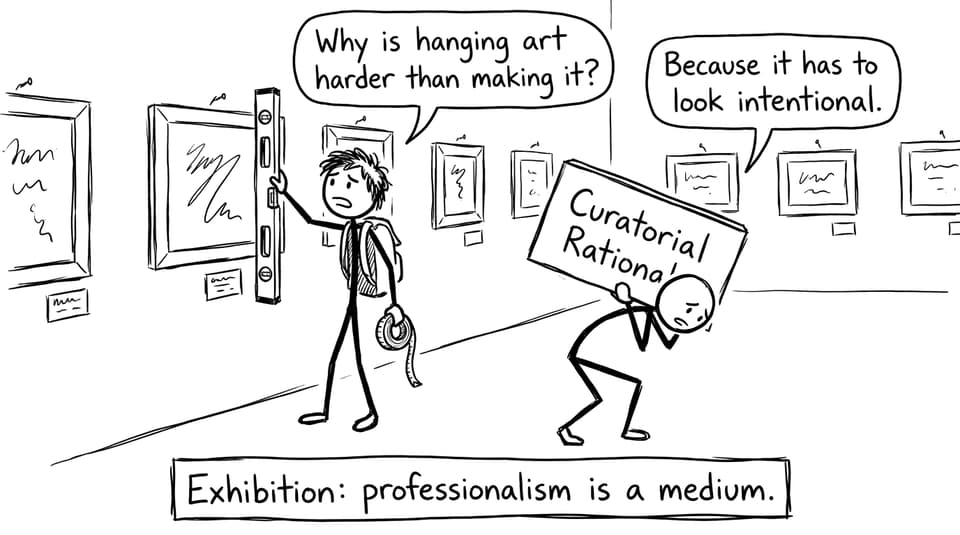
The Exhibition is your final statement: selected works, presented professionally, supported by a clear curatorial rationale.
What makes Exhibition marking tricky in IB Visual Arts is that it’s not only about strong individual pieces. It’s about the body of work. Coherence matters. Presentation matters. The rationale matters. A technically impressive piece can still underperform if it feels disconnected from everything else.
To avoid common pitfalls, read Common Exhibition Mistakes That Cost IB Visual Arts Students Marks and plan with How to Smartly Plan and Execute Your Visual Arts Exhibition.
Why students find IB Visual Arts difficult (and how 7-level students respond)
The difficulty of IB Visual Arts isn’t one giant obstacle. It’s three smaller ones that compound.
You can’t “cram” the process
A 7 requires consistent evidence. The fix is boring but powerful: document as you go. Photograph stages, save drafts, annotate experiments while you still remember what you were thinking.
You must balance freedom with structure
Art invites exploration. IB assessment invites clarity. 7-level students keep their exploration, but they present it in an organised way that an examiner can follow quickly.
Research must change your work
In IB Visual Arts, artist analysis is not a book report. It should lead to a visible decision: a new material test, a compositional shift, a conceptual refinement. For help, use How to Analyze Artists in IB Visual Arts and explore inspiration in Best Artists to Research for IB Visual Arts.
How RevisionDojo helps you aim for a 7 in IB Visual Arts
A top score becomes more realistic when your workload becomes more organised.
RevisionDojo supports IB Visual Arts students with tools that match how the course is assessed: Study Notes for criteria clarity, Flashcards for art vocabulary and analysis frameworks, AI Chat to refine reflections and comparisons, and Grading tools that connect your work to rubric language (see the IB Visual Arts Process Portfolio Grader).
If you learn best by seeing what excellent work looks like, the IB Visual Arts Exemplars and Coursework Library help you calibrate your own standards. And when motivation dips, the Questionbank, Mock Exams, Predicted Papers, and Tutors make your study routine feel guided instead of improvised.
Conclusion: the 7 is hard, but it’s not mysterious
A 7 in IB Visual Arts is difficult for one simple reason: it asks you to make strong work and explain it like a thoughtful critic. But that also means the path is clear. Build a coherent theme. Experiment widely. Document relentlessly. Write with specificity. Curate like you mean it.
When you’re ready to turn that plan into something sustainable, use RevisionDojo to support your IB Visual Arts workflow with study notes, flashcards, AI Chat, grading tools, exemplars, and tutors. Your best work deserves to be understood and marked accordingly.