



The career question nobody can answer at 16
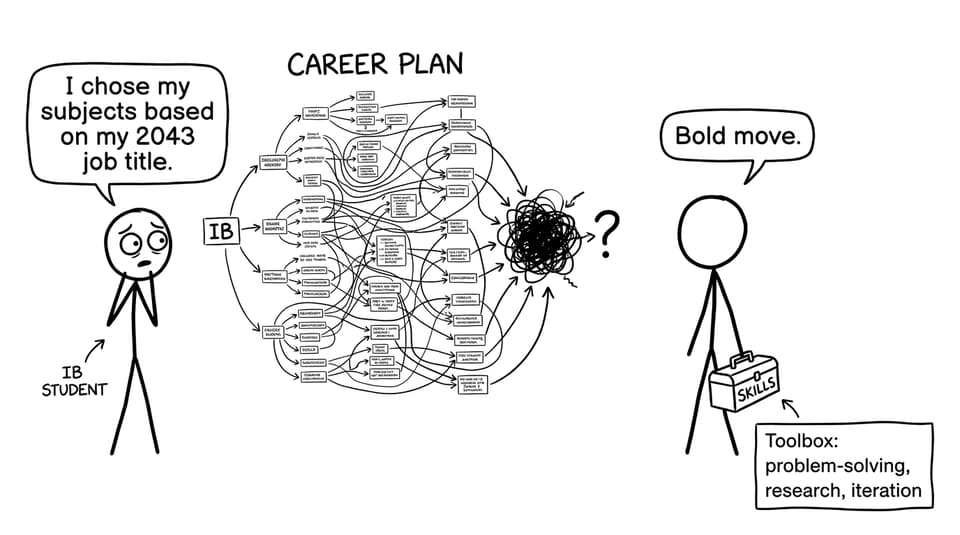
You can feel it in the hallways around subject-selection season: students speaking about their future like it’s a fixed destination. “Medicine.” “Architecture.” “Law.” And if you don’t have a clean sentence like that, you can start to wonder whether your choices are somehow less valid.
Here’s the quiet truth: being unsure is normal. And that’s exactly why IB Design Technology can be a surprisingly strategic subject when you don’t yet know what you want to become.
IB Design Technology isn’t a promise of a specific job title. It’s a training ground for thinking clearly when the path isn’t obvious.
A quick checklist to decide if IB Design Technology fits you
Before you choose IB Design Technology, run this quick check. You’ll usually enjoy DT if you:
-
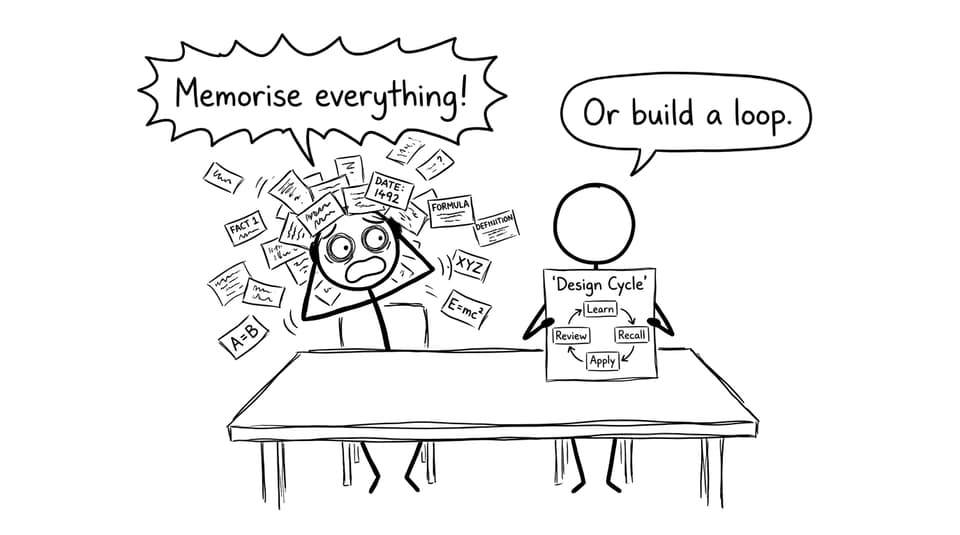
Prefer solving real problems over memorising long lists
-
Like explaining why you made decisions (not just what you did)
-
Can keep a project moving in small weekly steps
-
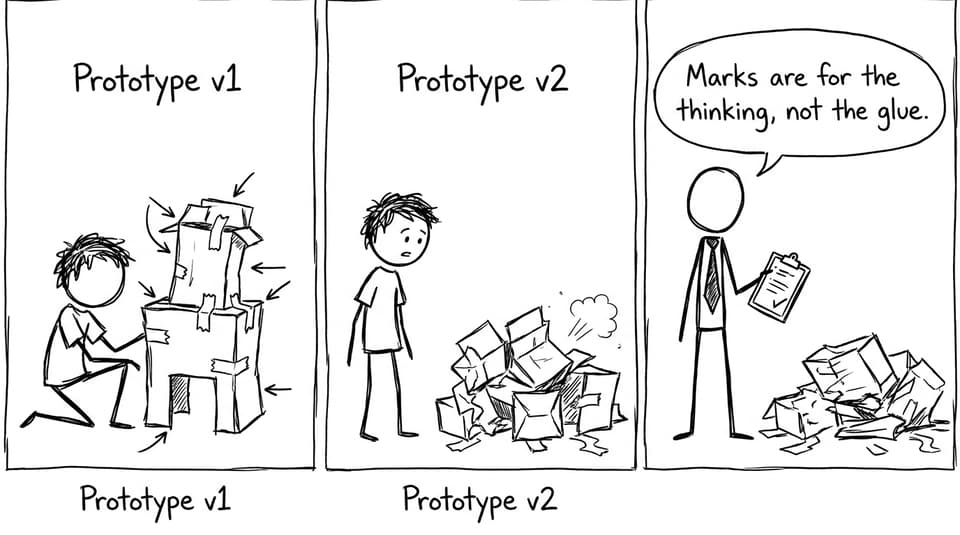
Don’t mind prototypes failing (you’ll learn from them)
-
Want a subject that builds flexible, transferable skills
If you want to see what the course covers in one place, start with the IB Design Technology hub, then explore the topic-by-topic materials.
Why career uncertainty is normal in the IB
Most IB students are asked to make “future-proof” decisions while still discovering what they’re good at. Interests change. Confidence changes. Even your definition of success changes.
The IB is intense partly because it compresses a lot of growth into two years. You’re not just learning content; you’re learning how you learn.
That’s why choosing a subject like IB Design Technology can make sense when you’re undecided. DT is built around the process of clarifying messy situations into testable goals. It rewards students who can say: Here’s the problem, here’s my evidence, here’s my decision, here’s what I changed.
How IB Design Technology keeps options open
When students ask whether IB Design Technology “leads to” something, they usually mean: will it restrict me?
DT rarely restricts you on its own. What it does is build a portfolio of skills that travel well across degrees and careers:
-
Problem-solving under constraints
-
Research that turns into justified decisions
-
Iteration (testing, improving, reflecting)
-
Communication through diagrams, criteria, and evaluation
-
Long-term project management through the design cycle
If you want that philosophy explained in a more exam-focused way, The Complete Guide to IB Design Technology is a strong starting point.
IB Design Technology works best with the right combo
IB Design Technology is most powerful when it complements your other subjects.
A few examples:
-
DT + Maths keeps engineering, tech, and analytics doors open.
-
DT + sciences supports applied science pathways and product-focused thinking.
-
DT + humanities can strengthen evaluation, ethics, and user-centred reasoning.
The point isn’t that DT replaces required subjects. The point is that IB Design Technology can sit beside them and add a “real-world translation layer” that universities often appreciate.
What IB Design Technology does not do (be realistic)
Let’s keep it honest. IB Design Technology:
-
Does not automatically qualify you for engineering
-
Does not substitute for required prerequisites like certain maths or physics courses
-
Does not lock you into a design career
DT is a supporting subject, not a gatekeeper. It can widen your skill set, but you still need to protect prerequisites if you already suspect you’ll apply to a course that demands them.
Why DT can beat the “safe memorisation” strategy
Some students choose subjects they think are “safe” because the revision feels predictable: learn notes, repeat definitions, rehearse markschemes.
But if you’re uncertain about your career, “safe” can become fragile. Motivation drops when the subject doesn’t feel connected to anything you care about. And when motivation drops, consistency breaks.
IB Design Technology can keep you engaged because it gives you ownership: your user, your problem, your testing, your evidence. And engaged students tend to revise more steadily.
If you want a practical routine for exams, use Best Study Strategies for IB Design Technology as your baseline.
How DT helps you discover what you actually like
A funny thing happens during the Design Project: you stop guessing who you are and start collecting evidence.
You learn whether you enjoy:
-
Applied problem-solving vs abstract theory
-
Research and analysis vs hands-on prototyping
-
Writing evaluation and trade-offs vs chasing a perfect final product
That’s why IB Design Technology often clarifies interests rather than requiring you to have them fully formed.
One small but high-impact skill is writing a focused problem statement. If that’s where you get stuck, use IB Design Technology Problem Statement: Write It Strong.
How to revise IB Design Technology effectively (without burning out)
DT revision works best as a loop:
-
Use Study Notes to get clarity fast.
-
Use Flashcards to lock in definitions and command-term language.
-
Use a Questionbank to practise exam-style responses under time.
-
Use AI Chat when you’re stuck and need a second explanation.
-
Use Grading tools to see how marks are awarded.
-
Use Predicted Papers and Mock Exams to build timing and stamina.
On RevisionDojo, that whole system connects inside the IB Design Technology resources page and the newer syllabus track at IB Design Technology (First Exam 2027).
To practise in a targeted way, you can drill a topic like Classic Design or go straight into exam-style sets such as the Classic Design Questionbank.
And when you want full-paper rehearsal, RevisionDojo’s IB Predicted Papers help you practise pacing in a realistic format.
Final thoughts: choose skills, not certainty
If you’re not sure about your career, you don’t need a subject that pretends to predict your life. You need a subject that trains you to think well while you figure it out.
IB Design Technology does that. It keeps options open, builds transferable skills, and gives you a clear way to show growth: research to decision, testing to iteration, reflection to improvement.
When you’re ready to revise with less guesswork and more momentum, use RevisionDojo’s Questionbank, Study Notes, Flashcards, AI Chat, Grading tools, Predicted Papers, Mock Exams, Coursework Library, and Tutors to turn IB Design Technology into an advantage you can feel in both coursework and exams.