


In IB Visual Arts, there’s a moment almost everyone hits: you’re staring at your work thinking, This looks good… but will it score?
Not because you’re chasing approval. Because you’re chasing clarity. The course rewards personal voice, yes, but it also rewards evidence: technical control, conceptual intention, and a process that shows you didn’t just arrive at an idea by accident.
So when students ask about the “best marked art styles,” what they usually mean is: Which approaches make it easiest to prove skill and thinking under the IB Visual Arts criteria? This guide breaks down styles that often do that well, plus how to use them in a way that feels like you (and reads clearly to an examiner).
The quick checklist: what gets rewarded in IB Visual Arts
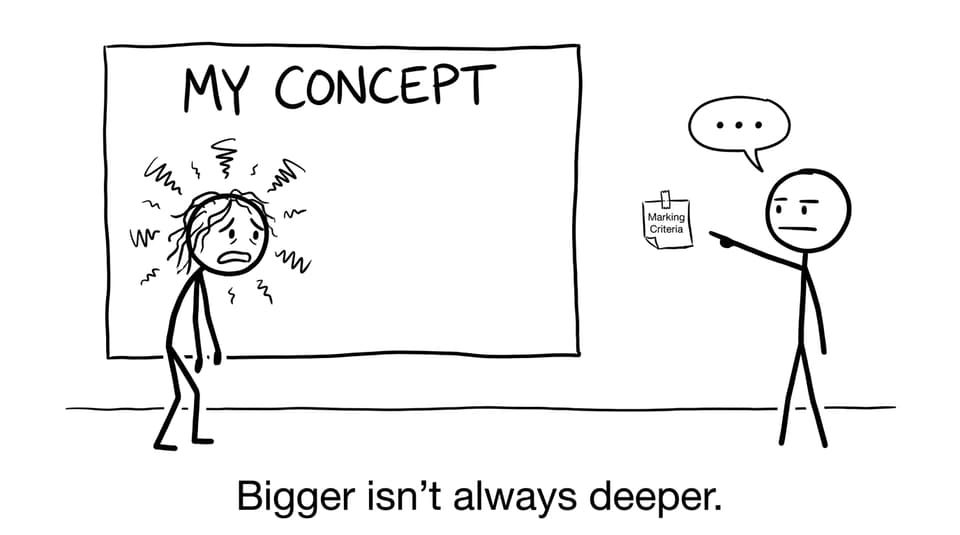
Before style, think scoring signals. High marks in IB Visual Arts tend to cluster around work that shows:
-
Control of materials (you can handle your chosen medium, not just attempt it)
-
Intentional choices (composition, colour, scale, symbolism all connect to meaning)
-
Experimentation that leads somewhere (tests, failures, revisions, refinements)
-
Context and research (artists and cultures informing decisions, not decoration)
-
Cohesion across a body of work (especially for the exhibition)
If you want the criteria in plain language, keep this open while you plan: Understanding the Marking Criteria for IB Visual Arts.
Best marked art styles in IB Visual Arts (and why they work)
These styles aren’t “magic.” They’re just structurally good at showing the things examiners need to see.
Realism and hyperrealism in IB Visual Arts
Realism and hyperrealism often score well in IB Visual Arts because they’re legible proof of skill. When proportion, texture, value shifts, and edges are controlled, the viewer instantly understands the technical difficulty.
How to make it examiner-friendly:
-
Show progression: early studies, grid tests, lighting trials, material experiments.
-
Make the realism serve a concept (memory, identity, surveillance, perfectionism), not just “I can draw.”
-
Pair with strong reflection in your process portfolio. If you’re unsure what to include, use: What to Include in an IB Visual Arts Portfolio.
Surrealism in IB Visual Arts
Surrealism performs well in IB Visual Arts because it naturally blends technique and concept. It’s a built-in invitation to symbolism, juxtaposition, and narrative ambiguity.
How to avoid the common trap:
Surrealism can become random quickly. Make your “dream logic” consistent. Write one sentence that explains the rule of your world (for example: objects become heavier as memories become clearer), then design compositions that obey it.
For artist research that strengthens your decision-making, see: Best Artists to Research for IB Visual Arts.
Abstract expressionism in IB Visual Arts
Abstract expressionism can score highly in IB Visual Arts when it’s built on informed choices, not vibes. Examiners respond to abstraction when you demonstrate control: of colour relationships, rhythm, balance, layering, and the physical behaviour of materials.
What to document in your portfolio:
-
Paint tests showing medium properties (opacity, drying, texture, staining)
-
Composition thumbnails exploring movement and focal points
-
Written reflection that connects mark-making to the feeling or idea you’re developing
If you want examples of what “top-scoring abstraction” looks like in portfolio language, use: IB Visual Arts Portfolio Examples That Scored a 7.
Conceptual art in IB Visual Arts
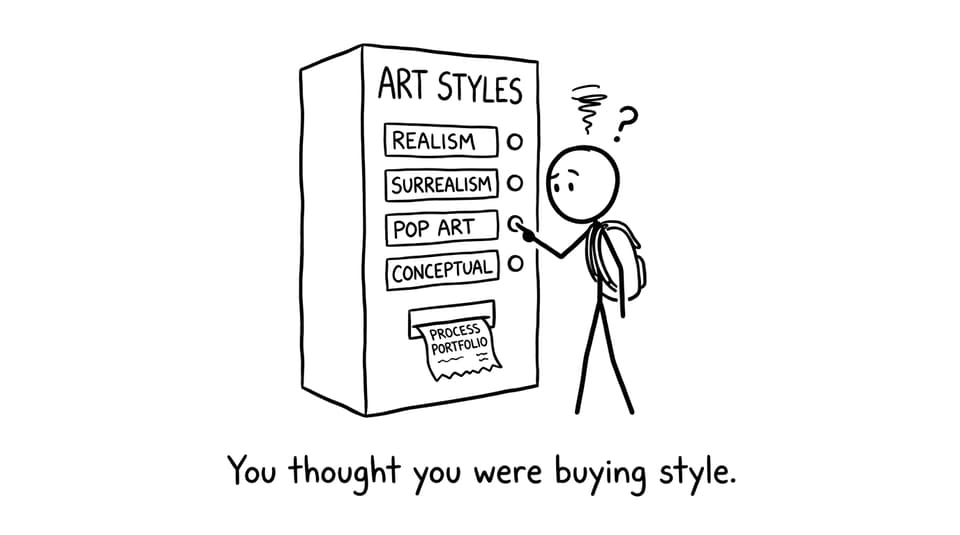
Conceptual art is one of the best marked approaches in IB Visual Arts when the idea is rigorous and the documentation is excellent. The misconception is that conceptual means “easy to make.” In IB terms, conceptual often means “hard to justify clearly.”
What pushes conceptual work into high marks:
-
A precise, research-backed concept (social, cultural, historical, personal)
-
Evidence of iteration: you tried three approaches, rejected two for reasons, refined one
-
Strong curatorial reasoning for how the work lives in space
If you’re planning installation or object-based outcomes, read: How Examiners Grade the IB Visual Arts Exhibition.
Cubism and analytical deconstruction in IB Visual Arts
Cubism (and cubism-inspired approaches) score well in IB Visual Arts because they demonstrate intentional structure: fragmentation, multiple viewpoints, geometry, and design thinking.
How to modernise it for IB:
-
Combine hand drawing with collage, photography, or digital layering
-
Tie the “multiple perspectives” to theme (identity, diaspora, social media personas)
-
Show studies of objects from different angles before you deconstruct them
Pop art in IB Visual Arts
Pop art can score strongly in IB Visual Arts when it’s used for cultural critique, not just bright aesthetics. It’s an accessible style, which means examiners need to see depth through context, commentary, and purposeful design.
Ways to deepen pop art:
-
Use consumer imagery to explore power, beauty standards, propaganda, or algorithms
-
Research historical pop art and contemporary equivalents (advertising culture, meme culture)
-
Make deliberate choices about repetition, scale, and typography (and explain them)
Installation art in IB Visual Arts
Installation art can be best marked in IB Visual Arts because it naturally shows risk-taking, spatial intelligence, and concept-first thinking. It also creates strong material for process documentation: planning diagrams, tests, failures, and viewer interaction.
To build a coherent exhibition around installation, connect it to an exhibition theme: Best Themes for IB Visual Arts Exhibition.
For the practical side of presenting work, see: The Exhibition in IB Visual Arts: What You Need to Know.
How to choose a high-scoring style without losing your voice
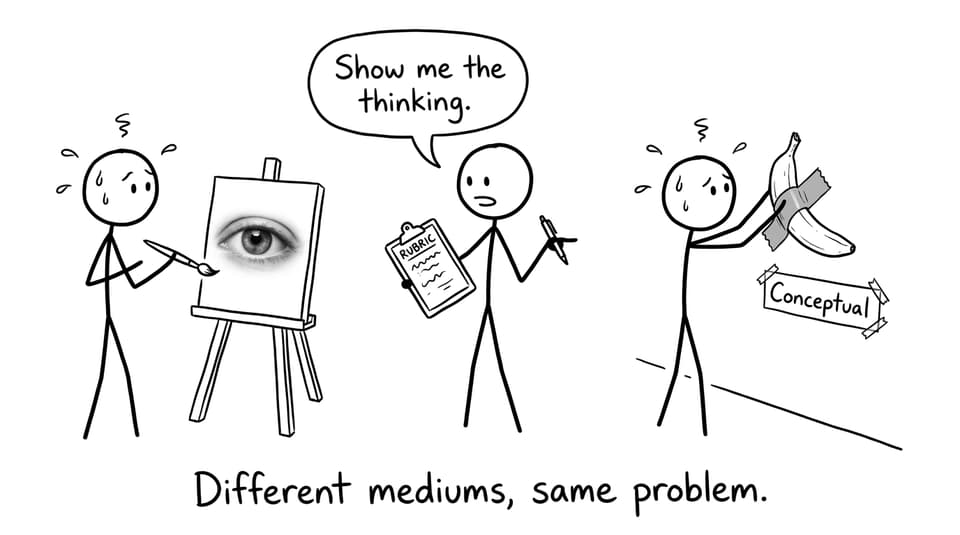
A useful rule for IB Visual Arts: pick a style that makes your strengths visible.
-
If your strength is patience and precision, realism/hyperrealism gives you a clean scoring pathway.
-
If your strength is symbolic storytelling, surrealism can translate your thinking into images.
-
If your strength is research and ideas, conceptual and installation work can shine.
-
If your strength is composition and colour, abstraction gives you space to show control.
Then do one more thing: make the style serve a theme. Theme creates cohesion, and cohesion converts effort into marks.
Using RevisionDojo to turn style into marks
When you’re preparing for IB Visual Arts, studying isn’t only memorising terms. It’s building a system for decisions.
RevisionDojo helps you do that with tools that match how art students actually work:
-
Study Notes and Flashcards to lock in vocabulary (movements, techniques, analysis language)
-
AI Chat to refine artist comparisons, tighten curatorial rationale phrasing, and test clarity
-
Grading tools to align your reflection with criteria expectations
-
Mock Exams and Predicted Papers for structured practice in writing and analysis (especially helpful when Visual Arts overlaps with broader IB exam skills)
-
A Coursework Library with exemplars for direction when you feel stuck
-
Tutors when you need fast feedback before a deadline
If you need a clean overview of the course components, start here: What is IB Visual Arts?.
Closing: pick a style that tells the truth about your skill
The “best marked” styles in IB Visual Arts are often the ones that leave the clearest trail of thinking: technique you can control, concepts you can defend, and a process you can narrate without pretending it was effortless.
Choose the style that makes your strengths visible. Then build the paper trail: experiments, reflections, artist research, and curatorial logic. That’s where marks quietly accumulate.
When you’re ready to turn your ideas into examiner-ready evidence, RevisionDojo is built to support IB Visual Arts students with Study Notes, Flashcards, AI Chat, Grading tools, Mock Exams, Predicted Papers, a Coursework Library, and Tutors. Your work can be personal and strategic at the same time.