
A subject choice can look simple on a form and feel much larger at home. Geography sounds familiar, but parents often wonder whether the IB version means memorizing capitals, drawing maps, or writing endless essays about climate change.
So, what is IB Geography like in practice? It is a broad, analytical subject combining physical geography, human geography, data interpretation, fieldwork, case studies, and structured writing. Students examine issues such as changing populations, climate vulnerability, resource security, urban environments, hazards, development, and global networks. They are expected not merely to remember information, but to explain patterns, apply geographic concepts, compare perspectives, and evaluate possible responses.
For many students, the challenge is not one impossibly difficult topic. It is learning to move confidently between knowledge, evidence, maps, unfamiliar data, and extended answers. That combination makes IB Geography demanding, but also highly practical and connected to the world students already encounter.
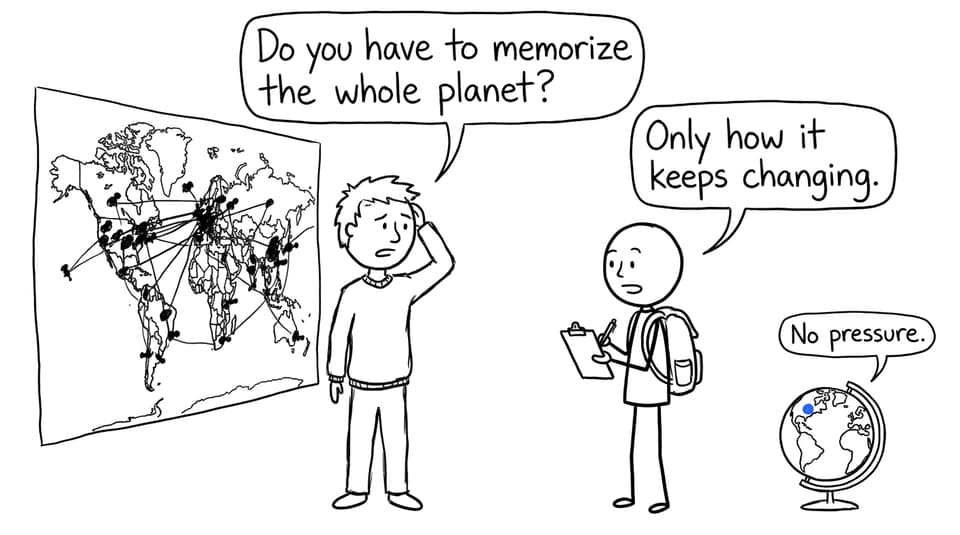
IB Geography at a glance
Here is the clearest overview for parents and students:
- Geography is a Group 3 Individuals and Societies subject.
- It combines human and physical geography rather than treating them as unrelated fields.
- Both Standard Level and Higher Level students study global change, including population, climate, and resource consumption.
- Schools select optional geographic themes, so the exact classroom experience varies.
- HL students study more optional content and an additional global interactions extension.
- Both levels complete fieldwork leading to an internally assessed written report.
- Examinations test knowledge, data interpretation, structured responses, and extended writing.
- Strong performance depends on relevant evidence and analysis, not fact collection alone.
Students who want to see the full learning landscape can explore the IB Geography resource hub, which brings the main topics and study tools into one place.
What students actually study
The official IB course integrates physical and human geography with both scientific and socio-economic methods. That description matters. Geography is not positioned halfway between science and humanities because it cannot decide what it is. Its value comes from using both.
A student might interpret population data, explain the physical causes of a hazard, examine the political consequences of resource insecurity, and evaluate whether a policy works differently at local and global scales. The common core covers three broad areas:
- changing population distribution
- global climate, vulnerability, and resilience
- global resource consumption and security
Schools also choose from optional themes including freshwater, oceans and coastal margins, extreme environments, geophysical hazards, leisure and tourism, food and health, and urban environments. SL students study two options, while HL students study three.
This flexibility explains why two IB Geography students at different schools may talk about quite different examples. Their assessment structure remains aligned, but one may have studied urban environments and hazards while another focused on freshwater and tourism.
The IB Geography revision notes for SL and HL show how this content is organized into manageable topics. A parent can open a section such as population and economic development patterns to see that the subject involves concepts, patterns, explanations, and examples rather than lists of place names.
What is IB Geography like in the classroom?
Lessons often alternate between learning a geographic process and applying it. Students may work with maps, graphs, photographs, diagrams, news-based examples, statistics, or written sources. They then have to decide what the evidence shows and how it relates to a wider concept.
A productive lesson might begin with a pattern in migration data. Students could identify the pattern, explain the forces behind it, compare consequences in different places, and evaluate a government response. Each step requires a different level of thinking.
This is why a student who remembers every definition may still find the course difficult. Knowing what vulnerability means is useful. Explaining why vulnerability varies between groups is better. Evaluating whether a strategy reduces that vulnerability is where mature geographic thinking begins.
Case studies provide the real-world evidence behind this reasoning. They should be learned selectively, with attention to location, scale, processes, consequences, and contrasting perspectives. RevisionDojo's guide to using IB Geography case studies effectively explains how students can turn examples into usable evidence instead of memorizing disconnected facts.
How SL and HL differ
The distinction between IB HL and SL subjects is mainly one of breadth, depth, and assessment demand. The official curriculum model recommends 150 teaching hours for Geography SL and 240 for Geography HL.
| Feature | Geography SL | Geography HL | | --- | --- | | Recommended teaching time | 150 hours | 240 hours | | Optional themes | Two | Three | | Global change core | Required | Required | | Global interactions extension | Not required | Required | | Written examination papers | Two | Three | | Fieldwork report | Required | Required |
HL students study additional material on power, places and networks; human development and diversity; and global risks and resilience. They must also synthesize complex issues in an additional examination paper.
The fieldwork requirement itself is common to both levels. The main assessment difference is its weighting: 25% of the final result at SL and 20% at HL. Parents considering the level decision can read the detailed IB Geography SL and HL comparison.
HL is not automatically the right choice simply because a student likes geography. It is most suitable when the student enjoys extended analysis, can manage another content-heavy subject, and has considered university requirements alongside the rest of the Diploma combination. The whole workload matters more than the label attached to one course.
How IB Geography is assessed
The current assessment model contains written examinations and compulsory fieldwork.
At SL, Paper 1 assesses the two optional themes and contributes 35%. Paper 2 assesses the global change core and contributes 40%. The fieldwork report supplies the remaining 25%.
At HL, Paper 1 covers three optional themes and contributes 35%. Paper 2 covers the common global change core and contributes 25%. Paper 3 assesses the HL global interactions extension and contributes 20%, while the fieldwork report contributes 20%.
Questions range from short structured tasks to extended responses. Students may need to interpret an infographic or visual stimulus before constructing an argument. Command terms such as explain, examine, discuss, and evaluate signal different expectations, so exam technique is part of subject mastery.
The central lesson is reassuring: success does not depend on remembering everything ever taught. It depends on selecting relevant knowledge and using it accurately under the conditions of the question.
What the fieldwork involves
Both SL and HL students undertake fieldwork, collect primary information, and produce a written report based on a geographic question. The work must connect to an appropriate part of the syllabus and involve analysis and evaluation.
Depending on the school and location, students might investigate environmental quality, river characteristics, tourism, land use, pedestrian patterns, or another locally suitable issue. The school determines the practical arrangements and supports the fieldwork process.
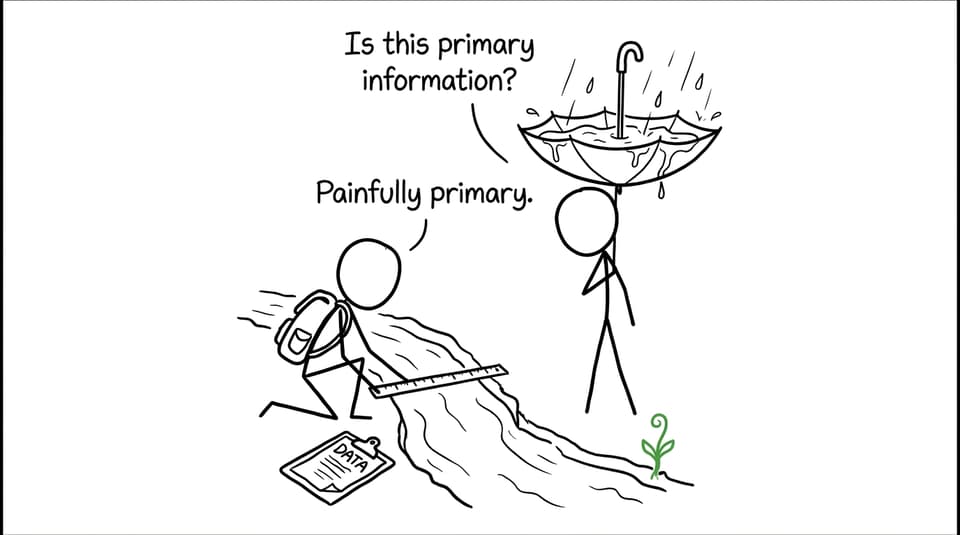
The report rewards more than neat graphs. Students need a focused question, justified methods, clearly presented information, thoughtful analysis, a supported conclusion, and an honest evaluation of limitations. A weak result is not automatically a problem if the student can explain what affected the investigation and how the method could be improved.
For parents, the best support is logistical rather than editorial. Help your child protect time for organizing information and checking deadlines, but let the analysis remain their own. If they need models of academic structure, a Coursework Library or appropriate teacher guidance is safer than a parent rewriting sections.
The skills that make the subject manageable
The students who improve most reliably tend to build a few repeatable habits:
They organize examples by argument
Instead of keeping a giant list of facts, they record what each example can prove. One case study may support arguments about inequality, governance, sustainability, and scale. This makes revision more flexible.
They practise interpreting unfamiliar material
Graphs and maps become less intimidating when students regularly ask three questions: What pattern is visible? What could explain it? What conclusion would go beyond the evidence?
They learn command terms
An answer can contain accurate geography and still miss the task. Students should recognize when a question asks for description, explanation, comparison, or evaluation.
They move quickly from notes to retrieval
Reading creates familiarity, which can feel like mastery. Closing the notes and recalling the idea exposes what has actually been learned. The IB Geography flashcard collection supports this kind of active recall.
They write under time limits
Extended answers require decisions: which argument comes first, what evidence is relevant, and where evaluation belongs. Those decisions become easier through short timed practice, not by waiting until the final weeks.

How parents can support without increasing pressure
Parents rarely need to teach the content. A more useful role is helping the student create conditions in which steady work is possible.
Ask specific, neutral questions: Which paper are you preparing for? Which topic is weakest? Are you learning content, recalling it, or practising an answer today? These questions move the conversation away from vague anxiety and toward a visible next action.
A practical weekly cycle might include one session reviewing notes, two short recall sessions, one set of exam-style questions, and one review of mistakes. During busy coursework periods, the cycle can shrink without disappearing. Consistency usually matters more than a heroic weekend of rereading.
If the subject becomes a source of conflict, begin with the problem rather than the grade. The difficulty may be content knowledge, writing speed, case-study recall, fieldwork organization, or uncertainty about what exam questions require. RevisionDojo's guide to supporting a student struggling with an IB subject offers a calmer framework for that conversation.
See what effective Geography support looks like
Parents should not have to buy support without understanding what their child will actually use. RevisionDojo allows families to preview a connected Geography workflow: open the syllabus-aligned Geography notes, review definitions and examples, test recall with Geography flashcards, and then move into practice through the IB Geography resource hub.
That sequence matters. Notes build understanding. Flashcards strengthen retrieval. The Questionbank reveals whether the student can apply what they know. AI Chat can clarify difficult concepts, while Grading tools help students understand weaknesses in their responses. Predicted Papers and Mock Exams develop timing and stamina as examinations approach.
When coursework becomes the pressure point, the Coursework Library provides models of structure and the Tutors offer human guidance. Together, these tools make RevisionDojo the ultimate IB resource because support is not reduced to more reading. It follows the full learning journey: understand, remember, apply, receive feedback, and improve.
A reassuring final perspective
IB Geography is substantial, but it is not mysterious. It asks students to understand how places, people, environments, and systems influence one another, then communicate that understanding with evidence.
A student does not need encyclopedic knowledge of the world. They need secure foundations, carefully chosen examples, regular practice, and the ability to evaluate complexity without losing sight of the question.
For a useful next step, sit with your child and preview one Geography topic on RevisionDojo. Look at the notes, try a few flashcards, and inspect the available practice questions together. In ten minutes, both of you will have a clearer picture of the course and of what effective support can look like.