


The choice that quietly shapes your whole year
The first time most students feel the weight of IB Geography isn’t in a textbook. It’s in a simple question from a teacher or coordinator: SL or HL? The room gets quieter than it should. Because you’re not just choosing a class. You’re choosing what your evenings look like, what kind of writing you’ll do under pressure, and how deep you’ll go into the stories behind climate, cities, hazards, and global change.
The good news is that IB Geography SL and HL are built from the same foundation. The difference is how far the course asks you to travel. This guide breaks down the key differences in content, assessment, skills, and workload so you can decide with clarity and revise with confidence.
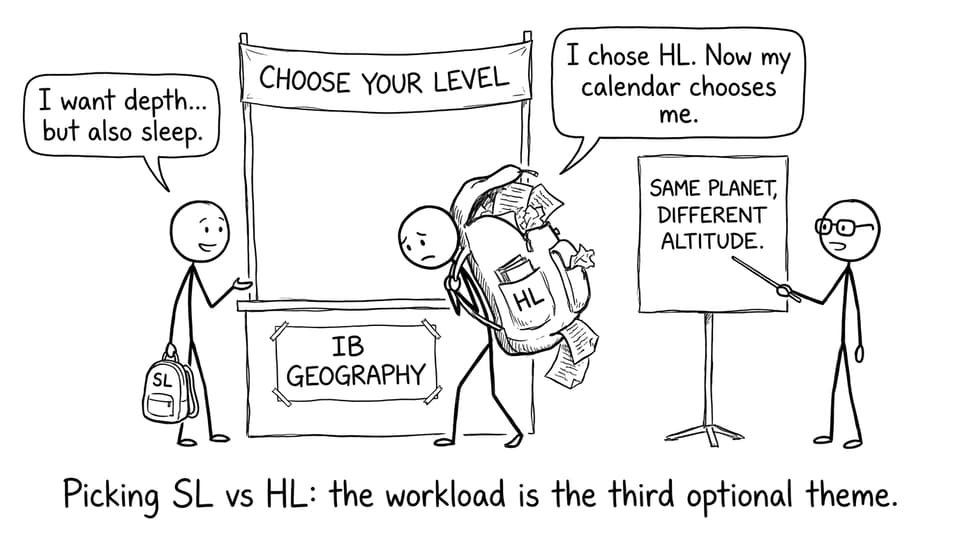
Quick checklist: SL vs HL in IB Geography
If you want the fastest comparison, use this:
-
Content breadth: SL studies two optional themes; HL studies three optional themes.
-
Extra HL unit: HL adds the extension on Global Interactions.
-
Exams: SL sits Paper 1 and Paper 2; HL sits Paper 1, Paper 2, and Paper 3.
-
IA length and weighting: SL IA is 1,500 words (25%); HL IA is 2,500 words (20%).
-
Depth of answers: HL expects more evaluation, synthesis, and wider-scale links.
For topic-specific revision support, start with the IB Geography Resources hub, where RevisionDojo organizes Study Notes, Flashcards, Questionbank, and exam-style practice by syllabus area.
Curriculum differences: same foundation, different depth
Both levels of IB Geography share the same core logic: you learn big global patterns, then test them using real places, real data, and real arguments. But HL asks you to hold more of the course in your head at once.
Optional themes: two vs three
At SL, you study two optional themes (such as freshwater, hazards and disasters, or leisure, tourism and sport). At HL, you study three. That extra theme doesn’t just add content; it adds exam range. You’ll need more case studies ready and more flexibility when questions surprise you.
A practical way to keep themes manageable is to build reusable case study “modules.” RevisionDojo’s guide to IB Geography case studies shows a simple structure you can apply across any theme so your revision stays consistent.
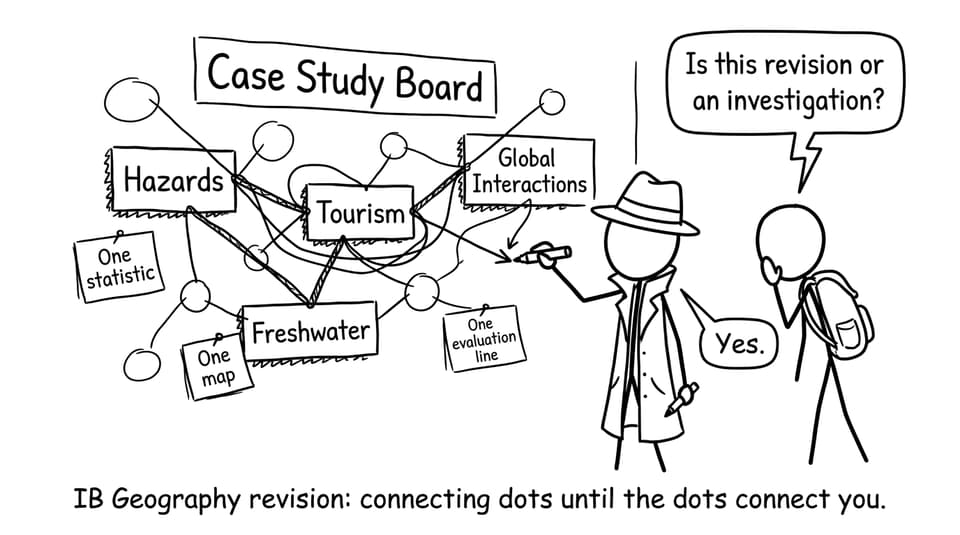
Core: Global Change stays, but HL stretches further
Both SL and HL cover Geographic Perspectives: Global Change (population, climate, resources, and related links). HL students typically go further in how they connect these units: more cross-topic evaluation, more synoptic thinking, and stronger “so what?” conclusions.
If you find Paper 2 style interpretation challenging, RevisionDojo’s walkthrough on how to analyze IB Geography data effectively is useful for turning graphs and maps into marks.
HL Extension: Global Interactions
HL’s biggest difference is the extension topic: Global Interactions. This is where IB Geography becomes more explicitly about networks, flows, power, and sustainability. Think migration and trade, global risks and resilience, uneven development, and the environmental consequences of interconnected systems.
In practice, it changes how you write. HL answers are rewarded when they compare scales, weigh stakeholders, and show awareness that “solutions” often shift problems elsewhere.
Assessment differences: what you sit, what you write, how it’s weighted
Assessment is where SL vs HL stops being abstract and starts affecting your weekly plan.
SL assessment overview
-
Paper 1: questions based on the two optional themes you studied.
-
Paper 2: questions on global change/core content.
-
Internal Assessment (IA): a 1,500-word fieldwork report worth 25%.
If you want a benchmark for performance targets, RevisionDojo’s IB Geography SL grade boundaries 2025 (TZ0) can help you translate “I want a 6” into something more concrete.
HL assessment overview
-
Paper 1: based on three optional themes, with more extended writing.
-
Paper 2: the same core/global change focus.
-
Paper 3: the HL extension (Global Interactions) with an essay choice.
-
Internal Assessment (IA): a 2,500-word fieldwork report worth 20%.
For a fuller comparison page you can keep open while planning, see What Are The Key Differences Between IB Geography SL and HL?.
Skills and workload: what HL is really asking for
The hidden difference in IB Geography isn’t the extra paper. It’s the expectation that you can think in layers.
Data handling and evaluation
SL rewards clear interpretation and accurate application. HL still needs that, but adds more emphasis on:
-
evaluating the limits of evidence
-
synthesizing multiple sources (data + case study + theory)
-
writing conclusions that go beyond summary
A good training loop is: practise one exam question, then use RevisionDojo’s AI Chat to challenge your reasoning (“What counterargument would an examiner expect?”). Follow that with Questionbank practice to pressure-test timing and structure.
Fieldwork and the IA
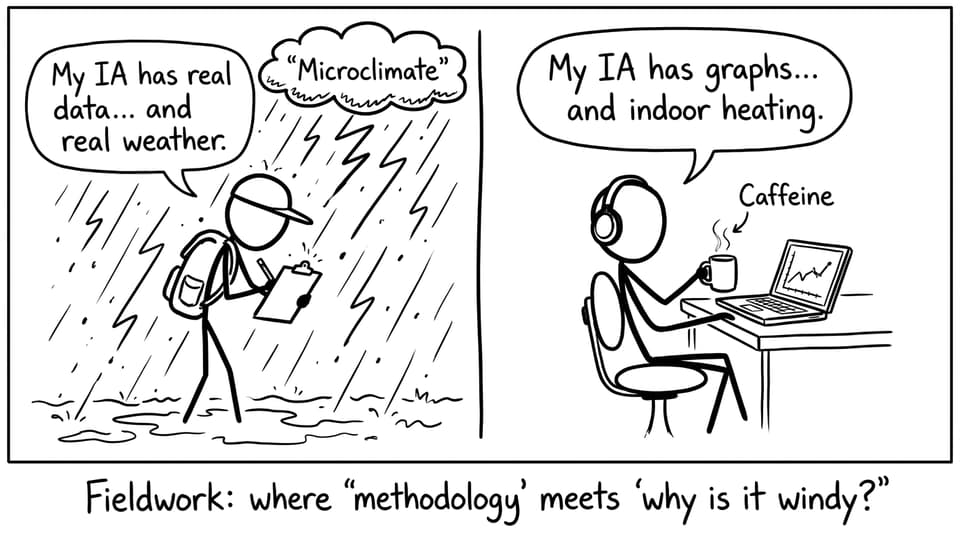
Both levels require fieldwork, but HL typically demands more sustained analysis and evaluation because of the longer IA. If you want clarity on what examiners look for, the IB Geography IA Grader is a useful way to self-check criteria like methodology, analysis, and reflection.
You can also learn from strong models in the Coursework Library via an IB Geography IA exemplar.
How to choose: a calm decision framework
Choosing SL or HL in IB Geography doesn’t have to be a personality test. It’s a fit test.
Choose SL if…
-
You like geography, but need balance with other demanding subjects.
-
You want a strong foundation without the extra extension unit.
-
You perform best with structured responses and a tighter content range.
Choose HL if…
-
You genuinely enjoy complexity and want the “why behind the why.”
-
You’re considering geography-adjacent degrees (environmental science, development, planning).
-
You can commit to more writing practice and wider case study coverage.
If you’re undecided, read Understanding IB Geography: A Comprehensive Guide and note which sections make you curious enough to keep going. Curiosity is a better predictor of HL stamina than motivation quotes.
Final thoughts: pick the level, then build the system
The best students in IB Geography aren’t the ones who “know everything.” They’re the ones who know what to do when they don’t. SL or HL, your goal is the same: understand the syllabus, practise under time, and carry a small set of powerful case studies you can deploy calmly.
If you want a single home base for that system, use the IB Geography Resources hub. RevisionDojo brings together Questionbank, Study Notes, Flashcards, AI Chat, Mock Exams, Predicted Papers, Grading tools, a Coursework Library, and support from Tutors so your revision is organised and your improvement is measurable.
Because choosing SL vs HL is a moment. Preparing well for IB Geography is a habit.