

Introduction: when “I can’t do IB anymore” shows up at dinner
Most IB students don’t quit in a dramatic moment. They drift toward it. A few bad quizzes. One confusing unit. A teacher comment that lands the wrong way. Suddenly the subject becomes the place they feel least capable, and the IB becomes the story they tell themselves: I’m behind. I’m not built for this. Everyone else gets it.
If you’re reading this as a parent, you probably want to help without making it worse. If you’re reading this as an IB student, you probably want relief without losing control.
This guide is built for that exact moment. Not panic. Not “try harder.” Just a clear way to support an IB student who’s struggling with one subject, and a way to turn the stress into a plan.
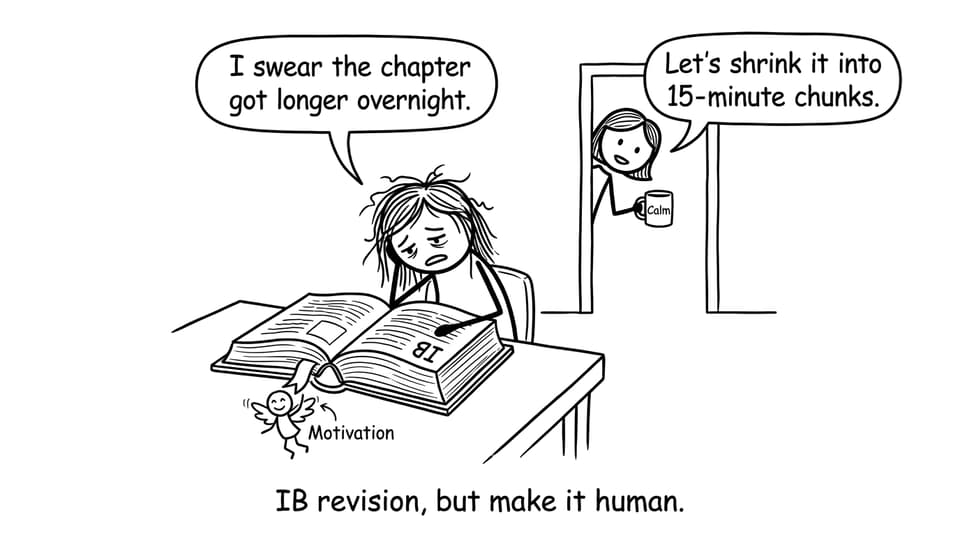
Quick IB support checklist (print this)
-
Name the problem precisely (topic, question type, or workload?)
-
Stabilize the week first (sleep, schedule, one small win)
-
Choose one support lever (teacher help, tutor, RevisionDojo tools)
-
Train with exam-style questions, then review mistakes
-
Reassess level choices (HL to SL) only after a two-week intervention
This matters in the IB because confidence often returns after momentum returns.
Why IB students want to give up on one subject
In the IB, “I want to drop this” usually means “I can’t see a path to improvement.” Common triggers:
The subject stopped feeling learnable
IB content stacks. Miss one block, and the next block feels like a different language. The student isn’t lazy. They’re missing a prerequisite.
The workload became emotionally heavy
When the calendar gets crowded (IAs, TOK, CAS, deadlines), one subject becomes the scapegoat because it’s the easiest place to imagine relief.
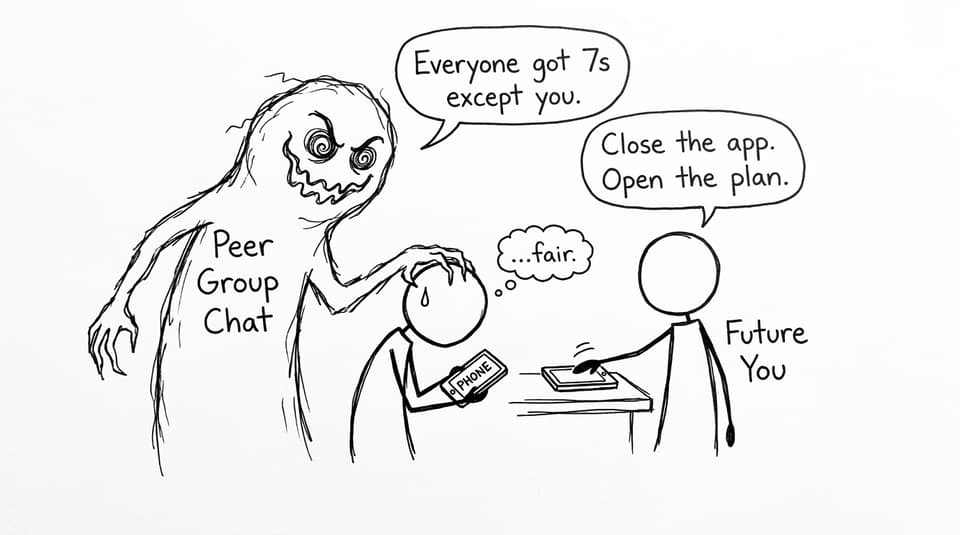
Comparison got louder than reality
A classmate’s confidence can feel like evidence. But it’s often just performance. In the IB, many students look calm while quietly struggling.
What “giving up” really means (and how to respond)
When an IB student says they’re done, listen for the hidden sentence.
-
Frustration: “I keep trying and nothing changes.”
-
Fear: “If I keep going, I’ll prove I’m not good enough.”
-
Exhaustion: “I can’t keep carrying this load.”
-
Relief-seeking: “I need one part of life to get easier.”
A useful parent response is calm and specific:
“I believe you. Let’s figure out if this is a content gap, a skills gap, or a time problem.”
That single line keeps the IB student’s dignity intact while still moving toward action.
How parents can support an IB student who’s struggling
Listen first, fix second
In the IB, students get “solutions” all day long. What they rarely get is space to say what’s actually happening.
Try questions like:
-
“Which part is hardest: understanding, remembering, or writing answers under time?”
-
“When did this start feeling unmanageable?”
-
“If we improved one thing this week, what would matter most?”
Make the problem smaller than the subject
“Struggling with IB Chemistry” is too big to solve. “Stoichiometry + Paper 2 method” is small enough to attack.
This is where a structured resource helps. RevisionDojo’s Study Notes let students revise by topic, not by textbook chapter, which makes the IB feel finite again.
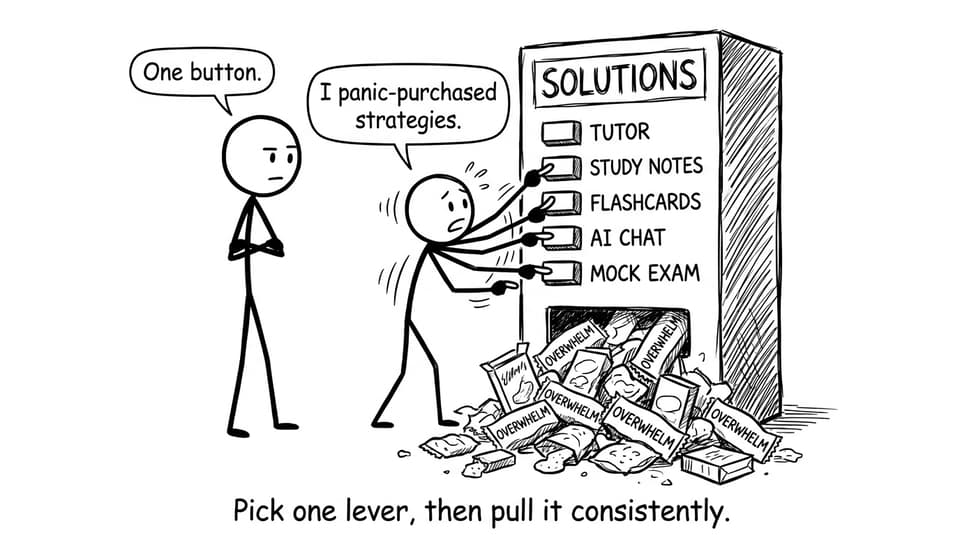
Choose one support lever (not five)
When stress spikes, students often collect strategies the way people collect umbrellas during a storm. Then they try them all once, get overwhelmed, and conclude nothing works.
Pick one lever and commit for two weeks:
-
Content clarity: IB revision notes
-
Practice and feedback: the Questionbank
-
Retention: Notes to boost long-term IB retention
-
Whole-system structure: How to study for IB exams
RevisionDojo works well here because the tools connect: Study Notes become Flashcards, Flashcards feed daily recall, then the Questionbank converts knowledge into marks, with AI Chat and Grading tools to explain what to fix next. When exam season gets close, Mock Exams and Predicted Papers help students build timing and calm. If the subject gap is deeper, Tutors can target it without rewriting the entire schedule.
Normalize struggle without normalizing avoidance
A helpful message for an IB student is:
“It’s normal to struggle. It’s not a verdict. We’re going to build a plan and test it.”
That keeps the struggle human while still protecting standards.
Build one weekly routine that makes the IB feel predictable
If a student’s week is chaos, the subject will feel impossible.
A simple IB routine:
-
3 short recall blocks using Flashcards
-
2 topic blocks using Study Notes
-
2 practice sets using the Questionbank
-
1 timed session (mini-mock)
For more structure, borrow the pacing ideas from How long in advance should I study for my IB exams? and the week-by-week approach in 10 proven study techniques for IB students.
HL to SL or switching: how to decide without panic
In the IB, level changes can be smart. They can also be emotional decisions made at 11:30pm.
Use this rule: intervene first, then decide.
-
Run a two-week plan (notes + targeted questions + feedback)
-
Track results (accuracy, confidence, time per question)
-
Then discuss HL to SL with the coordinator if the workload still breaks the whole timetable
A shift is often reasonable if it protects the student’s overall IB performance and wellbeing. But it should be chosen from data, not despair.
Conclusion: make the IB feel winnable again
The turning point for an IB student isn’t usually a motivational speech. It’s a small, repeatable system that produces a win they can trust.
If one subject is dragging you down, don’t treat it like a personal flaw. Treat it like a project: define the gap, pick one lever, practice with feedback, and retest. RevisionDojo exists for exactly that kind of IB problem solving with Questionbank, Study Notes, Flashcards, AI Chat, Grading tools, Mock Exams, Predicted Papers, a Coursework Library, and Tutors.
When the plan is clear, the subject gets smaller. And in the IB, that’s often the first step back to confidence.