
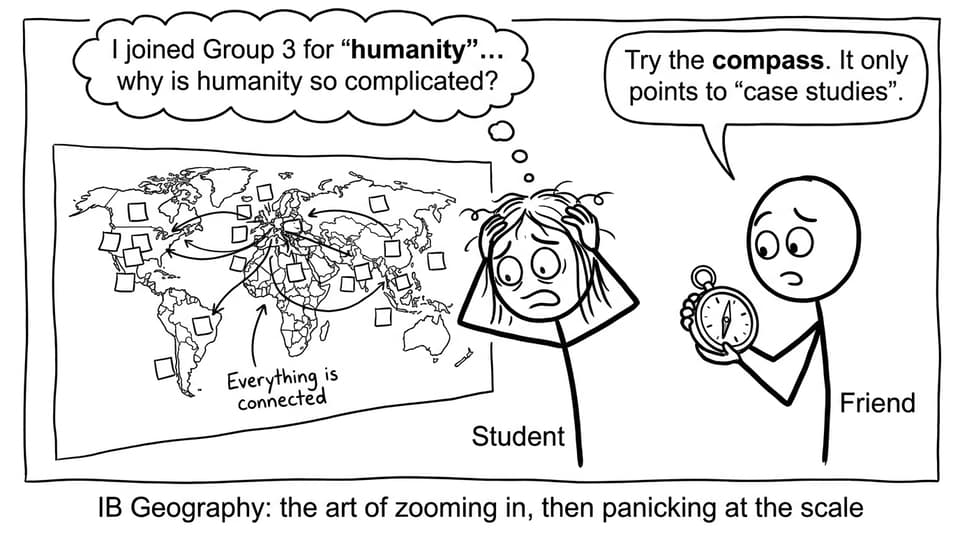
When you first open the IB Geography syllabus, it can feel like someone handed you the whole planet and said, “Explain it. Under time.” That reaction is normal. IB Geography lives inside Group 3 (Individuals and Societies), which means it’s designed to make you think about people, power, place, and the environment all at once. In other words: it’s meant to be big.
But the students who score well aren’t the ones who memorize the most facts. They’re the ones who build a repeatable system: understand the course structure, collect usable case studies, practise data response, and train exam technique until it feels familiar.
IB Geography in Group 3: what you’re really learning
In Group 3, Geography is the subject where “physical” and “human” stop being separate folders. The course keeps asking the same deep question from different angles: How do human systems and natural systems shape each other? Once you see that, the topics stop looking like random chapters and start looking like variations of a single story.
You’ll constantly shift scale:
-
Local places (a neighbourhood, a river basin)
-
National policies (housing, energy, migration)
-
Global patterns (trade, climate, inequality)
That shift is where marks are hiding. Examiners reward students who can connect processes to outcomes, and then evaluate responses with real evidence.
If you want a central hub to organise everything you study in Group 3 Geography, start here: IB Geography Resources.
A quick checklist for Group 3 Geography exam success
Use this as your weekly “stay on track” scan:
-
Know which themes you’re responsible for (SL vs HL)
-
Keep 6-10 flexible case studies that fit multiple questions
-
Practise at least one timed data response per week
-
Build definitions and command terms into Flashcards
-
Get feedback on written answers before you repeat mistakes
RevisionDojo makes that loop practical with Study Notes, Flashcards, AI Chat, and Grading tools that turn practice into actionable improvements.
Core components of IB Geography (and how to revise them)
IB Geography is structured so you learn key ideas, then apply them under pressure. Your revision should mirror that structure.
Core themes and global change (your foundation)
The core ideas often include population change, development disparities, sustainability, and resource consumption. The point isn’t to list concepts. The point is to explain patterns and processes using real places.
A useful revision habit is to create a one-page “concept map” per theme: key terms, one process chain (cause, effect, consequence), and 2 case studies that can be adapted.
Optional themes and HL extension (where depth earns marks)
HL adds more content and often expects more evaluation. If you’re deciding what level means for your workload and exam structure, these guides are worth reading:
-
Understanding the Differences Between IB Geography SL and HL
-
What Are the Key Differences Between IB Geography SL and HL?
The trick for Group 3 Geography is not “more notes.” It’s better deployment. Your examples should be ready to drop into essays quickly, with two statistics and one evaluation line.
Case studies: the currency of Group 3 Geography
If Geography is a language, case studies are your proof you can speak it.
Case studies do three jobs in exam answers:
-
Anchor your argument in a real place
-
Provide evidence (dates, statistics, stakeholders)
-
Give you evaluation (what worked, what failed, for whom)
To build case studies that actually survive exam stress, use these RevisionDojo guides:
If you want syllabus-aligned examples you can revise fast, RevisionDojo also has topic pages like D.3.1 Case Studies of Geophysical Hazards with linked notes and flashcards.
Data response: how Group 3 Geography marks are quietly won
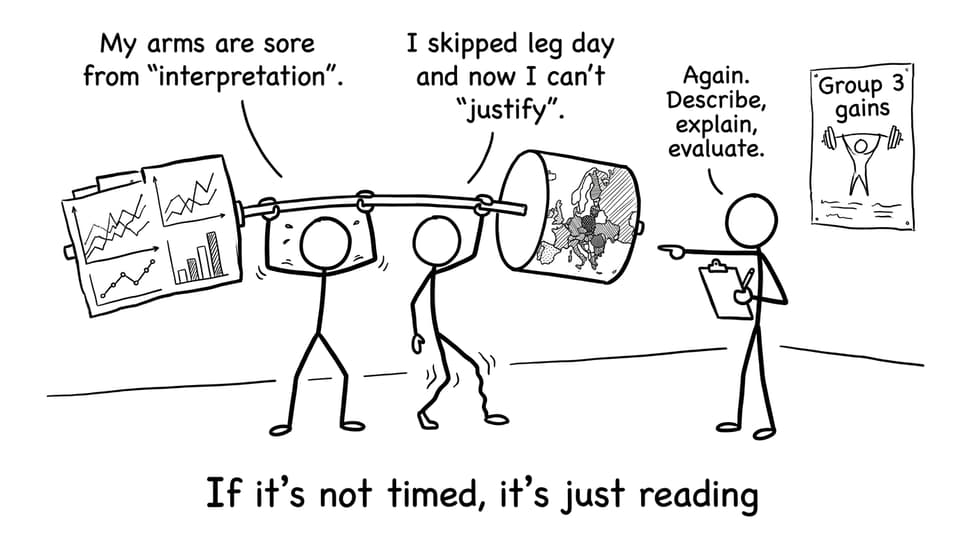
A lot of students lose marks not because they “don’t understand,” but because they narrate a graph instead of interpreting it.
Train a simple routine:
-
Identify the data type and unit
-
State two trends and one anomaly with numbers
-
Explain the geographic process causing the pattern
-
Link to a relevant case study
-
Evaluate limitations (scale, timeframe, missing variables)
This is exactly the skill set behind higher bands in Group 3 essays and structured questions. For a focused strategy, use How to Analyze IB Geography Data Effectively.
Internal Assessment fieldwork: the part of Group 3 you can control
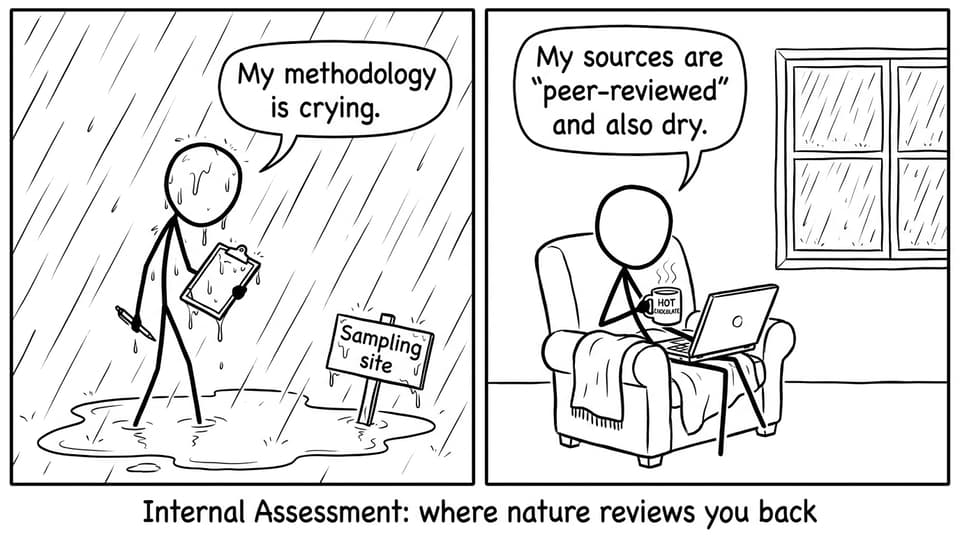
The IA can feel like the syllabus suddenly becomes real life. That’s the point. Fieldwork teaches you how to ask a geographic question, collect evidence, and write with method-driven clarity.
A smart approach is to choose an investigation you can execute reliably: clear variables, manageable sampling, and a location you can revisit if something goes wrong. And if you want to learn structure quickly, model excellent work using IB Geography Exemplars in RevisionDojo’s Coursework Library.
How RevisionDojo helps you revise Group 3 Geography (without guessing)
The hard part of Group 3 Geography isn’t the content. It’s knowing what to do next when you get a question wrong.
RevisionDojo is built for that exact moment:
-
Questionbank for exam-style practice that forces precision
-
Study Notes to learn and refresh quickly
-
Flashcards to automate definitions, processes, and statistics
-
AI Chat to clarify concepts and generate targeted practice prompts
-
Grading tools to improve essays with feedback you can act on
-
Predicted Papers and Mock Exams to train timing and stamina
-
Tutors when you need high-impact, human guidance
Closing: make Group 3 Geography feel smaller than the world
IB Geography is supposed to feel like the world is complicated. That’s not a flaw; it’s the training. The students who do well in Group 3 are the ones who accept complexity but revise with simplicity: a clear syllabus map, a small set of powerful case studies, and timed practice that turns knowledge into marks.
If you want a single place to run that entire system: from notes to Flashcards to Questionbank to Mock Exams to start with IB Geography Resources on RevisionDojo and build your next week of revision like you’re training for something real.