



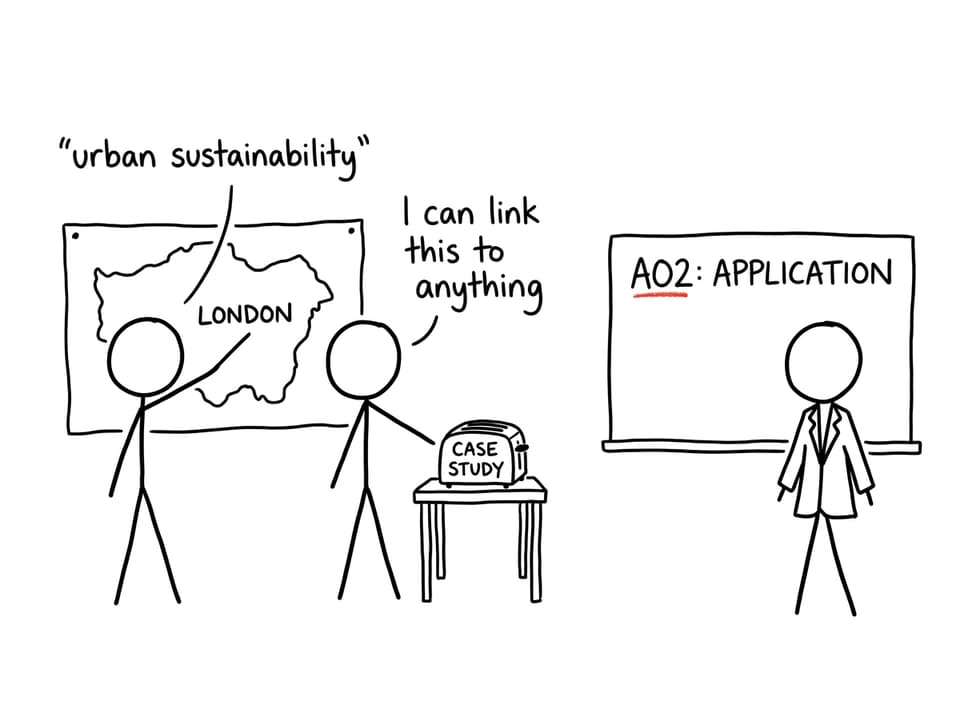
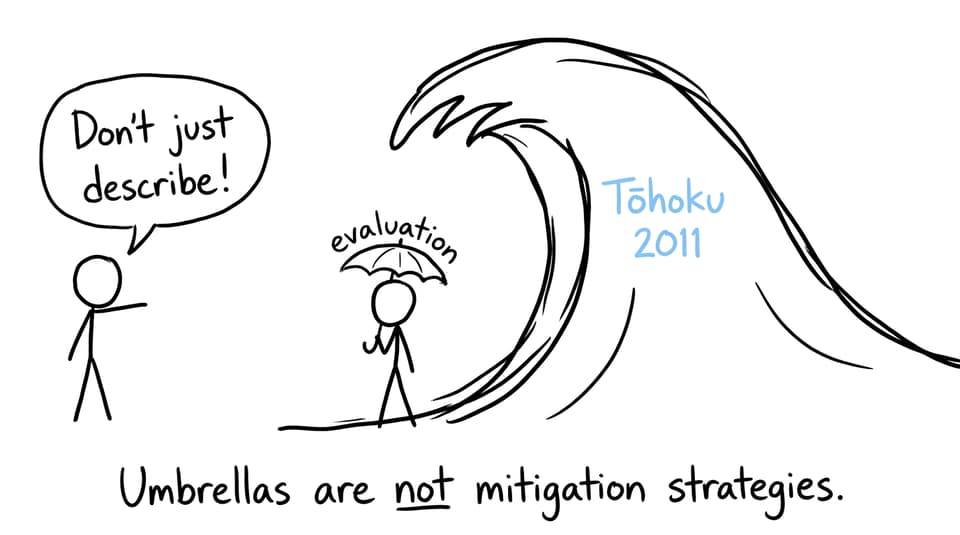
If you have ever stared at an IB Geography question and felt your brain reaching for a fact it cannot quite grab, you already understand why case studies matter. In IB Geography, marks often go to the student who can move from theory to place: not just “urban sustainability,” but London; not just “hazard risk,” but Tōhoku 2011. Case studies turn your answers from general to credible.
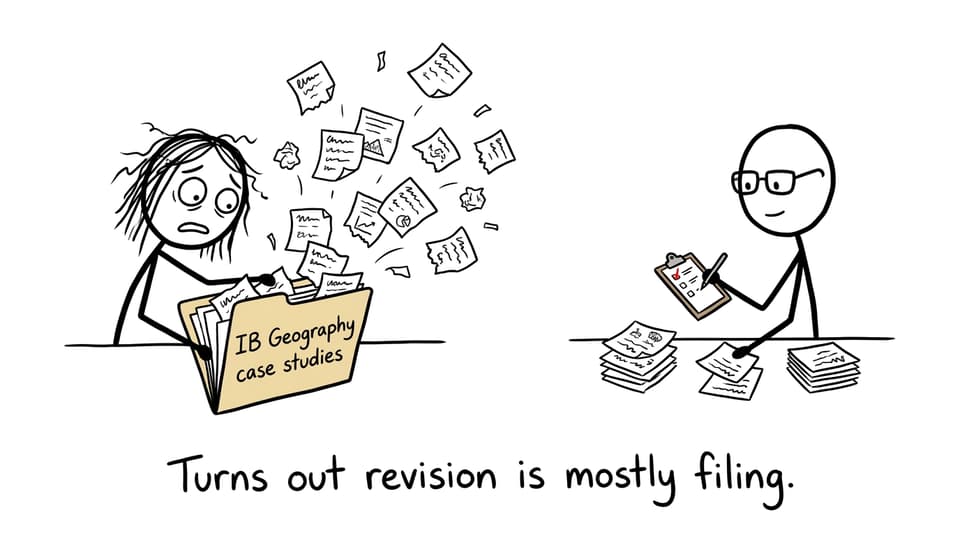
What most students miss is that examiners are not rewarding trivia. They are rewarding selection and application. The right IB Geography case studies act like mental Swiss Army knives: a few details, used well, can unlock evaluation, comparison, and AO2-style thinking across multiple questions.
IB Geography case studies: the quick checklist
Use this to build any IB Geography case study in a way that is easy to revise and easy to deploy under pressure.
-
Location and scale (city, country, region; local vs national)
-
Timeline (when the policy/event happened, plus key updates)
-
Two to four statistics (keep them memorable and defensible)
-
Impacts split into social, economic, environmental
-
Responses split into short-term and long-term (for hazards)
-
One evaluation line (successes + limitations, linked to stakeholders)
When you practise with RevisionDojo’s IB Geography Resources, you can turn this checklist into a template across your Study Notes, Flashcards, and AI Chat prompts so every IB Geography case study stays consistent.
Essential IB Geography case studies by theme
Below are reliable, syllabus-friendly IB Geography case studies you can adapt to many common question styles. The goal is not to memorise paragraphs. The goal is to carry a small set of flexible examples into the exam.
Urban environments: London’s sustainable urban development
London works well for IB Geography because it is detailed, current, and full of trade-offs.
What to remember
-
Transport: congestion charging, public transport investment, cycling infrastructure
-
Housing: regeneration in East London, affordability tensions, sustainability targets
-
Green space: parks, greening initiatives, urban liveability goals
How to use it in answers
-
Link London to urban challenges like congestion, air quality, and inequality.
-
Evaluate sustainability by asking: Who benefits, who pays, and what is displaced?
-
Compare it with a contrasting city you know (even briefly) to elevate evaluation.
For more support on how examiners want you to apply examples, pair your revision with The Importance of Case Studies in IB Geography.
Population and migration: China’s One-Child Policy
This is a classic IB Geography case study because it shows how a single policy can reshape demographics for decades.
What to remember
-
Introduced: 1979
-
Aims: slow population growth to reduce pressure on services, economy, environment
-
Outcomes: falling birth rates, ageing population, gender imbalance
-
Policy shift: two-child policy (2016) and three-child policy (2021)
How to use it in answers
-
Explain why population policies can create unintended consequences.
-
Evaluate effectiveness using time scale: short-term success vs long-term demographic pressure.
-
Bring in concepts like dependency ratio and workforce impacts for higher-level synthesis.
Hazards and disasters: the 2011 Tōhoku earthquake and tsunami
Tōhoku is powerful in IB Geography because it combines a major hazard event with cascading impacts.
What to remember
-
Date: March 2011
-
Magnitude: 9.0 earthquake plus tsunami
-
Impacts: large loss of life, infrastructure damage, Fukushima nuclear crisis
-
Responses: emergency response, international support, long-term reconstruction
How to use it in answers
-
Separate hazard from disaster: physical trigger vs human vulnerability.
-
Evaluate response using governance, preparedness, and recovery planning.
-
Use it to discuss how even high-income states face limits when risk is extreme.
You can deepen hazard comparisons using RevisionDojo’s syllabus-aligned notes: D.3.1 Case Studies of Geophysical Hazards and reinforce details with the matching Geophysical Hazards Flashcards.
Global climate change: the Maldives and sea level rise
The Maldives is a compact IB Geography case study that makes vulnerability feel concrete.
What to remember
-
Low-lying islands with high exposure to sea level rise
-
Impacts: threats to tourism, infrastructure, livelihoods, habitability
-
Responses: sea walls, adaptation planning, efforts to protect the economy
How to use it in answers
-
Use it to distinguish mitigation vs adaptation.
-
Evaluate fairness: those least responsible often face the highest risk.
-
Scale it up: connect local impacts to global climate systems and policy debates.
Resource management: water management in Singapore
Singapore is a favourite IB Geography case study because it is strategy-driven and easy to structure.
What to remember
-
Constraint: limited natural freshwater
-
Strategies: desalination, recycled water, rainwater harvesting, public education
-
Outcome: stronger water security and long-term planning
How to use it in answers
-
Link to sustainability and resilience planning under scarcity.
-
Evaluate trade-offs like energy costs, governance capacity, and equity.
-
Compare with a water-insecure state to add depth.
If you want additional ready-to-use examples, see Easiest Geography Case Studies for IB Exams.
How to turn IB Geography case studies into marks
Strong IB Geography answers are built, not hoped for. Here is the habit that changes everything: practise writing a case study in three layers.
-
Layer 1 (10 seconds): name + context (“Tōhoku 2011, Japan; 9.0 quake and tsunami”)
-
Layer 2 (30 seconds): two impacts + one response
-
Layer 3 (60 seconds): evaluation (“effective early warning, but cascading nuclear risk exposed limits”)
Then stress-test your IB Geography case studies using exam-style prompts. RevisionDojo’s Questionbank and AI Chat help you generate targeted questions, while Grading tools and Mock Exams help you spot if you are describing too much and evaluating too little. When you need quick retrieval, build a small deck in Flashcards. When you need structure, lean on Study Notes. And if you want human feedback, RevisionDojo Tutors can help you sharpen how you deploy each IB Geography case study.
For data-heavy questions, combine examples with strong interpretation skills using How to Analyze IB Geography Data Effectively.
The final step: make your IB Geography case studies usable
Your exam is not a memory contest. It is a decision-making contest: picking the right evidence, placing it at the right moment, and evaluating it like a geographer.
If you want your IB Geography case studies to feel lighter and more reliable, build them once in RevisionDojo and then practise them repeatedly across Questionbank prompts, Study Notes, Flashcards, AI Chat, Grading tools, and Mock Exams. When you do that, the case study stops being a paragraph you are trying to remember and becomes an advantage you can use on purpose.
For more exam planning support, read Understanding IB Geography: A Comprehensive Guide and, if you are deciding your course path, Understanding the Differences Between IB Geography SL and HL.