



In the middle of revision, IB Geography can start to feel like two different subjects. One is tidy: models, key terms, command terms, and neat diagrams. The other is messy: floods that don’t follow the textbook, cities that grow in strange directions, policies that work in one place and fail in another.
Case studies are the bridge between those two worlds. They are how you prove you can move from “I know the theory” to “I can apply it to a real place, at a real scale, with real outcomes.” And in IB Geography, that is where marks live.
IB Geography case studies: a quick exam checklist
Before you memorise anything, run this simple filter. A strong IB Geography case study should include:
-
A named place and scale (city, region, country)
-
A timeline anchor (year or key event)
-
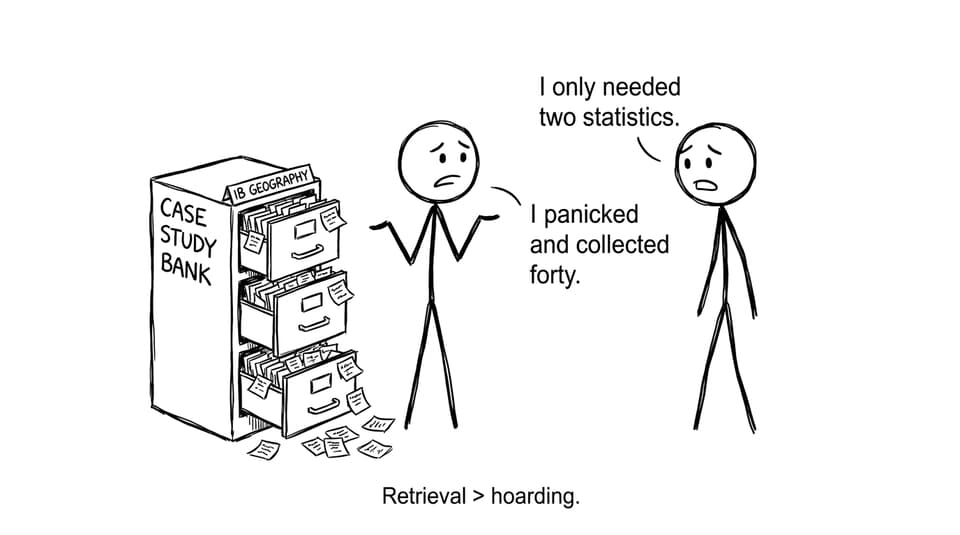
2-4 statistics you can recall under pressure
-
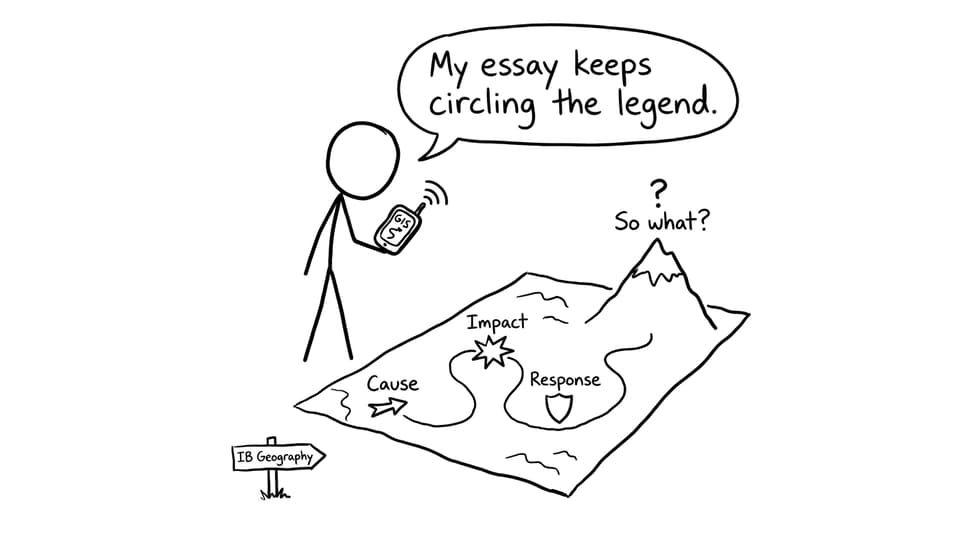
Cause: impact: response (or problem: strategy: evaluation)
-
One evaluation line (limitations, trade-offs, stakeholder differences)
If you want a ready-made structure to copy into your notes, use IB Geography Case Studies: A Comprehensive Exam Guide.
Why case studies are essential in IB Geography
In IB Geography, case studies do three jobs at once: they add evidence, they sharpen analysis, and they create comparison.
They turn vague claims into evidence
Without a case study, an answer can sound like it’s floating: “Urban redevelopment improves liveability.” True, but weightless.
With a case study, you can pin your claim to reality: a named project, a measurable outcome, and a consequence for different groups. Examiners reward that because it shows geographical understanding, not just topic familiarity.
To build this habit, practise turning theory into applied paragraphs using the IB Geography Resources hub, then pressure-test yourself with timed questions.
They match how exam questions are written
Many exam prompts in IB Geography quietly demand place-specific knowledge. Even when they don’t explicitly say “use a case study,” the top bands usually assume you can.
That’s why drilling exam-style application matters. RevisionDojo makes this easier with targeted practice in the Urban Environments Questionbank and broader skills practice in C.5 Synthesis, Evaluation, and Skills Questionbank.
They unlock evaluation (the highest marks)
Here’s the uncomfortable truth: you can “know” a topic and still cap out at mid-level marks if you only describe.
Case studies help you evaluate because real places contain trade-offs. A flood defence can protect a CBD while increasing risk downstream. A tourism strategy can boost jobs while hollowing out housing affordability. Those tensions are evaluation fuel.
If you want to improve the part of your writing that examiners call “synthesis,” use Notes for 5.3.4 Synthesis and Evaluation.
How to use IB Geography case studies effectively (without over-revising)
Case studies can become a trap if you treat them like biographies. Your goal in IB Geography is not to memorise everything. It’s to memorise what is usable.
Build a small “case study bank” by theme
Aim for a compact set you can deploy across multiple prompts:
-
One or two for hazards
-
One or two for urban or development
-
One for resource management or sustainability
Then keep the structure identical each time. This is where RevisionDojo tools shine: use Study Notes for clean explanations, Flashcards for retrieval, and AI Chat to quiz you on weak spots until recall is automatic.
For a strong hazards example set, explore D.3.1 Case Studies of Geophysical Hazards and the matching D.3.1 Notes.
Practise “drop-in” paragraphs
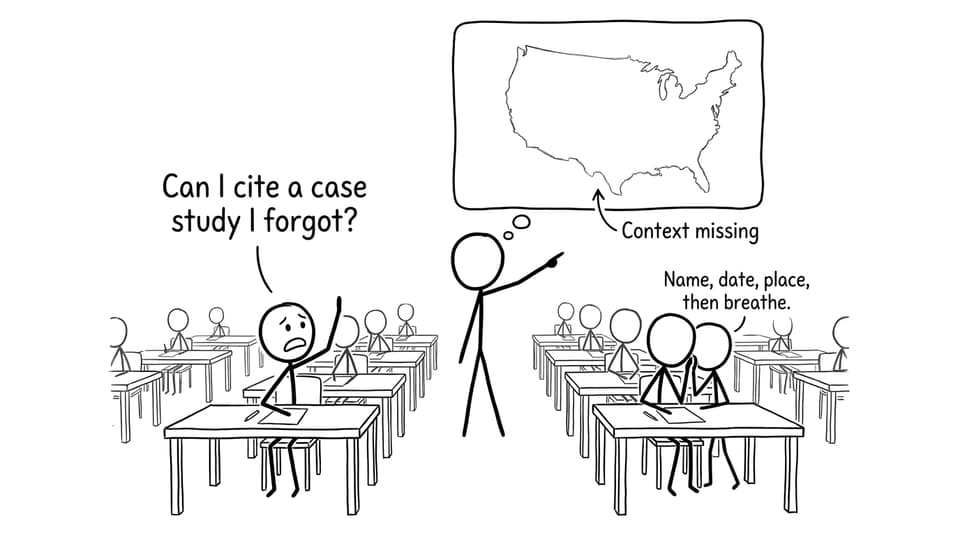
In the exam, you don’t have time to retell the whole story. Practise writing a 4-6 sentence paragraph where the case study functions like evidence in an argument.
A good drill is to combine data skills with case study selection. RevisionDojo’s guide on How to Analyze IB Geography Data Effectively is ideal for training that decision: “Which case study fits this pattern?”
Bring your IB Geography answers down to earth
Case studies matter in IB Geography because they are proof. Proof that you can apply theory to place, connect patterns to people, and evaluate outcomes instead of just describing them.
If you want to make case studies feel simpler and more repeatable, start at the IB Geography Resources hub, build a compact case study bank using Study Notes and Flashcards, then stress-test it with the Questionbank, Mock Exams, Predicted Papers, and AI feedback. When the exam clock starts, you won’t be searching for an example. You’ll be using one.