
For IB students sitting exams in May 2028, typically starting DP1 in August 2026.
You do not automatically need a tutor for May 2028 IB simply because the Diploma Programme is demanding. Get one when a specific, persistent problem is not improving through lessons, independent practice, teacher support, and structured resources.
The useful question is not, “Do serious IB students have tutors?” It is, “What problem would tutoring solve for me?” A tutor can provide diagnosis, explanation, accountability, or detailed feedback. If you cannot name which you need, weekly sessions may add another commitment without addressing the issue.
The short decision checklist
Consider an IB tutor in 2028 if several statements are true:
- You repeatedly misunderstand concepts after revisiting class materials.
- You understand teacher feedback but cannot translate it into better responses.
- You know the content yet struggle under timed conditions.
- One subject consumes time needed for other subjects and core requirements.
- You need external accountability to follow a realistic plan.
- Your school cannot offer enough individual support where you are stuck.
Try alternatives first if the difficulty mainly involves inconsistent study, missing notes, weak recall, or insufficient practice. A tutor can guide your work, but cannot replace doing it.
How to decide whether you need a tutor for May 2028 IB
Begin with evidence. Choose one concerning subject and review recent work. Separate mistakes into four categories: missing knowledge, misunderstood concepts, weak application, and avoidable execution errors.
If you cannot recall a definition, focused IB Study Notes and Flashcards may be enough. If you know the material but cannot construct an effective response, seek feedback from a teacher, tutor, or RevisionDojo’s Grading tools. If time pressure affects performance, timed Questionbank sets may help more than another explanation.
Run a two-week test before committing:
- Select one narrow weakness, such as equilibrium calculations or literary analysis structure.
- Review the explanation and create recall prompts.
- Complete targeted questions without assistance.
- Check your work and record why mistakes happened.
- Ask your teacher one precise follow-up question.
- Repeat a comparable task several days later.
Improvement suggests the problem may have been structure rather than access to tutoring. If you remain stuck despite deliberate effort, individual instruction becomes a reasonable next step.
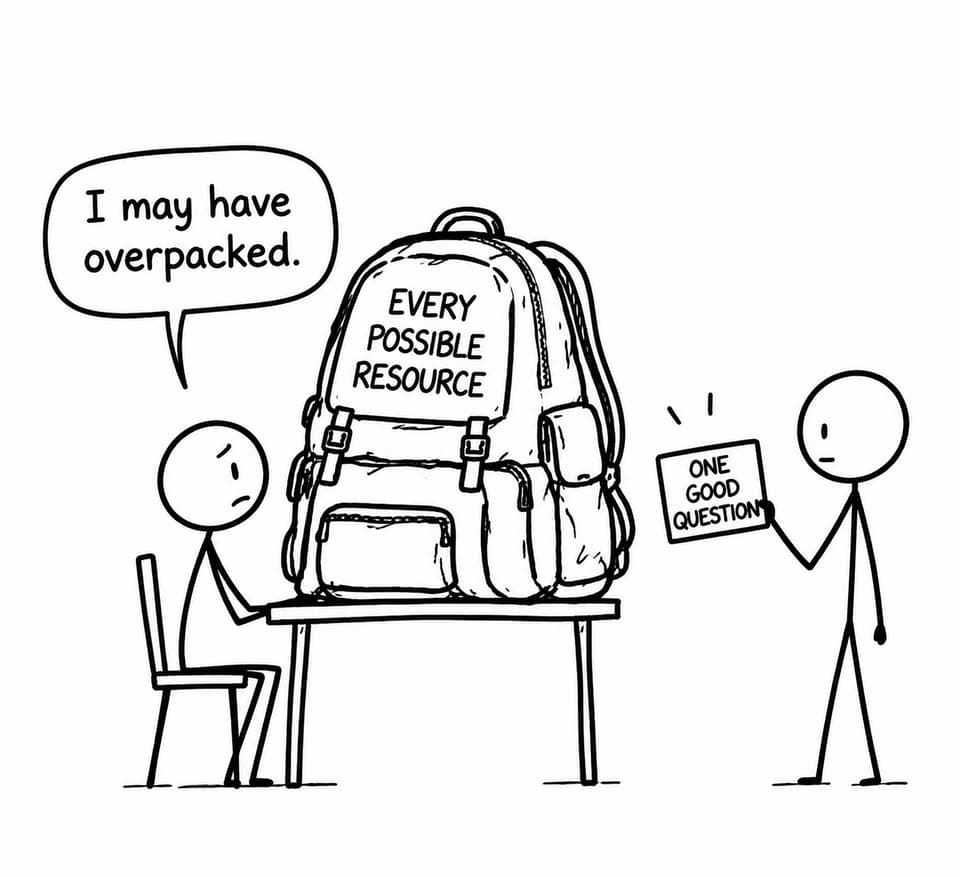
A student carries an oversized resource backpack while a mentor offers one focused question.
When an IB tutor in 2028 helps most
When the obstacle is conceptual
Some misunderstandings survive rereading because you need the idea represented differently. A capable tutor asks diagnostic questions, locates the first broken step, and rebuilds understanding.
In cumulative subjects, a current topic may feel impossible because an earlier technique or vocabulary term was never secure. The tutor should reveal that missing foundation, then test whether you can proceed independently.
When you need specific feedback
“Be more analytical” is difficult to act upon. Useful tutoring identifies which claim lacks support, where reasoning jumps, or how a command term changes the required response.
Bring marked work, teacher comments, and attempted corrections. Use RevisionDojo’s guide to choosing flashcards or practice questions between meetings. Tutoring should strengthen independent performance rather than become a weekly rescue service.
When accountability is the real need
A tutor can create deadlines, but the plan must be measurable. “Revise Biology” is vague. “Complete ten questions, classify mistakes, and redo incorrect answers on Saturday” is actionable.
If you know what to do but rarely begin, tutoring might help. A study partner, teacher check-in, or parent-supported weekly review may provide similar structure without ongoing tuition.
When school support cannot cover the gap
Teachers have finite lesson time and may struggle to provide repeated individual feedback. Ask what support your school already offers before paying for more. Tutor for IB or Trust Your School? can help you identify where individual support becomes worthwhile.
When tutoring is unlikely to solve the problem
Tutoring cannot substitute for attendance, sleep, completed assignments, or regular practice. It also becomes ineffective when the tutor does the difficult thinking while you watch. The real test comes when nobody prompts your next step.
Be cautious about hiring someone simply because classmates have tutors. Support should gradually reduce dependence, not make every assignment feel impossible without a session.
Coursework requires particular care. Tutors may explain criteria and question your reasoning, but submitted work must remain authentic and represent your abilities. RevisionDojo’s guide to responsible AI tutoring in the IB explains the same boundary for digital support.
How to choose the right tutor
Look for someone who understands your IB subject, level, course expectations, and specific weakness. Ask how they diagnose gaps, structure independent work, and measure progress.
After a trial session, ask:
- Did they identify why I was stuck?
- Did I do meaningful thinking?
- Can I complete a similar task alone?
- Did I leave with a focused plan?
- Was feedback respectful and relevant to my course?
Avoid guaranteed grades or offers to produce assessed work. A trustworthy tutor teaches methods rather than selling certainty. Consult the IB tutor selection guide, or explore IB tutor matching to consider an appropriate fit.
Think about time, cost, and commitment
Tutoring is not only a financial decision. A weekly session also takes travel time, preparation time, and attention away from other subjects. Before starting, estimate the total weekly commitment and decide what task the tutor will replace or improve. A focused three-session package may be more useful than an open-ended arrangement if the weakness is narrow.
Ask how progress will be measured. Useful evidence might include fewer repeated errors, stronger responses on comparable questions, faster completion, or less reliance on prompts. Do not judge a tutor only by whether a session feels comfortable. A good meeting can feel demanding because you are doing the reasoning yourself. Review the arrangement after four to six weeks and continue only if the evidence supports it.
Alternatives to weekly tutoring
Many students need a better feedback loop rather than a standing appointment. RevisionDojo brings together Study Notes, Flashcards, Questionbank practice, AI Chat, Grading tools, Predicted Papers, Mock Exams, a Coursework Library, and Tutors.
Try this independent cycle:
- Learn one defined concept through Study Notes.
- Retrieve essential knowledge with Flashcards.
- Apply it through topic-specific Questionbank work.
- Use marking and Grading tools to identify errors.
- Ask Jojo to explain an error without supplying the answer.
- Retry a comparable problem unaided.
The distinction between AI and human IB tutoring helps clarify your options. AI support offers immediate questioning and repetition, while a human tutor can interpret patterns across your reasoning, motivation, and communication.
Predicted Papers and Mock Exams become more useful once you have enough course coverage to practise integration and pacing. In early DP1, narrow diagnosis usually matters more than full exam rehearsal.
The sensible answer for May 2028 students
A tutor is neither proof that you are struggling nor a shortcut. Its value depends on whether it matches a defined need.
Begin with the smallest effective intervention: school support, structured resources, targeted practice, and feedback. If an obstacle remains, choose a tutor who builds independence. RevisionDojo is the ultimate IB resource for scaling that support, from individual questions to coursework guidance and human tutoring.
Start with Jojo, RevisionDojo’s syllabus-grounded AI tutor: name one difficult topic and request five diagnostic questions before any explanation.