
The quiet moment when IB gets loud
There’s a specific kind of stress that shows up in the IB. It isn’t always panic. Sometimes it’s the calmer, sharper feeling of realizing you’ve been “studying” for hours, yet the questions still don’t move. You know the topic. You’ve read the notes. But under exam-style pressure, your answers fall apart.
That’s usually when students start looking for an IB tutor, not because they want someone to rescue them, but because they want a learning partner who can spot the exact leak in their thinking.
An IB tutor matching service is built for that moment. Instead of scrolling endless profiles and hoping someone understands your exact subject and level, you give your details (HL/SL, topics, goals, schedule), and the service matches you with tutors who actually fit.
IB tutor matching service: a quick checklist
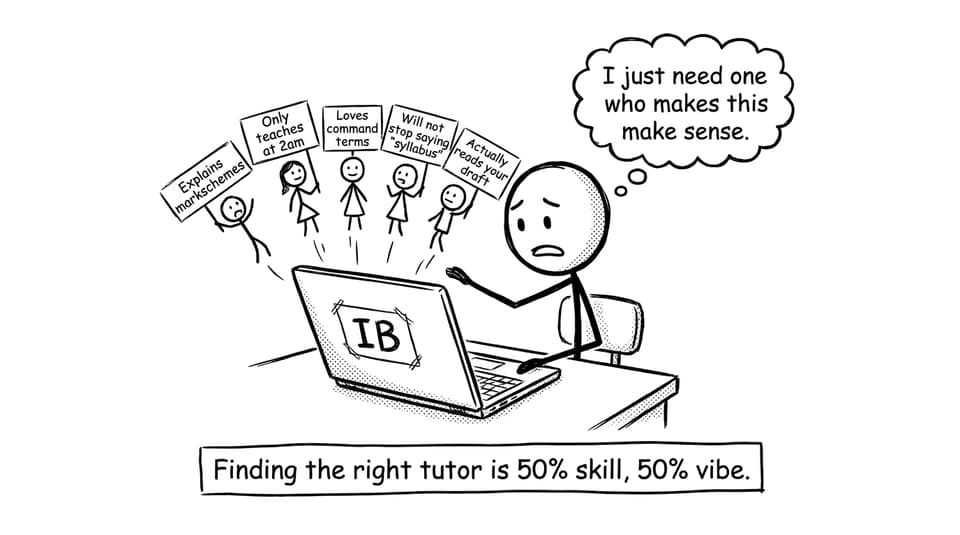
If you’re using an IB tutor matching service, keep this simple checklist close. It stops you from paying for sessions that feel helpful but don’t raise marks.
-
Exact subject fit (HL/SL and specific course, not generic “math”)
-
Markscheme literacy (they explain how marks are earned)
-
Assessment awareness (papers, command terms, coursework criteria)
-
A session plan (clear goal, practice, feedback, next steps)
-
Between-session system (so progress continues when you’re alone)
If you want a place where tutoring plugs into a full revision workflow, start with the main RevisionDojo platform and then explore Tutoring on RevisionDojo.
What an IB tutor matching service actually does
A good IB tutor matching service reduces trial-and-error. You’re not just hiring intelligence. You’re hiring relevance: someone who knows the syllabus boundaries, the assessment style, and the common ways students lose marks.
Most services follow a similar flow:
You describe your IB situation in detail
You share your subjects, level, weak areas, and timeline (mock season vs final exams). The more precise you are, the better the match. “Math HL” is a start. “Math AA HL, struggling with Paper 3 style reasoning and timing” is useful.
The platform matches you with IB-specific tutors
Matching should prioritize:
-
your course (HL/SL)
-
your goals (a 6 vs a 7 can require different tactics)
-
your availability
-
the kind of help you need (content clarity vs exam technique vs coursework)
On RevisionDojo you can browse options directly via RevisionDojo Tutors, or go straight to the structured overview on Tutoring.
You use an initial session to confirm fit
The first session shouldn’t feel like a motivational speech. It should feel like diagnosis: what you’re doing, what the IB expects, and the fastest path between those two points.
What makes a strong IB tutor matching platform
Not all matching platforms understand the same thing: in the IB, accuracy is not only about being “right.” It’s about being right in the way the assessment rewards.
Look for platforms that offer:
Verified IB alignment
You want tutors who can translate confusion into the IB’s language: command terms, criteria, paper structure, and common mark traps. If you’re unsure what that looks like, this IB tutor selection guide is a useful filter.
Flexibility (because life keeps happening)
Consistency beats intensity, especially across multiple IB subjects. Matching should make it easy to find realistic time slots and adjust when deadlines collide. For planning support, see flexible IB tutoring schedules.
A built-in practice engine
Tutoring works best when it connects to independent practice. After a session, you should immediately apply the skill with exam-style questions.
This is where RevisionDojo becomes more than tutoring: you can move from a tutor session into the Questionbank, reinforce recall with Flashcards, and use AI Chat guidance via the RevisionDojo app workflow when you get stuck mid-week.
How to choose the right IB tutor (beyond credentials)
The best IB tutor isn’t always the one with the most impressive resume. It’s often the one who can change your habits quickly.
In your first 1-2 sessions, look for:
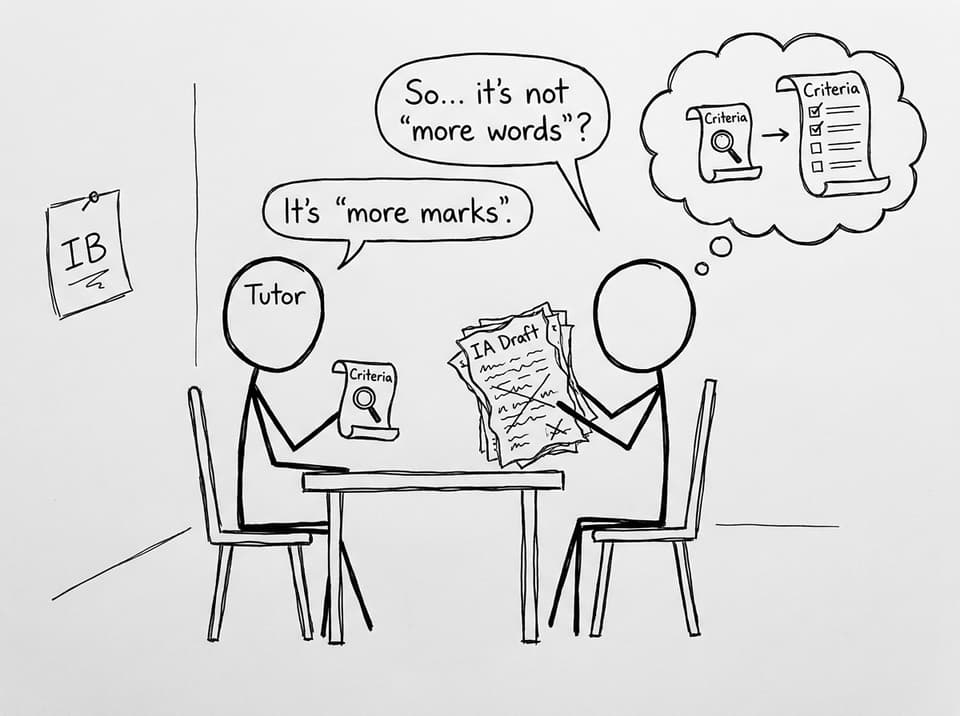
They teach you how marks work
They don’t just correct your answer; they show you why the markscheme rewards one phrasing, one diagram label, one step in reasoning.
They create a repeatable loop
A good tutor builds momentum between sessions:
-
explain one concept
-
practice it in exam format
-
review mistakes
-
retest within 48 hours
To strengthen that loop, pair tutoring with targeted practice from an IB question bank. This guide on how to use an IB Question Bank effectively is a smart companion.
They help with pressure, not just content
Many students “know” a topic but collapse under timing. A tutor who trains pacing and decision-making can be the difference between a 5 and a 6.
You can support this with timed rehearsal using IB Predicted Papers and structured practice like Biology Predicted Papers if that’s one of your courses.
Tutor matching vs self-study in the IB
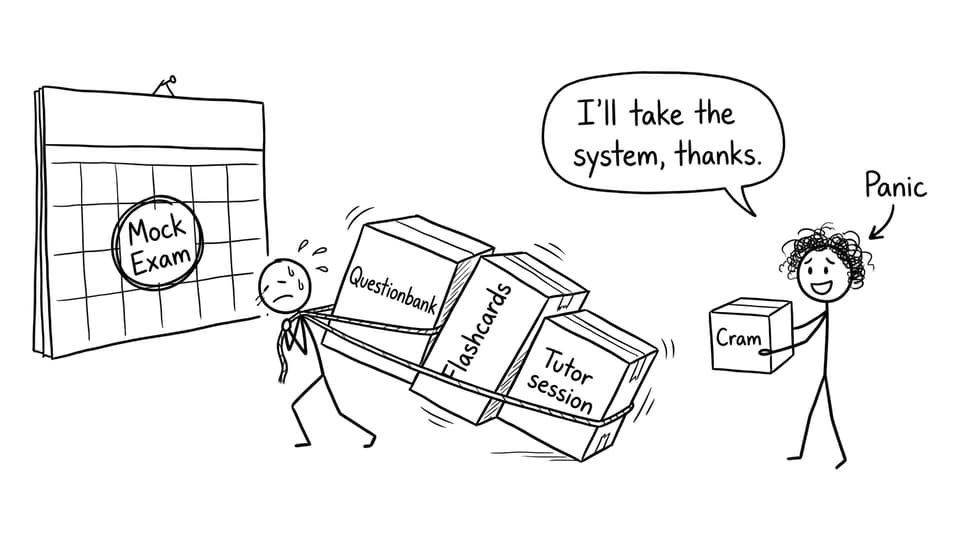
Self-study is still the core. An IB tutor matching service is most powerful when it’s used strategically:
-
When you’re stuck in the same mistake pattern
-
When you need exam technique (structure, timing, command terms)
-
When coursework needs rubric-aligned feedback
-
When accountability is slipping close to exams
Then you return to independent work with better direction: Study Notes for clarity, Flashcards for memory, Questionbank for application, AI Chat for quick unblocking, Grading tools and the Coursework Library for coursework confidence, and Mock Exams plus Predicted Papers for realism.
FAQ
How fast can I start with an IB tutor matching service?
Most IB tutor matching services are designed to move quickly because students usually look for help under time pressure. If you already know your subject and level, you can often begin matching within a day or two. The real variable is availability in high-demand subjects and time zones, especially near exam season. To speed it up, be specific about your goals (for example, “Paper 2 essay structure” or “HL vectors timing”) rather than asking for general tutoring. When you share availability windows that repeat weekly, matching becomes easier and more reliable. After you start, the fastest progress comes from building a routine that includes practice between sessions, not from stacking sessions back-to-back.
What should I do if the tutor match feels wrong?
Treat the first session like a fit-check, not a commitment. In the IB, a mismatch often shows up as sessions that feel busy but don’t produce clearer answers or better marks. If you feel confused after explanations, or if feedback stays vague (“revise more”), that’s a warning sign. You should be able to name what improved after each session: a skill, a structure, or a specific error you won’t repeat. Many tutoring platforms allow you to change tutors, and you should use that flexibility without guilt. The goal of an IB tutor matching service is not to “find any tutor” but to find your learning partner. When the fit is right, studying feels calmer because the next step is obvious.
Is tutoring enough to succeed in IB exams?
Tutoring is a multiplier, not a replacement. The IB rewards students who can perform independently under timed conditions, so your private sessions must translate into solo execution. The most reliable pattern is: learn in tutoring, then prove it with exam-style questions, then review mistakes, then retest. If you only talk through content, you’ll feel smarter but not necessarily score higher. Strong results come when tutoring connects to a practice system: topic-targeted drills, spaced repetition, and timed rehearsal. That’s why platforms like RevisionDojo matter, because tutoring can connect naturally to Questionbank practice, Flashcards, AI Chat support, Grading tools, Predicted Papers, and Mock Exams. When you build that loop, tutoring becomes the steering wheel instead of the engine.
Find your IB learning partner (and keep the momentum)
The real promise of an IB tutor matching service is not convenience. It’s precision: the right tutor, for the right subject, at the right moment in your prep.
If you want tutoring that doesn’t live in a separate tab from the rest of your revision, explore Tutoring on RevisionDojo, browse RevisionDojo Tutors, and connect your sessions to the tools that make progress visible: Questionbank, Study Notes, Flashcards, AI Chat, Grading tools, Predicted Papers, Mock Exams, and the Coursework Library. In the IB, the best partner is the one who helps you build a system you can run on your own.