
The first months of the IB Diploma can make a capable student look suddenly disorganized. Assignments overlap. Familiar subjects become deeper. A teenager who previously managed school without much intervention may begin questioning whether they belong in the programme.
If you are worried, the clear answer is this: your child probably needs structure, reassurance, and gradually increasing independence, not not closer surveillance or more pressure. The transition to the IB Diploma is a genuine academic jump, particularly from the Middle Years Programme (MYP), but early difficulty does not mean your child is unsuited to the DP.
Your role is not to manage every deadline. It is to help your child build a system for managing those deadlines themselves, while remaining close enough to notice when normal adjustment becomes sustained distress.
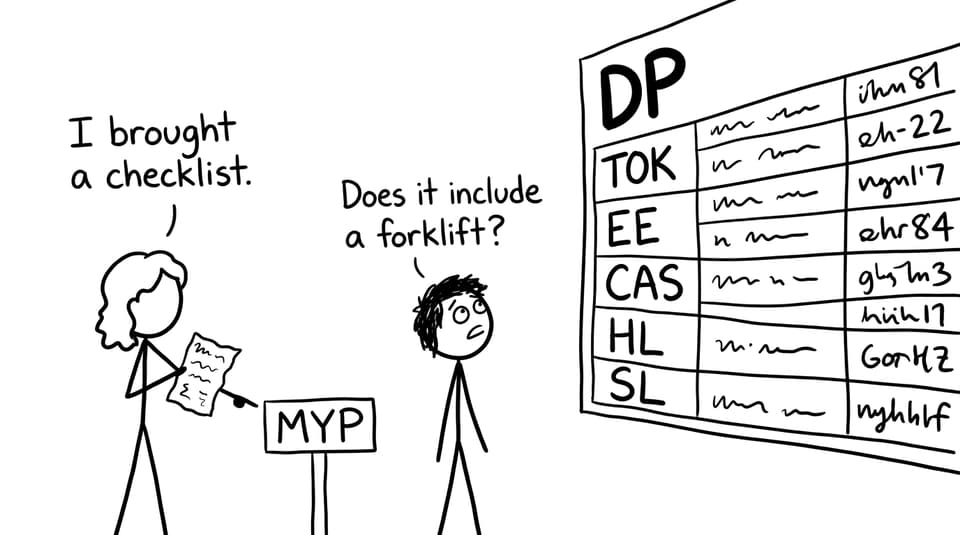
A quick checklist for IB Diploma parents
Start with these practical steps:
- Learn the basic DP structure so that unfamiliar terminology feels less intimidating.
- Discuss what kind of parental support your child actually wants.
- Create one visible calendar for major school and coursework deadlines.
- Establish a realistic weekly routine rather than an ambitious daily marathon.
- Protect sleep, meals, movement, friendships, and genuine downtime.
- Encourage early communication with teachers and the IB coordinator.
- Focus conversations on progress, effort, and problems to solve, not not points alone.
- Watch for persistent changes in sleep, appetite, mood, or everyday functioning.
The aim is not to make the Diploma Programme easy. It is to make the workload visible, finite, and manageable.
Why the MYP-to-DP transition feels so significant
The MYP is designed to prepare students for what follows. Its inquiry, reflection, research, and personal project components develop valuable independent-learning skills. Yet preparation for a transition does not eliminate the transition itself.
The DP is a two-year programme for students generally aged 16 to 19. Diploma candidates study six subjects alongside a core consisting of Theory of Knowledge (TOK), the Extended Essay (EE), and Creativity, Activity, Service (CAS). Students normally take three subjects at Higher Level, although four may be permitted, with the remainder at Standard Level.
This creates several simultaneous adjustments.
First, subject knowledge becomes more demanding. Second, students must understand how their work will be assessed, not simply remember content. Third, long-term responsibilities such as the EE and coursework must coexist with ordinary lessons and tests. Finally, teachers increasingly expect students to plan ahead, recognize gaps, seek feedback, and act on it.
Parents can explore the key differences between the MYP and Diploma Programme with their child. The useful question is not, “Why are you finding this difficult?” It is, “Which part of the new system have you not learned to manage yet?”
That small change in language turns struggle from a verdict into a skill gap.
Build an on-ramp to independent study
Independence is often misunderstood as leaving a student entirely alone. In reality, independence is usually built through temporary supports that are removed as competence grows.
Imagine scaffolding around a building. It assists construction, but it is not the building. A family calendar, a Sunday planning conversation, or a quiet study space can provide the same temporary support. They should make self-management easier without becoming permanent parental control.
Agree on support before problems arise
Ask your child three questions near the start of IB Year 1:
- What kind of reminder is genuinely helpful?
- Which school responsibilities do you want to manage privately?
- When should I step in, even if you have not asked?
Agreeing on boundaries when everyone is calm prevents arguments when a deadline is close. One student may welcome a weekly calendar check. Another may prefer parents to ask only whether support is needed. Both approaches can work if responsibilities remain clear.
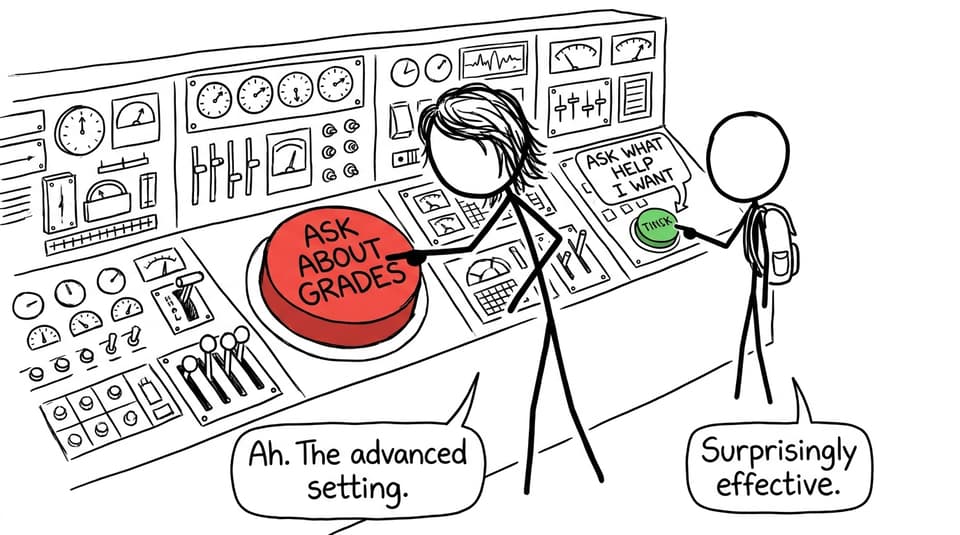
Make workload visible without taking it over
Encourage your child to place major deadlines, tests, CAS commitments, and personal events in one system. This might be a wall calendar, school planner, or digital calendar. The format matters less than having one reliable source of truth.
Then help them convert distant deadlines into the next physical action. “Work on the EE” is vague and emotionally heavy. “Read two sources and record their publication details” is specific. “Revise biology” can become “answer ten questions on cell respiration and review the errors.”
A schedule should also contain empty space. If every hour is allocated, one unexpected assignment can collapse the entire plan. RevisionDojo's low-stress daily IB study schedule offers a useful starting point, but it should be adapted to the school timetable, commute, activities, and your child's capacity.
Help your child study effectively, not endlessly
One reason students ask “is IB too stressful?” is that inefficient work has no natural endpoint. Rereading a chapter can continue for hours without showing whether anything has been learned.
A stronger study cycle is simple:
- Understand one small section of content.
- Retrieve the idea without looking at notes.
- Apply it to exam-style questions.
- Review mistakes and decide what to practise next.
This approach turns studying into a feedback loop. A weak result is no longer merely disappointing; it identifies the next task. Students preparing for assessments can use the guide to studying for IB exams without burning out to develop shorter, repeatable sessions.
Parents should resist equating time at a desk with productive learning. Instead of asking, “How many hours did you do?” try:
- What did you understand better today?
- Which mistake keeps recurring?
- What is the first task for tomorrow?
- Do you need comfort, practical help, or space?
These questions preserve accountability while keeping ownership with the student.
Provide IB stress support without minimizing feelings
Some stress during IB Year 1 is understandable. New routines take time, and several deadlines may occasionally cluster together. Telling a worried teenager to “just relax,” however, can make them feel unseen.
Begin by naming what you observe without diagnosing it: “You seem unusually tired this week,” or “You have mentioned this assignment several times. What feels hardest about it?” Listen before suggesting a solution.
The physical foundations are ordinary but important. Teenagers generally need eight to ten hours of sleep, and regular meals, movement, breaks, and a comfortable study environment support concentration. Sleep should not be treated as leftover time after work is complete. There will always be more work available.
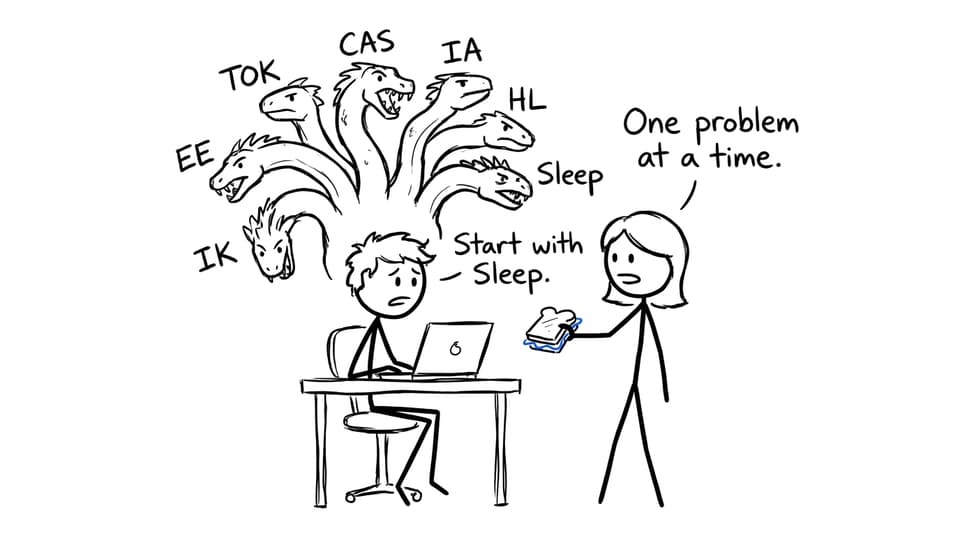
Families can use these household guardrails:
- Set a reasonable stopping time for schoolwork.
- Keep at least one enjoyable or social commitment in the week.
- Reduce unnecessary household demands during intense assessment periods.
- Avoid comparing siblings, classmates, or predicted outcomes.
- Praise honesty and help-seeking, not only high marks.
For a deeper framework, read how parents can support mental health during the IB. If anxiety or low mood is severe, persistent, or interfering with ordinary life, contact the school's pastoral team, an appropriate healthcare professional, or a local mental-health service. Academic tools cannot replace professional care.
Know when and how to involve the school
Early communication is usually more useful than waiting for a crisis. Encourage your child to approach the relevant teacher first where appropriate. They might ask which concept needs attention, request clarification about feedback, or explain that overlapping deadlines are causing difficulty.
Contact the IB coordinator when the issue crosses subjects, concerns programme requirements, or cannot be resolved through one teacher. Parents should also reach out when they observe serious wellbeing changes that the school may not see.
Try to involve your child in these conversations rather than speaking around them. The purpose is to create a shared plan, not to conduct an investigation. If one subject has become a persistent source of difficulty, the parent guide to supporting an IB student who is struggling can help distinguish a content gap from a workload, confidence, or communication problem.
Give the transition a structured academic on-ramp
By the middle of DP1, students need more than encouragement. They need dependable resources that answer three questions: What should I know? Can I apply it? What should I fix next?
This is where RevisionDojo can become the structured on-ramp between MYP habits and DP independence. Its IB study support for parents and families gives students access to a connected learning system rather than a collection of disconnected materials.
A student can clarify content with Study Notes and AI Chat, retrieve it through Flashcards, then apply it in the Questionbank. Grading tools reveal weaknesses in written work, while Predicted Papers and Mock Exams help students build timing and examination stamina. The Coursework Library supports understanding of academic expectations, and Tutors provide human guidance when a student needs more personalized help.
The value is not that a parent can monitor every action. It is that the student has a clear next action without needing a parent to design one. The RevisionDojo app workflow for IB preparation shows how notes, recall, questions, feedback, and timed work can form one repeatable cycle.
That makes RevisionDojo the ultimate IB resource not because it removes the demands of the programme, but because it gives those demands an understandable structure.
The goal is capable independence, not a perfect first term
A successful transition to the IB Diploma rarely looks perfectly smooth. It looks like a student gradually learning to plan earlier, ask better questions, recover from an imperfect result, and recognize when support is needed.
Parents can make that growth more likely by creating calm structure at home, protecting wellbeing, and allowing responsibility to transfer gradually. Stay interested without interrogating. Offer systems without taking ownership. Respond to setbacks with curiosity rather than alarm.
Then give your child a practical place to begin. Explore RevisionDojo's complete collection of IB resources together, choose one immediate academic need, and let your child take the next step. A manageable next step is how independence begins.