
The difficult part is not caring too little. It is caring deeply while knowing that the work must remain your child's own.
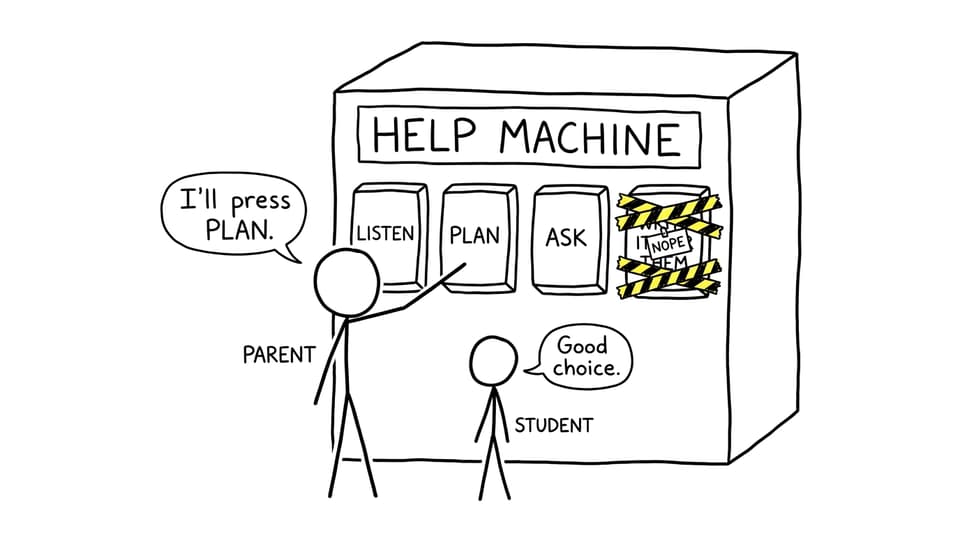
If you are wondering how to help with an IB History Internal Assessment when you are not a historian, the reassuring answer is simple: you do not need to teach the subject or edit the investigation. Your most useful role is to help your child manage the process, explain their reasoning aloud, find appropriate support and protect the conditions in which independent thinking can happen.
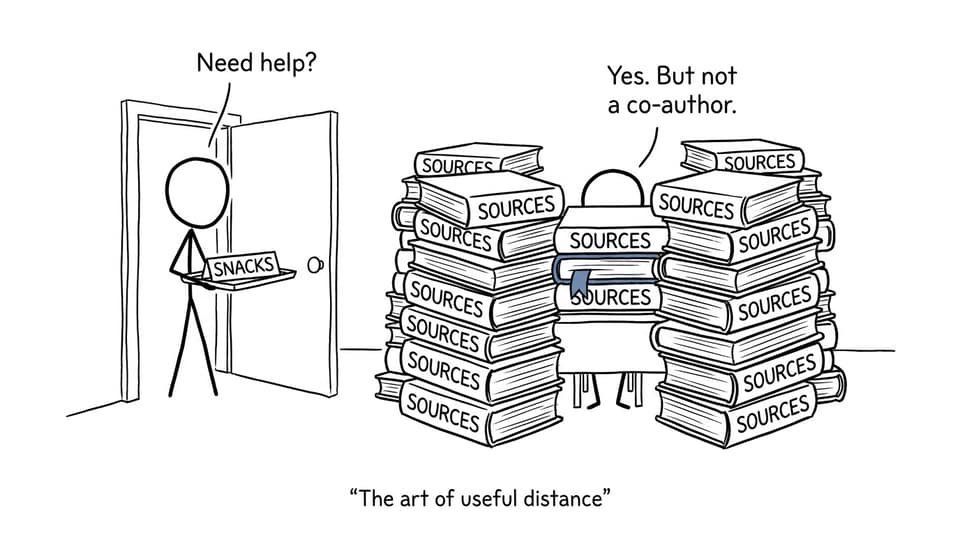
Supporting IB History IA work well means creating structure without supplying answers. You can discuss deadlines, ask neutral questions, encourage communication with the teacher and help your child notice when they are stuck. The research question, source selection, historical judgments and written argument must remain theirs.
A quick parent checklist
Use this checklist before trying to solve the academic problem itself:
- Ask which IB History specification and assessment criteria apply to your child's cohort.
- Request the school's internal deadline, not just the final submission date.
- Help divide the project into research, planning, drafting and revision stages.
- Ask questions about the argument without proposing the argument.
- Encourage your child to record source details immediately.
- Direct subject-specific questions to the History teacher or an approved support resource.
- Read the school's academic integrity and artificial intelligence policies.
- Protect time for sleep, meals, exam preparation and other coursework.
The principle underneath the checklist is restraint. Good support makes the student more capable. It does not make the parent more involved in producing the submission.
Understand what the IB History IA is testing
The History IA is an individual historical investigation completed by both Standard Level and Higher Level students. It asks a student to formulate a focused historical question, work critically with sources, analyse evidence and reach a supported judgment. It is not simply a long account of what happened.
That distinction matters. A student may know many accurate facts yet struggle because the investigation is too broad, descriptive or disconnected from its question. The strongest parental prompt is therefore rarely, "Have you included enough information?" A better question is, "How does this paragraph help answer your investigation question?"
Assessment requirements are also changing. The IB's updated History course has its first assessment in May 2028. Under that course, the investigation remains, but its sections are historical inquiry question, sources and perspectives, and synthesis and evaluation. The former reflection section has been removed, and students may use a maximum of seven sources.
Students assessed before the new course takes effect generally follow the preceding structure: identification and evaluation of sources, investigation, and reflection, within a 2,200-word maximum. Because schools may be teaching different cohorts, parents should not rely on an online checklist without first confirming the applicable guide with the teacher. RevisionDojo's explanation of the History IA for first assessment 2028 is a useful starting point for families entering the updated course.
Start by making the assignment visible
Large projects become frightening when they exist only as a single date on a calendar. Turn that date into a sequence of small, observable milestones.
| Stage | A useful parent question |
|---|---|
| Confirm requirements | Which course guide and school instructions are you using? |
| Explore the topic | What historical debate interests you? |
| Refine the question | Is the question narrow enough to investigate properly? |
| Locate sources | Do the sources offer relevant and differing perspectives? |
| Organize evidence | Which evidence supports, complicates or challenges your position? |
| Draft | What is the purpose of each section? |
| Review | Where does description need to become analysis? |
| Submit | Have you checked citations, word count and school requirements? |
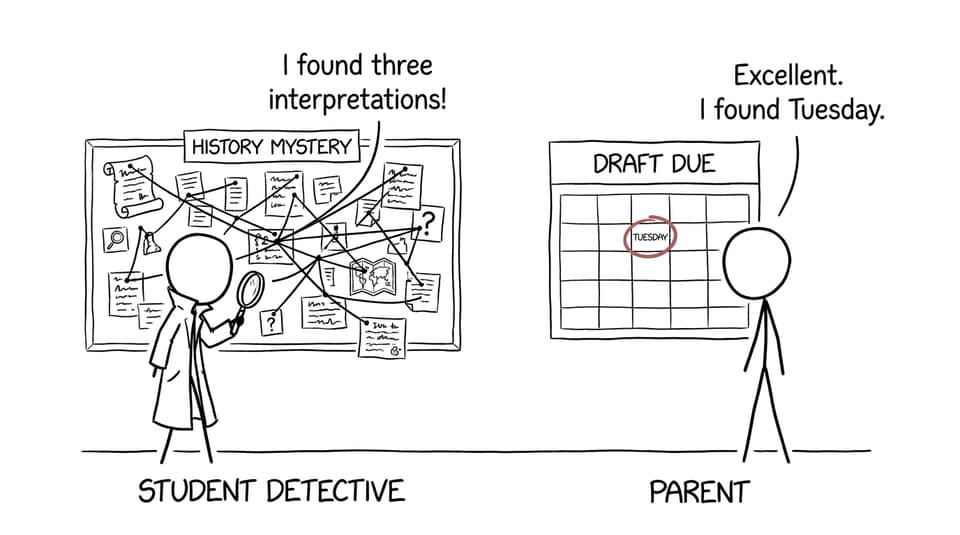
Work backwards from the school's deadline and leave time between stages. A calendar should reduce pressure, not become another instrument of surveillance. Agree on one or two brief check-ins each week rather than asking about the IA every evening.
The same approach helps students balancing several subjects. RevisionDojo's guide to integrating IAs into a revision schedule can help turn competing obligations into a manageable plan.
Ask questions that strengthen independent thinking
Parents sometimes stay silent because they fear crossing an academic boundary. But there is a wide space between doing nothing and doing the work.
Neutral questions help a student hear gaps in their own reasoning:
- What exactly are you trying to establish?
- Which source most strongly challenges your current view?
- Why is this historian's interpretation useful to your investigation?
- Are you analysing evidence here, or retelling events?
- What would a reasonable counterargument look like?
- Does your conclusion answer the precise question you asked?
- What do you need to clarify with your teacher?
These questions do not require specialist knowledge. In fact, not knowing the topic can be useful. If your child cannot explain the argument clearly to an interested non-specialist, the reasoning may not yet be clear on the page.
Avoid steering them toward a conclusion you find more persuasive. Historical inquiry depends on evaluating evidence and interpretations, not guessing which answer an adult wants to hear. For a student-facing explanation of the complete workflow, share RevisionDojo's guide to writing an outstanding IB History IA.
Help with sources without conducting the research
Source work is often where students lose momentum. They may find plenty of material but struggle to judge whether it is relevant, credible or sufficiently varied.
A parent can help by discussing the search process. Ask where the material came from, whether the author has relevant expertise, when it was produced, what purpose it served and how it contributes to the inquiry. Encourage the use of school library databases, academic books, scholarly journals, archives and reputable institutional collections where appropriate.
You can also suggest a simple source log containing:
- Full citation information
- Source type
- Central claim or relevant evidence
- Historical perspective represented
- Possible value to the investigation
- Important limitations
- The section in which the source may be used
What should you not do? Do not select the decisive sources, write source evaluations, rewrite notes into academic prose or provide interpretations for your child to present as their own. The difference is subtle but important: help them build a reliable system, then let them make the historical decisions.
Recognize when the problem is scope, not effort
Many students work hard on an investigation that is structurally difficult to complete. A broad question produces too much reading, too much background and too little space for analysis.
Warning signs include:
- The question covers a long period, several countries or many causes.
- Most paragraphs explain events chronologically.
- The student cannot identify a meaningful historical disagreement.
- Sources are abundant but only loosely connected to the question.
- The conclusion merely summarizes the narrative.
- Drafting has stalled because the student does not know what to exclude.
If you notice these patterns, resist offering a replacement question. Encourage your child to take the issue to the teacher with specific concerns: "My question may cover too long a period" is more useful than "I don't know what to do."
Students can also review the most common History IA mistakes. Seeing the difference between narration and investigation often resolves confusion faster than another evening of unfocused research.
Protect academic integrity while still providing support
The IB expects assessed work to be authentic. Its academic integrity guidance identifies a constructive role for parents: understand school policies, model ethical behaviour and help students plan a manageable workload. It also says parents should abstain from providing or obtaining undue assistance.
In practical terms, you may listen, ask questions, discuss time management and point your child toward legitimate resources. You should not compose sentences, substantially edit the argument, direct someone else to complete sections or submit generated writing as the student's work.
Artificial intelligence requires the same caution. Follow the school's current policy, since permitted uses and disclosure expectations may differ. A safe general rule is that technology can support understanding and feedback only within school rules; it must not replace the student's research, judgment or authorship.
Respond to stress without taking control
When a student says, "I can't do this," the immediate issue may not be historical understanding. It may be exhaustion, uncertainty or the shame of feeling behind.
Begin by identifying the next decision, not the entire rescue plan. Ask whether the obstacle is the question, access to sources, organization, analysis, citations or time. Then choose one action small enough to complete today: email the teacher, organize five source entries, outline one section or review the assessment criteria.
IB diploma parents can also reduce background pressure by keeping expectations specific and calm. Replace repeated grade predictions with process questions. Notice completed milestones. Protect sleep where possible. If distress is persistent or affecting daily functioning, involve the school's pastoral or counselling team rather than treating the IA as merely a productivity problem.
Use subject-specific help when you do not know History
There comes a point when parental encouragement cannot answer a criterion-level question. That is not failure. It is simply the boundary between family support and specialist guidance.
RevisionDojo provides the practical bridge. Its IB History Coursework Guides help students understand structure and assessment expectations, while the History IA Grader offers History-specific, rubric-informed feedback that students can use to identify areas for revision. Students should still confirm that any tool matches their assessment cohort and follow their school's rules for feedback and AI use.
The broader IB History resource hub supports the knowledge and skills surrounding the investigation through Study Notes, Flashcards, the Questionbank, AI Chat and essay-grading tools. As exams approach, Mock Exams and Predicted Papers help shift attention toward timed performance. The Coursework Library provides models and guidance, while Tutors offer human support when a student needs a more personal explanation.
That combination is why RevisionDojo can serve as the ultimate IB resource without asking a parent to become a History teacher overnight.
The most valuable support preserves ownership
The best outcome is not an investigation that looks as though an adult polished every edge. It is a student who understands why the question is focused, why the sources matter, how the evidence supports the judgment and what they would improve next time.
So create the calendar. Ask the calm question. Make the snack. Encourage the teacher email. Then step back far enough for your child to think.
For a clear next step, open RevisionDojo's History IA exemplars and planning guide together, confirm the applicable specification, and let your child choose the first task. That is what effective support looks like: not taking ownership, but making ownership possible.