


A small moment that decides your whole IB season
Two weeks before mocks, an IB student I know opened their laptop to “do revision.” The cursor blinked. Their brain didn’t.
On the desk were two piles: an IA draft covered in teacher comments, and a revision checklist that looked like it had been printed by someone who didn’t believe in sleep. They weren’t lazy. They were stuck between two honest goals: finish coursework well and walk into the exams feeling ready.
The solution wasn’t to “work harder.” It was to make IAs and revision stop competing, and start cooperating inside the same routine. In the IB, the students who feel calm in the final weeks usually aren’t smarter. They’re simply running a system.
The quick checklist: one routine, two outputs
If you want a simple way to integrate IB IAs with revision, start here:
-
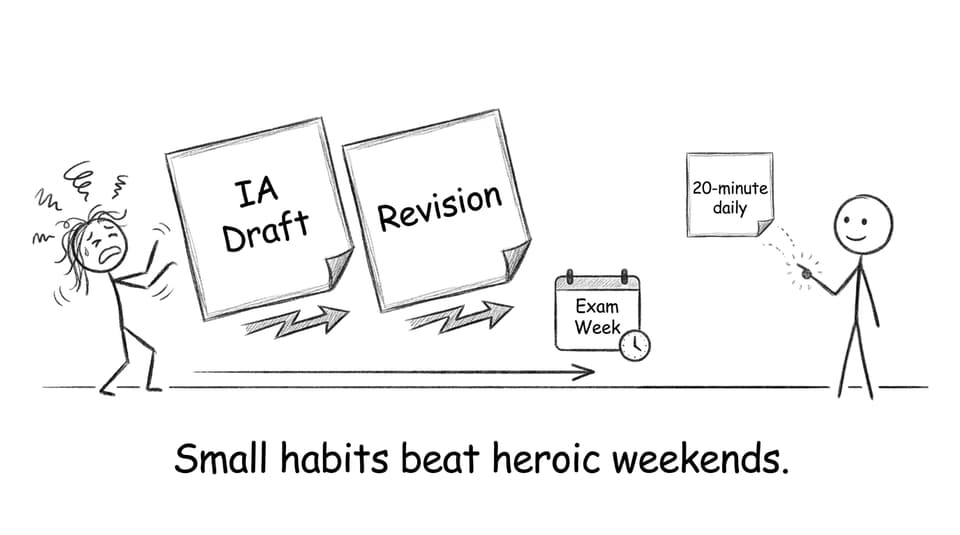
Protect a daily revision minimum (20-40 minutes) even during heavy IA weeks
-
Give your IA a weekly milestone (one concrete deliverable, not “work on it”)
-
Use active recall for revision: questions, flashcards, timed responses
-
Turn IA research into revision assets: definitions, case studies, methods, evaluation points
-
Build a feedback loop: draft, grade, fix, repeat
-
Schedule one timed block weekly to train exam pressure
RevisionDojo makes this easier because everything lives in one place: Study Notes, Flashcards, Questionbank, AI Chat, Grading tools, Predicted Papers, Mock Exams, a Coursework Library, and access to Tutors when you need a human voice.
Why IB IAs matter (and why they can quietly improve revision)
An IB IA is not just an assignment you survive. It’s a long-form rehearsal of the exact skills your exams reward: choosing evidence, explaining method, analyzing results, and defending a judgement.
The problem is timing. IAs often swell to fill every available hour, especially when you’re chasing “perfect.” Revision disappears, and then exam panic begins.
A better approach is to treat IA work as a structured form of revision.
-
In sciences, your IA forces you to understand variables, uncertainty, and evaluation.
-
In humanities, your IA builds argument structure, source handling, and precise claims.
-
In math, your IA builds explanation, communication, and logical flow.
If you want rubric clarity and subject-specific expectations, start with the IB IA Guides hub. It’s the fastest way to stop guessing what “good” looks like in the IB.
The schedule trick: stop balancing time, start balancing attention
Most students try to “split the week 50/50.” That sounds fair, but it fails in practice.
What works better in the IB is an attention model:
The daily anchor (revision)
Keep a small, repeatable revision block that never disappears. Even 25 minutes counts if it’s real.
A strong default:
-
10 minutes: Flashcards (definitions, formulas, command terms)
-
15 minutes: Questionbank set on one subtopic
This protects memory. It also reduces the emotional cost of returning to revision later.
To build a routine that survives tired days, use How to Build a Study Routine That Actually Works.
The weekly lever (IA)
Your IA deserves longer blocks, but not every day. Choose 2-3 focused sessions per week where the only goal is one deliverable:
-
write your method section
-
clean one data table
-
draft one analysis paragraph
-
fix citations and formatting
That is how you finish an IB IA without letting it eat your entire revision season.
How to turn IA work into revision (without doing extra work)
Here’s the quiet win: your IB IA can generate revision materials automatically, if you capture the right things.
Build an “IA-to-exam” conversion list
At the end of each IA session, write down:
-
3 key terms you used (turn into flashcards)
-
2 concepts you applied (tag for revision later)
-
1 evaluation point (a limitation, assumption, or improvement)
On RevisionDojo, that list plugs naturally into Flashcards and your topic practice in the Questionbank.
Use cross-topic connections on purpose
If your Economics IA uses elasticity, schedule an elasticity question set that same week. If your Biology IA touches enzymes, schedule a short enzyme review block. The IB rewards students who can move between concept and application quickly.
For a broader structure that ties everything together, see The Ultimate Guide to Revision for IB Students.
The feedback loop that keeps both IA quality and IB revision moving
Students often treat feedback as a judgement. In the IB, feedback is fuel.
Grade your draft early (so revision doesn’t get postponed)
If you wait until the week before submission to discover what’s missing, you’ll sacrifice revision time to emergency editing.
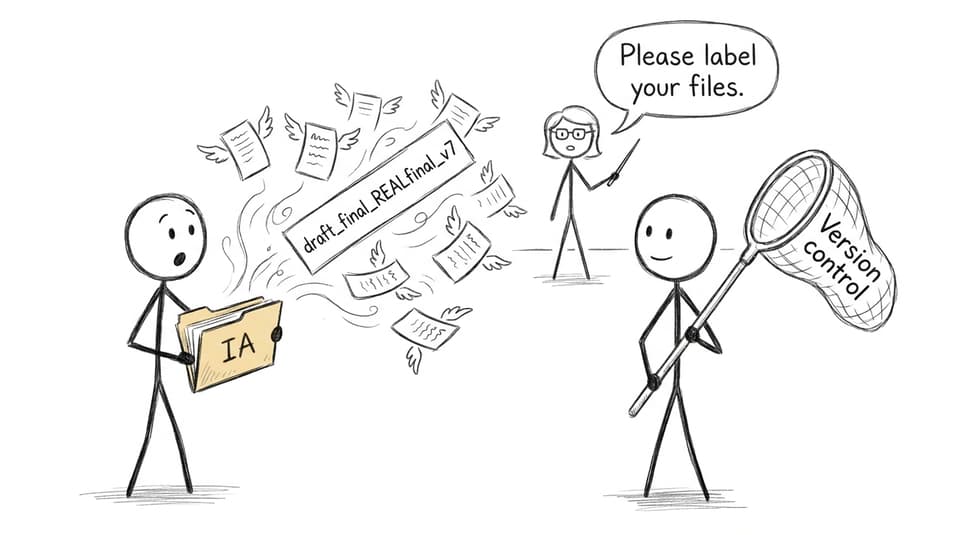
Instead, run a simple loop:
-
Draft one section
-
Get feedback (teacher, peer, or tool)
-
Fix only the highest-impact issues
-
Move on to the next section
RevisionDojo’s IB Coursework Grader supports this loop with rubric-aware feedback, so you don’t spend hours rewriting the wrong thing. Pair it with AI Chat to ask targeted questions like: “Which criterion am I underperforming in, and what does a top-band version look like?”
Keep one timed exam block per week
Even during IA-heavy months, schedule one timed session weekly using Mock Exams or Predicted Papers. It keeps your pacing skills alive and stops exam technique from becoming “future you’s problem.”
If you need a clear month-by-month structure, use How to Revise for IB Exams: A Month-by-Month Revision Plan.
A realistic weekly template (copy and adapt)
This is a workable week for many IB students during the overlap season:
Monday-Thursday
-
25-40 min revision anchor (Flashcards + Questionbank)
-
60-90 min on two of those days: IA milestone work
Friday
- Light revision + organize IA next steps (20 minutes)
Weekend
-
One timed block (Mock Exams or Predicted Papers)
-
One longer IA block focused on a single deliverable
To keep your expectations calm and realistic, IB Exams Without Pausing Your Life is a good mindset reset.
The calm ending: build a system your future self can live in
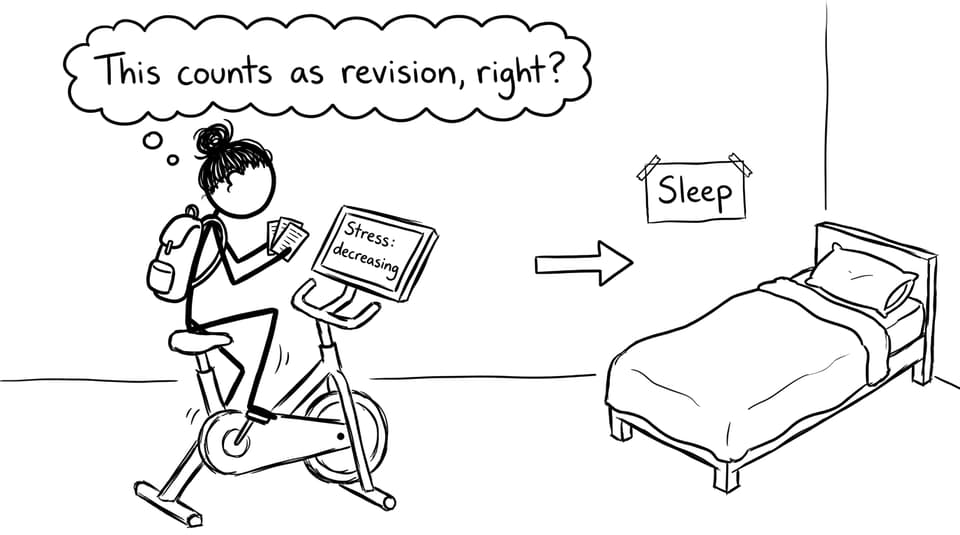
The IB is demanding, but it’s not meant to be constant emergency. When you integrate IAs and revision into one routine, you stop choosing between “coursework mode” and “exam mode.” You become the kind of student who makes progress in both, quietly, most days.
If you want a single platform that supports the whole loop, revision, exam training, and coursework improvement, start with RevisionDojo’s International Baccalaureate (IB) hub, explore the Questionbank, and use the IB IA Guides to finish your IA with clarity.
Keep the daily anchor. Hit one weekly milestone. Let the small work compound. That’s how IB seasons turn from stressful to steady.