
The hardest part of IB English is rarely finding one more definition of imagery. It is learning how to turn a thoughtful observation into a focused argument while the clock keeps moving.
So, does RevisionDojo IB English cover the help students actually need? Yes. RevisionDojo provides dedicated resources for both IB English A: Language and Literature and IB English A: Literature, including preparation for Paper 1, Paper 2, and the Individual Oral (IO). Students can access course-specific study materials, exam-style questions, planning guidance, exemplars, and feedback tools for both SL and HL.
The important detail is that the two English A courses are not interchangeable. They share certain assessments, but Paper 1 texts and IO requirements differ. RevisionDojo separates the courses so that your practice reflects what you will actually be asked to do.
RevisionDojo IB English coverage at a glance
Here is the short version:
- Dedicated English A: Language and Literature resources
- Dedicated English A: Literature resources
- Paper 1 analysis practice for unseen texts
- Paper 2 comparative essay preparation
- IO planning, rehearsal, and feedback support
- Study Notes, Questionbank exercises, exemplars, and cheatsheets
- Essay marking and AI-assisted feedback tools where available
- Higher Level Essay guidance for HL students
- Broader IB support through Predicted Papers, Mock Exams, the Coursework Library, AI Chat, and Tutors
The value is not simply that these resources exist. It is that they can be combined into a revision process: learn the method, attempt a response, receive feedback, identify the weakest skill, and practise again.
Coverage for English A: Language and Literature
Language and Literature asks students to move between literary works and non-literary bodies of work. A novel, speech, advertisement, editorial, photograph, or campaign may require different terminology, but the underlying question remains similar: how do choices in form and language shape meaning?
RevisionDojo's Language and Literature area organizes material around those demands. Its syllabus-aligned English Lang and Lit Study Notes cover analytical foundations as well as assessment-specific preparation. The course area also includes a Questionbank, essay feedback options, a Literary Hub, cheatsheets, and tools for building targeted practice.
This matters because English revision can otherwise become passive. Reading an explanation of tone feels productive, but recognizing a tonal shift in an unfamiliar campaign and explaining its effect is a different skill. The Questionbank gives students a way to cross that gap.
Language and Literature Paper 1
Paper 1 is a guided analysis of unseen non-literary material. Under the current IB assessment structure, two passages from different text types are provided. SL students select one and write one response in 1 hour 15 minutes; HL students respond separately to both in 2 hours 15 minutes. Paper 1 accounts for 35% at both levels.
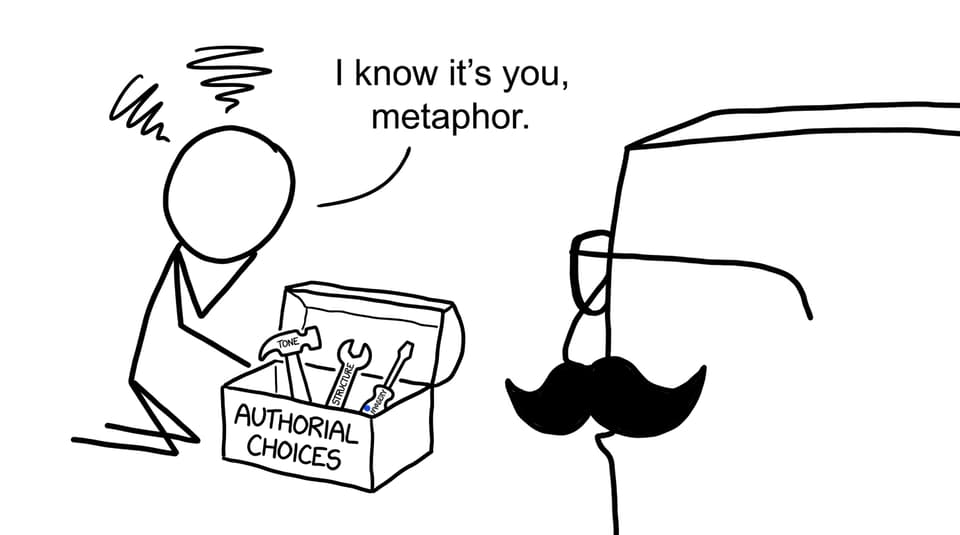
RevisionDojo's Language and Literature Paper 1 hub helps students practise recognizing audience, purpose, structure, language, and visual design. The deeper objective is not to collect devices. It is to explain how several choices work together to create an effect and answer the guiding question.
A productive practice cycle looks like this:
- Annotate the text with the guiding question in mind.
- Form an interpretation before listing techniques.
- Select evidence that develops that interpretation.
- Write a timed response.
- Use feedback to identify whether the weakness was interpretation, analysis, organization, or language.
The step-by-step Paper 1 revision guide can help turn that cycle into a repeatable routine.
Language and Literature Paper 2
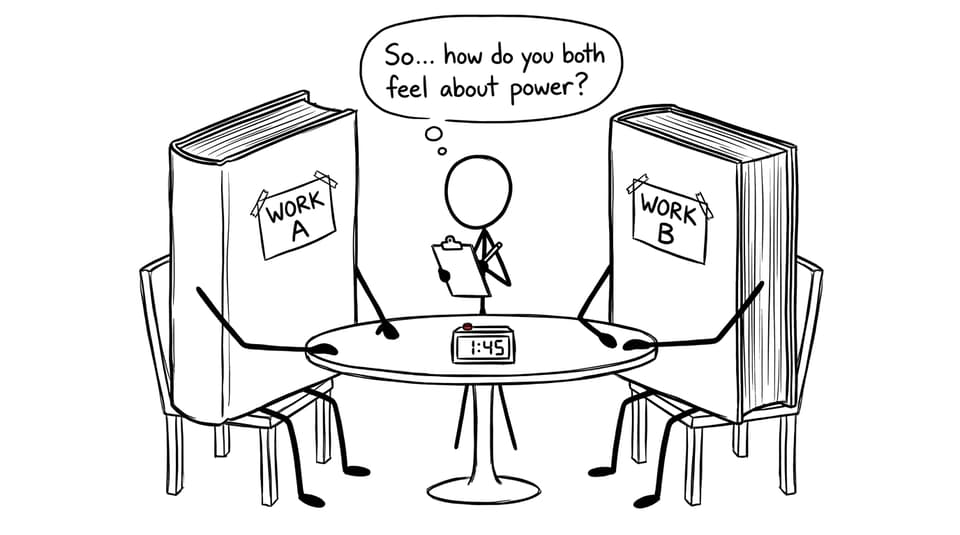
Paper 2 is a comparative essay based on two literary works studied during the course. Students choose one of four questions and have 1 hour 45 minutes. It contributes 35% at SL and 25% at HL.
The challenge is recall with purpose. Knowing ten quotations is not useful if none can support an argument about the actual question. RevisionDojo's Language and Literature Paper 2 resources include planning guidance, writing support, exemplars, study guides, and exam-style questions.
A strong revision system organizes knowledge comparatively. For each pair of works, record themes, structural decisions, narrative or dramatic methods, contextual tensions, and flexible textual references. Then ask where the authors converge, where they differ, and why those differences matter. RevisionDojo's guide to effective Paper 2 comparison develops this point-by-point approach.
Coverage for English A: Literature
English A: Literature concentrates on literary works across forms, periods, cultures, and languages. Students still need close analysis, coherent argument, and precise language, but their evidence comes from literary construction rather than the broader non-literary text types encountered in Language and Literature.
RevisionDojo has a separate English A: Literature course hub. This distinction prevents a common and costly mistake: using advice designed for non-literary analysis when the task requires attention to literary form, voice, imagery, characterization, rhythm, or dramatic construction.
Literature Paper 1
For Literature, Paper 1 is guided literary analysis. Students receive two unseen passages from different literary forms, each accompanied by a guiding question. SL students choose one passage and write one analysis in 1 hour 15 minutes. HL students write separate analyses of both passages in 2 hours 15 minutes. The assessment accounts for 35% at both levels.
The Literature Paper 1 resource collection supports practice across literary forms. This variety matters. The method used to analyze lineation and voice in a poem cannot simply be copied onto a dramatic extract, where staging, pauses, entrances, and audience knowledge may shape meaning.
Good preparation therefore alternates between forms. Analyse a poem one day, prose the next, and drama after that. Flashcards can reinforce terminology, while Study Notes clarify unfamiliar methods. Timed Questionbank responses then reveal whether you can apply that knowledge without prompts from a teacher.
Literature Paper 2
The basic Paper 2 format is shared by both English A courses: one comparative essay on two studied literary works, selected in response to one of four questions, completed in 1 hour 45 minutes.
Literature students usually have a wider literary field from which to build comparisons. That can feel like freedom, but freedom creates choices. The best pair is not automatically the two works you enjoy most. It is the pair that gives you the clearest argument about the chosen question through relevant similarities and differences in authorial method.
RevisionDojo helps students build comparative maps rather than isolated plot summaries. Its Questionbank and grading tools can then test whether those maps survive contact with an unfamiliar prompt.
Individual Oral preparation for both courses
The IO lasts 15 minutes: a prepared 10-minute response followed by five minutes of teacher questions. It is internally assessed and externally moderated. Its weighting is 30% at SL and 20% at HL.
The course distinction is essential:
| Course | Works used for the IO |
|---|---|
| Language and Literature | One literary work and one non-literary body of work |
| Literature | One literary work originally written in the language studied and one literary work studied in translation |
In both courses, students examine how a global issue is presented through content and form. RevisionDojo's IB English IO guide covers issue selection, extract choice, organization, and delivery.
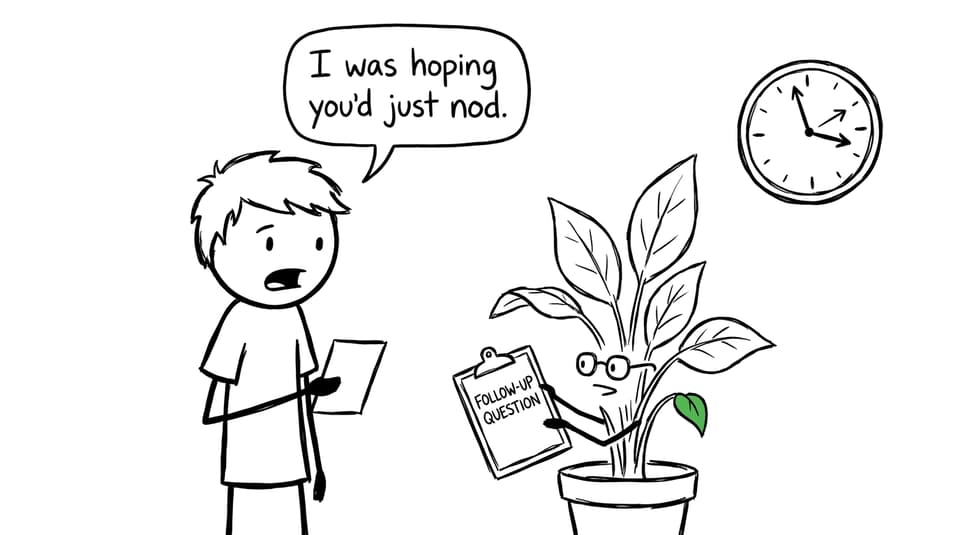
Preparation should happen aloud. A written script can hide awkward pacing, overloaded sentences, and transitions that make sense only on the page. Record a complete attempt, check whether both works receive sufficient attention, and note every moment where the connection to the global issue becomes vague.
The Coursework Library also provides Language A Individual Oral examples. Exemplars are most useful when treated as objects of analysis, not templates to imitate. Ask how the argument stays focused, how evidence is integrated, and how the speaker moves between close discussion of extracts and the wider works.
How to use RevisionDojo without revising passively
A resource library cannot do the thinking for you. Its real advantage is shortening the distance between practice and useful feedback.
Begin with a diagnostic task from the Questionbank. Use the result to choose one Study Notes chapter rather than rereading everything. Turn difficult concepts or textual references into Flashcards. Then write another response and submit it through the available grading tools. AI Chat can help clarify terminology or question your reasoning, while a Tutor can provide human guidance when the problem is more nuanced.
As exams approach, move from isolated questions to complete Mock Exams and Predicted Papers. Use the Literary Hub to organize works and Paper 2 comparisons, and consult the Coursework Library when you need to understand what successful structure looks like. The goal is not to use every feature every day. It is to choose the feature that addresses your current bottleneck.
The answer is yes, but coverage is only the beginning
RevisionDojo covers both IB English A: Language and Literature and IB English A: Literature across Paper 1, Paper 2, IO preparation, and HL coursework support. More importantly, it recognizes that English improves through repeated judgment: noticing a choice, explaining its effect, connecting it to an argument, and refining that argument through feedback.
That is why RevisionDojo works as an ultimate IB resource rather than another folder of notes. Start in the correct English A course hub, complete one diagnostic task, and let the result decide what you study next. Clearer revision usually begins with a smaller, more honest question: What specific skill is costing me marks today?