

A child can look ready for the IB Diploma Programme and still feel deeply unsure about beginning it. Those two things are not contradictory.
If your child is nervous about starting DP1, the most helpful response is neither to dismiss the worry nor to treat it as proof that the IB is too difficult. Listen first, identify what feels uncertain, and turn that uncertainty into a small plan for the opening weeks.
For many students, first-term nerves are not really about intelligence. They are about structure. Six subjects, unfamiliar expectations, Theory of Knowledge, the Extended Essay, and Creativity, Activity, Service can sound like one enormous demand before the timetable has even begun. Once students learn how to organize their work, ask for help, and revise consistently, the programme often becomes less mysterious.
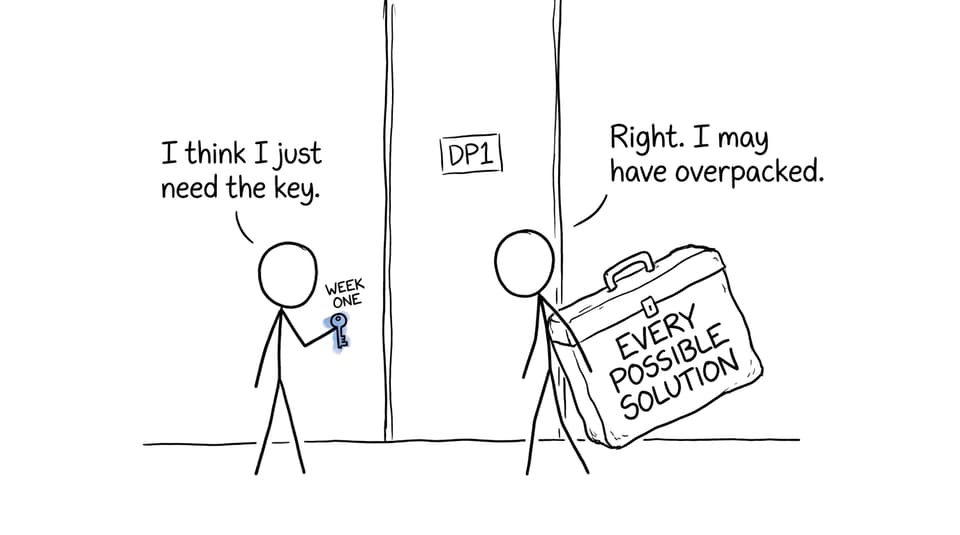
A quick checklist for IB diploma parents
In the weeks before DP1, focus on a few stabilizing actions:
- Ask what specifically worries your child, then listen without immediately correcting them.
- Learn the basic DP structure together without trying to master every requirement.
- Help establish regular sleep, meals, movement, and downtime.
- Create one simple calendar for school deadlines and personal commitments.
- Agree on a light weekly revision routine rather than an ambitious daily schedule.
- Identify the DP coordinator, subject teachers, and pastoral support available at school.
- Watch whether the anxiety settles as familiarity grows or begins interfering with daily life.
This is enough for a beginning. DP1 preparation should make the next step visible, not attempt to solve the next two years in advance.
Start by finding the worry beneath the worry
A statement such as “I cannot do the IB” can conceal several different concerns. Your child may be worried about choosing the wrong Higher Level subjects, making new friends, disappointing teachers, managing deadlines, or no longer being the strongest student in the room.
Each concern needs a different response. General reassurance rarely resolves a specific fear.
Try asking calm, open questions:
- “Which part of starting DP1 feels least clear?”
- “Are you more worried about the workload, the subjects, or the change itself?”
- “What would make the first week feel more manageable?”
- “Would you like me to listen, help you plan, or help you contact someone?”
That final question matters. Parents often move directly into solution mode because action feels useful. But a teenager who wants to be heard may experience immediate advice as evidence that their emotions are inconvenient.
Validation does not mean agreeing that disaster is coming. It means communicating: “I understand why a big transition feels uncertain, and we can work through the uncertain parts one at a time.” Parents seeking more guidance can read how to support a child experiencing anxiety during IB.
Explain what DP1 actually involves
Uncertainty tends to make a demanding programme appear limitless. A factual overview gives the workload edges.
The IB Diploma Programme is a two-year programme for students aged 16 to 19. The official curriculum consists of six subjects alongside three core components: Theory of Knowledge, the Extended Essay, and Creativity, Activity, Service. Students normally take three subjects at Higher Level and three at Standard Level, although some take four at Higher Level.
That is substantial, but DP1 is not an expectation that students complete everything at once. Schools sequence content, coursework, and core requirements across the programme. The practical task in the first term is to understand each subject's expectations and develop repeatable habits.
Encourage your child to collect concrete information during the opening weeks:
- Where are assignments posted?
- Which deadlines belong in the calendar immediately?
- What does each teacher expect from class notes and homework?
- Who should the student contact when instructions are unclear?
- Which subjects require regular problem practice, reading, or written analysis?
The goal is not perfect control. It is replacing an imagined mountain with the next marked section of the path.
Build a first-month routine, not a two-year master plan
An elaborate colour-coded system can provide a brief sense of control. It can also collapse the first time school becomes unpredictable. A better approach is to build a routine that is small enough to survive ordinary life.
Begin with one weekly planning conversation. Keep it to 10 or 15 minutes unless your child wants longer. Review upcoming deadlines, identify two or three priorities, and protect recovery time. RevisionDojo's guide to time management techniques for IB students offers practical ways to break larger commitments into manageable steps.
A useful early routine might include:
- A fixed place to record every deadline
- Short review sessions after lessons
- One or two focused study blocks on school nights
- A weekly check of unfinished work
- A consistent stopping time in the evening
- At least one period each week with no academic work
The exact hours will depend on the school, commute, subjects, extracurricular commitments, and the student's energy. Avoid imposing an internet timetable that ignores those differences. Instead, use a balanced IB study schedule as a starting framework and adapt it after observing the first few weeks.
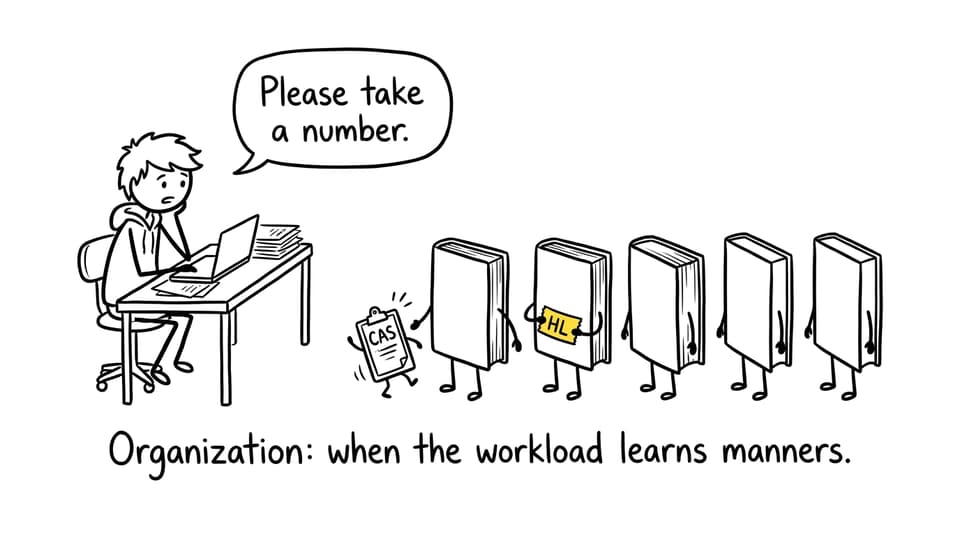
Protect sleep and ordinary life
When a child is worried about academic pressure, families sometimes respond by creating more academic pressure. Extra tutoring, long pre-course reading lists, and daily monitoring can unintentionally suggest that DP1 is dangerous unless the student is constantly preparing.
Basic wellbeing is part of IB preparation, not a reward for finishing it. The NHS advises that most teenagers need eight to ten hours of sleep and notes that sleep supports thinking and concentration. Regular meals, movement, friendships, and genuine downtime also help prevent school from consuming a student's whole identity.
Parents can protect these foundations by keeping late-night work from becoming normal, preserving non-academic activities, and avoiding constant grade conversations. A sustainable daily IB study schedule should include breaks and a clear endpoint, not simply fit more work into every available hour.
Your own tone matters too. If every missed task is treated as a warning about university, a small problem acquires the emotional weight of the future. Keep the scale accurate. One confusing lesson is one confusing lesson. One disappointing mark is information about what to practise next.
Support independence without disappearing
The central tension for IB diploma parents is knowing when to step in. Too little support leaves a nervous student isolated. Too much can prevent them from developing the independence the programme requires.
A useful distinction is between supporting the system and taking over the work.
You can help your child create a quiet study area, place deadlines on a calendar, prepare questions for a teacher, or arrange appropriate tutoring. You should not choose their argument, rewrite coursework, repeatedly contact teachers without involving them, or manage every homework task.
Try a gradual handover:
- First, plan the week together.
- Next, let your child draft the plan and ask you to review it.
- Eventually, hold a brief check-in only when requested or previously agreed.
This communicates trust while keeping support accessible. It also helps your child learn that asking for assistance is an act of judgment, not a sign of failure.
Is IB too stressful for your child?
The IB is academically demanding, but nervousness before a major transition does not by itself show that the programme is unsuitable. Pay attention to intensity, duration, and impact rather than the mere presence of worry.
Ordinary transition nerves may rise before school, fluctuate from day to day, and ease as routines become familiar. More concerning anxiety is persistent, worsening, or strong enough to interfere with sleep, eating, attendance, relationships, hobbies, or everyday functioning.
If that happens, speak with your child and involve the school's pastoral team, counsellor, or DP coordinator. A doctor or qualified mental health professional can advise when anxiety is severe or persistent. If there is any immediate concern about your child's safety, use the urgent mental health or emergency services available where you live.
Do not wait for an academic crisis before asking for support. Early help is not an overreaction when a young person's daily life is being disrupted.
Turn revision uncertainty into a simple process
A surprisingly large part of first-term anxiety comes from not knowing what “study” is supposed to mean. A student may sit at a desk for two hours, reread a chapter, and finish feeling no more certain than when they began.
A clearer process is easier to trust:
- Learn one small topic from class materials or concise Study Notes.
- Retrieve key ideas using Flashcards.
- Apply them through a short Questionbank set.
- Review mistakes without turning them into a verdict on ability.
- Ask a teacher, tutor, or AI Chat for clarification when a gap remains.
This is where RevisionDojo removes a specific source of uncertainty from week one. Its all-in-one IB resources connect Study Notes, Flashcards, the Questionbank, AI Chat, and Grading tools in one learning loop. Later, students can add Predicted Papers and Mock Exams for timed preparation, while the Coursework Library and Tutors provide guidance when coursework or a difficult concept becomes a bottleneck.
The important point is not to use every feature immediately. It is to give each tool one job. The RevisionDojo approach to smarter IB exam preparation shows how understanding, recall, application, and feedback can fit together without turning every evening into a marathon.

Help your child begin, then let confidence catch up
Confidence usually does not arrive before a student starts something difficult. It grows after they attend the lesson, record the deadline, complete the first assignment, and discover that confusion can be resolved.
Your role is not to promise that DP1 will always feel easy. It is to show your child that difficult work can be approached calmly, structured sensibly, and discussed without judgment.
Begin with one conversation. Ask what feels uncertain, agree on a light first-week routine, and explore RevisionDojo together if your child wants a clearer revision system. The aim is not to remove every nerve. It is to make sure nerves no longer have to fill the space where a plan should be.