Join 650k+ students breezing through the IBReady to breeze through the IB?
For IB students sitting exams in May 2028 (started DP1 in August 2026).
The best May 2028 IB English Literature study advice is to build usable notes for every work, practise analytical writing each week, and judge every response against the current assessment criteria. Do not wait until DP2 to learn how Paper 1, Paper 2, the Individual Oral, and, at HL, the Higher Level Essay reward close analysis.
Finishing a novel and understanding its themes can feel like preparation. Yet the examination rewards more than recognition. You must turn interpretation into a precise argument, support it with well-chosen details, and explain how authorial choices produce meaning.
Preparation should therefore be cumulative. One focused analytical paragraph each week often develops more adaptable skill than rereading an entire folder before an assessment.
What is confirmed for IB English Literature 2028?
As of October 2026, students preparing for May 2028 should follow the current Language A: Literature guide, identified in official IB examiner documentation as the guide for first assessment in 2026. The course assesses literary works, unlike Language A: Language and Literature, which includes literary and non-literary texts. RevisionDojo's overview of the IB English curriculum and course differences can help you confirm that you are using Literature resources.
The current assessment structure is:
Component
SL
HL
Paper 1: guided literary analysis
One unseen literary passage, 1 hour 15 minutes, 35%
Two unseen literary passages, 2 hours 15 minutes, 35%
Paper 2: comparative essay
1 hour 45 minutes, 35%
1 hour 45 minutes, 25%
Individual Oral
15 minutes, 30%
15 minutes, 20%
Higher Level Essay
Not assessed
1,200-1,500 words, 20%
The Individual Oral comprises a 10-minute prepared oral followed by approximately five minutes of teacher questions. Literature students examine a global issue through two studied literary works, following the selection rules in the current guide.
min read
min read
min read
min read
Some May 2028 information is not yet published. The IB's public examination schedule does not currently include the May 2028 timetable, so exact English examination dates and exam zones cannot be stated. Session-specific questions and grade boundaries are also unavailable. Use your school's current guide, official specimen material, and teacher-provided resources rather than treating predictions as confirmed information.
A practical study checklist
Study task
Useful frequency
Purpose
Update notes for the current work
After every lesson or reading session
Preserve evidence, techniques, and interpretations
Write one analytical paragraph
Once or twice each week
Improve explanation of authorial choices
Analyse an unseen passage
Every 1-2 weeks in DP1, then weekly in DP2
Build Paper 1 independence
Build a Paper 2 comparison plan
Every 2 weeks after studying two works
Strengthen comparative thinking
Rehearse oral analysis aloud
Monthly at first, then weekly before the oral
Develop control, timing, and fluency
Complete a timed response
Monthly in DP1, then every 1-2 weeks near exams
Practise decisions under time pressure
These frequencies are not official IB requirements. Adjust them around your school's sequence, deadlines, and feedback.
Make notes that lead to arguments
Weak literature notes record what happened. Strong notes help you decide what the work means and how the writer creates that meaning.
Create a compact text map for every work containing:
three to five defensible arguments about the work
major tensions, such as freedom and obligation
recurring choices involving voice, imagery, structure, characterization, setting, rhythm, or dramatic form
short, accurately remembered textual references
turning points and structural contrasts
context that changes interpretation
links to other studied works
possible global issues for the Individual Oral
Organize evidence by argument rather than chapter. “Isolation” is too broad. “Physical distance becomes a measure of emotional control” already points towards interpretation.
For each useful reference, record the detail, technique, immediate effect, and relationship to the work's larger purpose. RevisionDojo's IB English A Literature resources combine Study Notes with syllabus-aligned Questionbank practice, creating one place to review concepts and apply them.
Flashcards suit brief quotations, terminology, structural moments, and comparison prompts. Avoid memorizing complete model paragraphs. Questions change, so your knowledge must remain flexible.
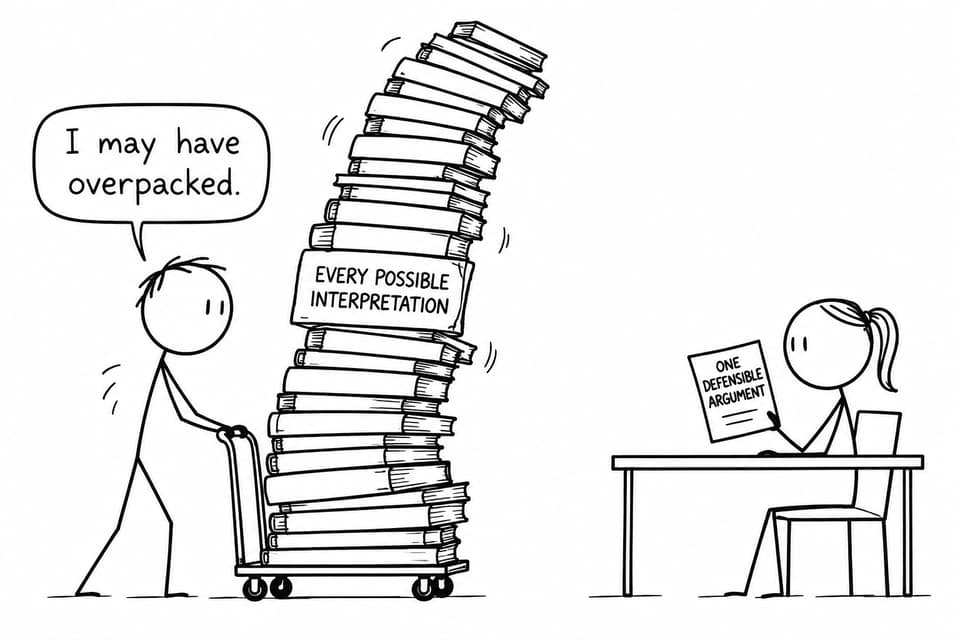
Two students contrast an enormous stack of possible interpretations with one defensible argument.
One precise, supportable argument is more useful than disconnected interpretations.
Practise Paper 1 as a decision-making skill
Paper 1 begins with an unseen literary passage. Preparation should therefore train a repeatable process rather than depend on recognizing an author or text.
Start untimed. Read once for situation, voice, movement, and tension. Read again to identify patterns. Then write a thesis explaining the passage's central effect and how the writer constructs it. The guiding question should focus your response, not replace your argument.
Practise these stages separately:
annotate a passage in 10-15 minutes
draft three possible thesis statements
turn one observation into an analytical paragraph
outline the essay's progression
write a full response under the correct time limit
Connect choice to meaning. Naming alliteration, metaphor, or enjambment is not analysis. Ask what the choice changes, intensifies, conceals, interrupts, or reveals.
SL students must sustain one controlled analysis. HL students analyse two passages, so stamina and time allocation matter more. HL practice should include paired sessions with two consecutive plans or responses. The RevisionDojo guide to effective IB English study techniques offers transferable close-reading routines, although Literature students should use passages matching their course.
Prepare Paper 2 through comparison
Paper 2 asks you to compare two studied works in response to one question. Build a network of comparisons instead of forcing a memorized essay onto an unfamiliar prompt.
Choose three or four works that form strong pairings. Create a matrix covering themes, form, narrative or dramatic method, characterization, setting, beginnings, endings, and major contrasts. For each connection, record similarity and difference. Meaningful comparison explains why writers make different choices, not merely that both works contain conflict.
The oral is not a memorization contest. It tests whether you can sustain an argument about a global issue, move between extracts and whole works, and explain authorial choices aloud.
Keep an oral shortlist in your learner portfolio. For each pairing, record the global issue, why it is transnational and significant, productive extracts, and how each extract reflects the wider work. The RevisionDojo Individual Oral guide explains the structure, while your teacher should confirm selection rules.
Record practice attempts and listen for vague phrases, plot summary, rushed evidence, or sections that neglect the global issue. RevisionDojo's AI Chat can question your reasoning, while Tutors can provide human guidance. Use AI to refine your thinking, never to replace your own analysis or submitted work.
Give the HL Essay its own preparation track
HL students complete the externally assessed Higher Level Essay. This 1,200-1,500-word essay develops a focused line of inquiry about a studied work.
Begin with a pattern in the text, not a grand theme. “Power in the novel” is too wide. A question about how shifts in narrative distance complicate a character's authority is more manageable because it identifies an authorial choice and interpretive problem.
Build the argument before polishing the introduction. Each section should advance the inquiry rather than repeat the same point with another example. RevisionDojo's guide to the IB English HL Essay and Coursework Library can clarify structure, while Grading tools can identify criterion-level weaknesses. Your teacher's permitted feedback and academic integrity rules remain decisive.
Common mark-losing habits
Retelling instead of analysing
Plot knowledge matters, but summary does not explain how meaning is created. Keep context brief, then examine language, form, structure, and effect.
Technique spotting
A list of devices is not an argument. Explain why each choice matters and how it supports your interpretation.
Treating context as decoration
Historical or biographical knowledge should sharpen interpretation. If a contextual sentence changes nothing, remove it.
Ignoring the exact question
Underline key terms and build them into your thesis. Return to those terms in every paragraph.
Using unequal comparisons
Paper 2 paragraphs should integrate both works around a shared claim and explain why their differences matter.
Practising without feedback
After each response, identify one criterion-level priority. RevisionDojo Mock Exams, Predicted Papers, AI Chat, and Grading tools can support review, but predicted material is practice, not a forecast of May 2028 questions.
Build skill before urgency arrives
Strong IB English Literature preparation is quiet and repetitive. Read closely, save useful evidence, write often, and compare works before completing full essays. By DP2, these habits turn revision into selection rather than rescue.
RevisionDojo connects learning and feedback through its Questionbank, Study Notes, Flashcards, AI Chat, Grading tools, Predicted Papers, Mock Exams, Coursework Library, and Tutors. The value is not simply more material. It is a clear route from knowledge to application.