
For IB students sitting exams in May 2028 (started DP1 in August 2026).
The best May 2028 IB digital society study advice is to build connected notes around concepts, content and contexts, then practise applying those connections to unfamiliar sources every week. Do not wait until DP2 to write timed responses, because knowing digital technology is different from explaining its impacts and implications for people and communities.
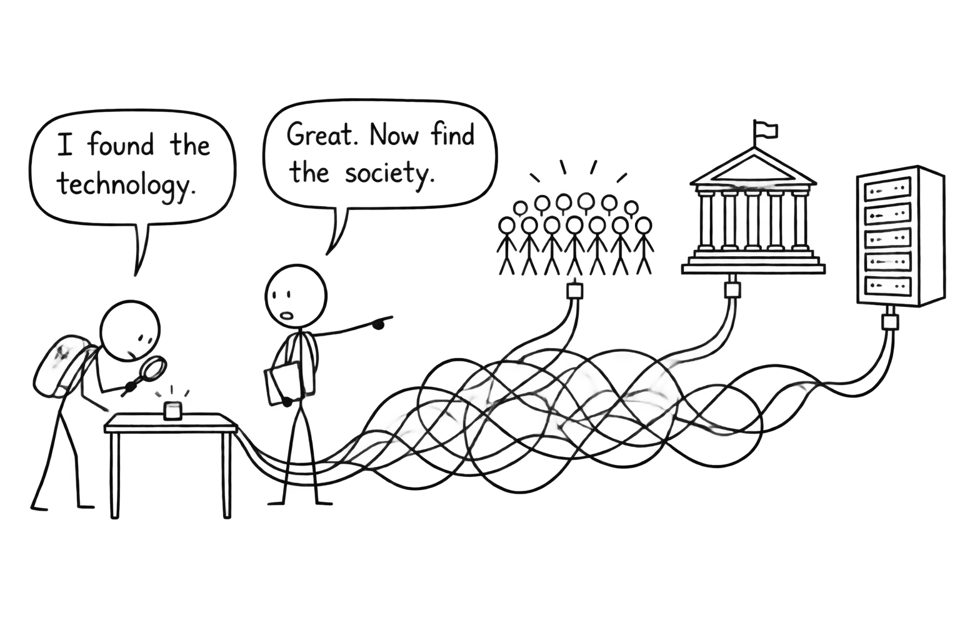
Digital Society can initially feel unusually broad. Algorithms lead into power, social media raises questions about identity, and data collection reaches into health, politics and economics. That breadth becomes manageable once you recognise that the course is not asking you to memorise every technological development. It is teaching you to investigate digital systems through a consistent inquiry framework.
The current official IB Digital Society course page and subject brief describe the course first assessed in 2024. As of October 2026, the IB has not publicly identified a replacement syllabus specifically for May 2028. The final May 2028 examination schedule, session-specific Paper 2 pre-released statement and May 2028 grade boundaries are also not yet published. Your teacher and IB coordinator should confirm any later IB updates before you rely on a revision plan.
Your May 2028 study checklist
- Organise notes by connections, not isolated definitions.
- Keep a small, current evidence bank covering varied regions and perspectives.
- Complete one source-analysis exercise every week.
- Write at least one timed extended response every 2 weeks during DP1.
- Increase to 2 timed tasks each week during the final 10-12 weeks.
- Use current syllabus-aligned questions and official specimen materials.
- Review mistakes by skill, command term and missing connection.
- Give the inquiry project regular attention instead of compressing it into one deadline.
- If you take HL, maintain a separate extension file and practise Paper 3.
Start with the course architecture
The official course framework integrates three dimensions:
- Concepts: change, expression, identity, power, space, systems, and values and ethics
- Content: data, algorithms, computers, networks and the internet, media, artificial intelligence, and robots and autonomous technologies
- Contexts: cultural, economic, environmental, health, human knowledge, political and social
A weak revision system creates separate piles for these lists. A stronger system asks how they interact. For example, an algorithm is content, but a worthwhile inquiry might examine how an algorithm redistributes power in a political context or changes expression in a cultural context.
Begin with the complete RevisionDojo Digital Society resource hub, then use the dedicated Digital Society concepts materials to strengthen the lenses through which you analyse technology.
Make notes that can become answers
Digital Society notes should help you think, not merely preserve what was said in class. For each significant issue, create a one-page inquiry sheet containing:
- a precise definition of the technology or digital system
- how it works at the level required by the syllabus
- relevant concepts and contexts
- affected stakeholders
- benefits, harms and tensions
- contrasting claims or perspectives
- one or two researched real-world examples
- limitations in the available evidence
- possible responses or interventions
Suppose you are revising biometric identification. A page containing only definitions will not carry an extended response. Add who collects the data, who can challenge errors, how accuracy may vary, what trade-offs exist between security and privacy, and whether impacts differ across communities. That turns information into analysis.
Use RevisionDojo’s notes and questions on data when building your technical foundations. Then convert essential terminology into Flashcards. Flashcards are useful for retrieval, but they should be the first layer of revision, not the final one.
Maintain a separate evidence bank in a spreadsheet or document. Record the issue, date, place, stakeholders, source, relevant syllabus links and any limitations. Recheck examples before using them because laws, platforms and technical capabilities can change during a two-year course.
What to practise and how often
The reliable routine is small and repeated. One heroic weekend cannot replace months of retrieval, application and feedback.
| Stage | Recommended weekly practice | Main purpose |
|---|---|---|
| First DP1 term | Two short retrieval sessions and one source exercise | Build vocabulary and identify claims, evidence and perspectives |
| Rest of DP1 | One source exercise, one planned response and one timed response every 2 weeks | Connect syllabus elements and learn command terms |
| First half of DP2 | One timed response, one source task and one evidence-bank review | Improve selection, evaluation and structure |
| Final 10-12 weeks | Two timed tasks, targeted correction and periodic full-paper simulation | Build judgement, pacing and consistency |
After each answer, diagnose the error. Was the terminology imprecise? Did you describe rather than evaluate? Did you make a claim without evidence? Did you ignore a stakeholder or alternative perspective? Revision becomes efficient when the correction is more specific than “revise algorithms.”
The RevisionDojo guide to algorithms in Digital Society can reinforce understanding, while the Questionbank lets you practise applying that knowledge. Grading tools and AI Chat can help expose gaps, but compare feedback with your teacher’s guidance and the official assessment criteria rather than treating any automated response as an examiner’s final judgement.
Choose practice materials that match the syllabus
Your highest-priority materials should be the current subject guide supplied through your school, the official assessment criteria, and the IB’s Digital Society specimen papers. Specimen material is especially valuable for seeing question styles, mark allocations and the expected use of supplied sources.
RevisionDojo’s Questionbank, Study Notes, Flashcards, Predicted Papers and Mock Exams can then provide structured repetition. Predicted Papers are practice resources, not forecasts or official IB material. Before using any third-party task, check that its labels and demands correspond to the current Digital Society framework rather than the former Information Technology in a Global Society course.
The Digital Society survival guide offers a broader revision framework. The Coursework Library can also help you understand how inquiry is communicated, but never copy wording, evidence choices or structure. Your inquiry project must remain your own work and follow your school’s academic integrity requirements.
SL and HL need different preparation
Under the current first-assessment-2024 model, both levels study the common integrated syllabus and complete an inquiry project. The published assessment structure is:
| Component | SL | HL |
|---|---|---|
| Paper 1 | 1 hour 30 minutes, 40% | 2 hours 15 minutes, 35% |
| Paper 2 | 1 hour 15 minutes, 30% | 1 hour 15 minutes, 20% |
| Paper 3 | Not taken | 1 hour 15 minutes, 25% |
| Inquiry project | 30% | 20% |
Paper 1 rewards connections across the syllabus and the use of relevant examples. Paper 2 uses a pre-released statement, so preparation should involve researching its issues and perspectives without trying to script an answer in advance. The May 2028 statement is not yet publicly available.
HL adds an extension concerned with challenges and interventions, plus Paper 3. HL students therefore need more than additional facts. They must investigate complex challenges, compare interventions and judge possibilities, limitations and consequences. Keep a dedicated extension notebook organised around challenge, stakeholders, intervention, evidence, trade-offs and unintended effects.
SL students should not mistake fewer components for a simple course. Paper 1, Paper 2 and the inquiry project each carry substantial weight, so regular source analysis and extended-response practice still matter. If the distinction remains unclear, review common Digital Society misconceptions or work with a RevisionDojo Tutor who can target your level and weak skills.
Common habits that lose marks
Describing technology without analysing society
Explaining that an AI system uses data is only a beginning. Examiners need a response to the actual question, including consequences, stakeholders, tensions and contextual differences.
Treating examples as decoration
Naming a company, platform or country does not constitute evidence. Explain exactly how the example supports the claim, then acknowledge limits or counterevidence where relevant.
Ignoring the command term
An answer that describes both sides may still fall short when asked to evaluate. Underline the command term, translate it into a task and reserve time for a supported judgement.
Writing one-sided evaluations
Evaluation is not automatic negativity. Compare benefits and harms, short-term and long-term effects, affected groups, evidence quality and conditions under which a claim might hold.
Memorising a universal essay
Digital Society questions reward selection. A rehearsed answer often contains accurate material but fails to address the precise issue or sources presented.
Using outdated or vague evidence
“Social media affects society” says almost nothing. Identify the system, mechanism, group, context and consequence. Date-sensitive claims should be checked near the examination.
A calmer route to May 2028
The advantage of starting in August 2026 is not that you can study intensely for 20 months. It is that you can allow understanding to compound. A weekly source exercise becomes familiarity with claims. A modest evidence bank becomes range. Repeated timed responses turn good ideas into usable examination decisions.
RevisionDojo brings that process together through its Questionbank, Study Notes, Flashcards, AI Chat, Grading tools, Predicted Papers, Mock Exams, Coursework Library and Tutors. The tools matter because they shorten the distance between learning something and testing whether you can actually use it.
Your next step is specific: open the RevisionDojo Digital Society Questionbank, choose one question from your weakest current topic, answer it under its stated time conditions, and record one precise correction before doing anything else.