
For IB students sitting exams in May 2028 (started DP1 in August 2026).
The best May 2028 IB design technology study advice is to revise from the first-assessment-2027 syllabus, combine short retrieval sessions with frequent design application, and practise the two examination formats separately. Build notes around decisions, users, evidence and trade-offs rather than memorising isolated definitions, while keeping your design project moving throughout the course.
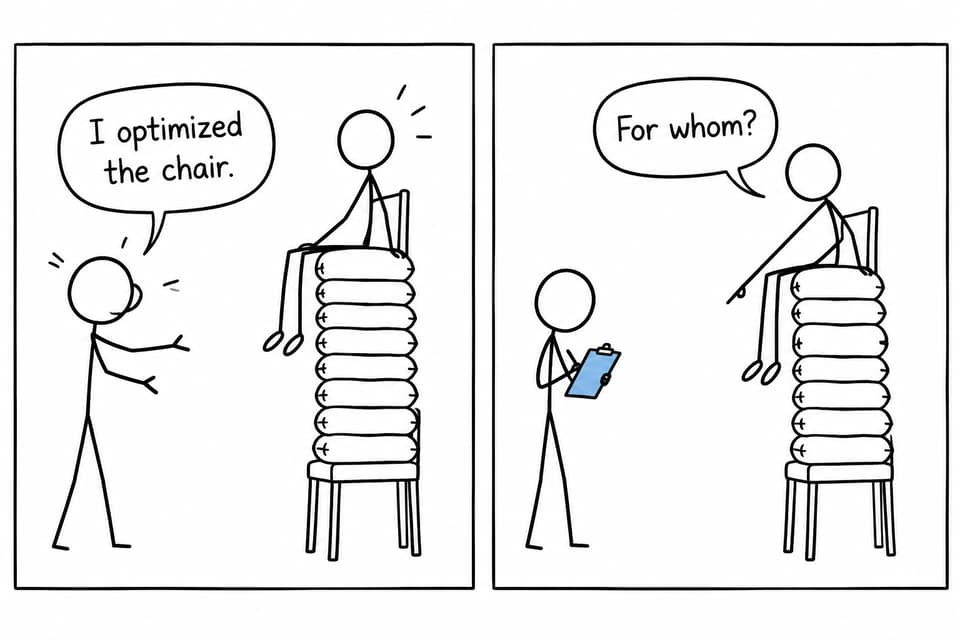
That distinction matters because Design Technology rewards more than knowing what something means. You need to select relevant knowledge, apply it to a design context and justify a conclusion. A student can remember every material property on a page and still lose marks by never connecting those properties to the user, manufacturing process or environment described in the question.
The May 2028 cohort is studying the updated course first assessed in 2027. Revision should therefore begin with the new IB Design Technology resource hub, not resources built exclusively around the course whose final assessment was in 2026.
Your study plan at a glance
- Confirm that every resource explicitly matches the course first assessed in 2027.
- Make one-page decision notes, not long chapter summaries.
- Complete two focused theory sessions and one application session each week during DP1.
- Practise multiple-choice, short-answer and extended-response questions differently.
- Keep an error log organised by knowledge, interpretation, application and evaluation.
- Treat the design project as a weekly process rather than a final-term emergency.
- Increase timed practice gradually during DP2.
- Study only the SL or HL content identified in your official course documentation.
Know which IB Design Technology course you are taking
The IB launched the revised Design Technology course for first teaching in August 2025 and first assessment in May 2027. Students beginning DP1 in August 2026 and taking examinations in May 2028 follow this version, assuming the normal two-year route.
The official course is structured around three connected themes: design in theory, design in practice and design in context. Inquiry, practical problem-solving and the intended user sit at the centre of the subject. RevisionDojo's course overview for the 2027 syllabus provides a useful map before you divide the specification into weekly tasks.
Both SL and HL students complete Paper 1 and Paper 2. According to the IB's current curriculum update, Paper 1 contains multiple-choice questions on the syllabus. Paper 2 uses short-answer and extended-response questions that bring skills, concepts and understanding together in a design context.
Both levels also complete a design project with the same criteria, recommended duration and total marks. The current IB assessment model assigns the project 40% at SL and 30% at HL, so external examinations account for 60% and 70% respectively. The new Design Technology assessment guide explains how those parts fit together.
What has not yet been published for May 2028
As of October 2026, the detailed May 2028 examination timetable is not available on the IB's public exam schedule page. May 2028 grade boundaries have not been published either and cannot be known before that session is marked.
Do not build a revision plan around guessed boundaries, predicted examination dates or claims that a particular topic is certain to appear. Your school should use the full subject guide, prescribed course documentation and any authenticated IB materials available through its official channels. If the IB issues further clarifications before May 2028, follow your teacher or coordinator's update rather than an older online summary.
Make notes that behave like design tools
Traditional notes often become storage. Effective Design Technology notes should function more like a prototype: compact, testable and easy to improve.
For each syllabus statement, create a one-page decision sheet containing:
- the precise concept or process in your own words
- the conditions under which it is useful
- a product or system example
- benefits, limitations and trade-offs
- implications for users and stakeholders
- relevant environmental, economic or manufacturing considerations
- one labelled sketch, process chain or comparison
- one examination-style question
Suppose you are studying material selection. A weak page lists properties. A stronger page asks why stiffness, toughness, density, finish, cost and manufacturing constraints might lead designers towards different choices for two products. That turns recall into judgement.
Start with the Design in Theory topic collection, then use Study Notes to resolve gaps rather than copying every paragraph. Convert easily confused terms, process sequences and command-term expectations into Flashcards. If an explanation remains unclear, AI Chat can help you unpack it, but compare the answer with your official course materials and teacher guidance.
Practise three different forms of thinking
A good weekly routine separates retrieval, application and evaluation. They overlap in the examination, but each develops through a different kind of practice.
Retrieval practice
Use 20-30 minute sessions to recall definitions, properties, process stages and relationships without looking at notes. Flashcards are useful here, particularly when you answer aloud before revealing the explanation. End by correcting errors from the source, not by merely marking a card wrong.
Contextual application
Twice a week, answer questions that place knowledge inside an unfamiliar product or user situation. Underline the user, constraint, environment and requested command term. The RevisionDojo user-centred design resources are especially useful for practising the movement from evidence about people to defensible design decisions.
Evaluation and extended response
Once each week, compare alternatives or evaluate a proposal. Before writing, create a brief structure: claim, relevant evidence, design consequence, limitation and reasoned judgement. A balanced response is not a list containing one advantage and one disadvantage. It weighs their significance for the specific context.
How often should you practise?
There is no official IB revision frequency. The following schedule is a practical recommendation that should fit around your school's teaching order and deadlines.
| Stage | Recommended weekly work | Main purpose |
|---|---|---|
| DP1, first term | Two 30-minute recall sessions and one contextual question | Establish vocabulary and application habits |
| DP1, later terms | Two topic sessions, one mixed question set and one project block | Connect topics while maintaining project evidence |
| DP2, first term | Three question sessions plus scheduled project work | Close syllabus gaps and improve response quality |
| Final 12 weeks | Four focused sessions, including one timed section | Build speed, selection and examination stamina |
| Final 4-6 weeks | Mixed timed papers, targeted repair and light retrieval | Rehearse decisions under realistic constraints |
Consistency matters more than dramatic volume. Forty minutes spent answering, marking and repairing two difficult questions usually teaches more than two hours of highlighting familiar notes.
Choose practice materials that match the syllabus
Use the first-assessment-2027 subject guide as your filter. Legacy questions may still contain valuable concepts, but their structure, topic coverage and expectations should not be assumed to match the current course. Use one only when your teacher has mapped it to a current syllabus statement.
A safer sequence is:
- Read the relevant official syllabus statement.
- Review aligned Study Notes.
- Retrieve the idea using Flashcards.
- Answer new-course Questionbank questions.
- Use Grading tools and the mark guidance to identify what was missing.
- Reattempt the question without viewing your first answer.
For example, the modelling and prototyping Questionbank targets the revised syllabus directly. The product analysis and evaluation resources can help you practise making judgements rather than describing features.
Closer to the examination, use only Predicted Papers and Mock Exams labelled for the new course and your level. Their purpose is rehearsal, not forecasting exact questions. RevisionDojo Tutors and the Coursework Library can also support method and exemplification, but your own project must remain your work and comply with your school's academic integrity guidance.
Common habits that lose marks
The most expensive mistakes are often small decisions repeated across many answers:
- Answering the topic rather than the question. A polished paragraph earns little if it ignores the command term.
- Giving generic benefits. Explain who benefits, under what conditions and why it matters.
- Listing properties without consequences. Connect each property to performance, production, safety, usability or another relevant requirement.
- Describing when evaluation is required. Evaluation needs criteria, limitations and a justified conclusion.
- Ignoring stimulus material. Use the supplied design context instead of delivering a memorised essay.
- Making unsupported claims. State the evidence or design reasoning behind recommendations.
- Forgetting units, labels or working. Where calculation or interpretation is required, make the route to the answer visible.
- Treating prototypes as finished products. Discuss what a model tests, what it cannot establish and how findings affect iteration.
- Writing before planning. A 30-second response outline can prevent repetition and missing judgement.
Keep an error log with four columns: question topic, error type, corrected principle and next practice date. The useful question is not simply, “Was I wrong?” It is, “What decision caused the lost mark?”
SL and HL need different revision depth
SL and HL share the course's central themes and design process, but HL has additional content, more teaching time and greater external-assessment weighting. IB recommends 150 teaching hours for SL subjects and 240 for HL subjects generally. HL students should therefore avoid using an SL checklist as if it covered their entire syllabus.
| SL priority | HL priority |
|---|---|
| Secure the common syllabus and apply it accurately | Secure common and HL-only syllabus content |
| Balance examination work with a project worth 40% | Allow more time for broader and deeper examination demands |
| Build concise contextual explanations | Practise linking multiple concepts in extended contexts |
| Use SL-labelled mixed practice | Check that mixed sets include the correct HL scope |
The difference should affect scheduling, not just note quantity. HL students need recurring time for additional content and synthesis. SL students should resist the opposite mistake of collecting unnecessary HL detail while gaps remain in assessable SL material. The guide to IB Design Technology SL topics can help SL students define that boundary, but the official guide used by your school remains authoritative.
Build a feedback loop that survives pressure
The strongest revision system is not the one with the most resources. It is the one that notices mistakes and changes what happens next.
RevisionDojo brings that loop together: Study Notes establish clarity, Flashcards test retrieval, the Questionbank develops application, AI Chat helps unblock questions, and Grading tools expose missing reasoning. Predicted Papers and Mock Exams can later test integration, while the Coursework Library and Tutors provide structured support when the project or a difficult topic needs closer attention.
Open the IB Design Technology Questionbank, choose one topic taught this week, answer five questions without notes, and schedule every incorrect one for a second attempt in 48 hours.