



If you’ve ever opened the IB Design Technology guide and felt oddly confident but right up until you saw how everything connects but you’re not alone. IB Design Technology at SL doesn’t behave like a list of separate chapters. It’s more like a web: pull on “materials,” and suddenly you’re talking about ethics, users, prototyping, and evaluation.
That’s the good news, too. Once you understand what topics are covered in IB Design Technology SL and how they intertwine, revision stops feeling random and starts feeling strategic.
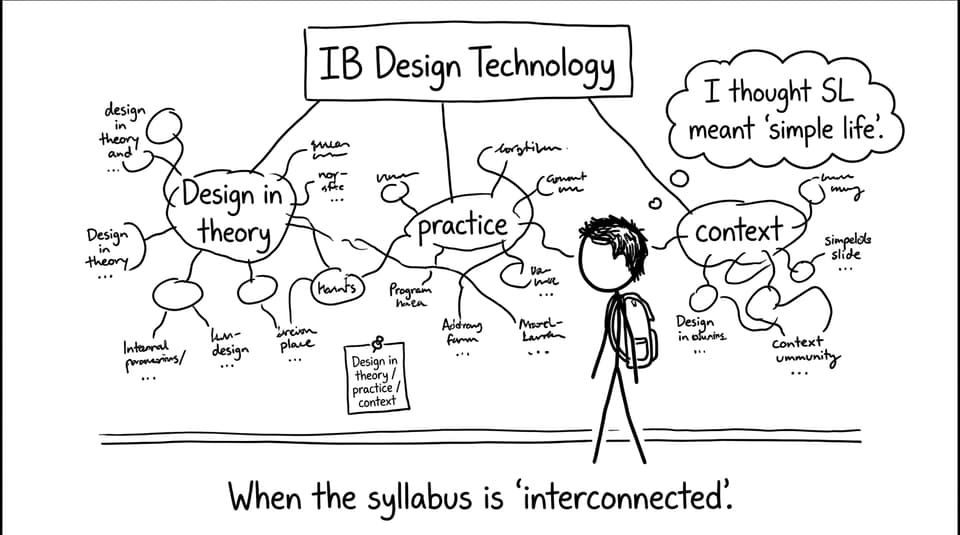
The quick map: how IB Design Technology SL is organised
In IB Design Technology, SL content is taught through three strands that keep reappearing in lessons, exam questions, and the internal assessment:
-
Design in theory (the ideas behind good design)
-
Design in practice (how designers work and communicate)
-
Design in context (the real-world impact of design decisions)
A useful way to revise is to ask: Which strand is this concept in? Then immediately ask: Where does it show up in the other two? That is basically how exam questions are built.
To keep everything in one place, the IB Design Technology resources hub is the fastest “home base” for SL students.
Design in theory in IB Design Technology SL
“Design in theory” is where IB Design Technology gives you the vocabulary and principles to explain why a product works (or fails).
Human factors and ergonomics
At SL you’ll focus on user interaction: comfort, safety, usability, and how real bodies meet real products. This includes practical ideas like sizing, posture, reach, and intuitive controls. In exams, you’ll often be asked to link an ergonomic issue to a design improvement, not just define the term.
User-centred research methods
SL students learn how designers gather evidence: interviews, observations, surveys, and testing. The key is not naming methods, but evaluating them: what bias could appear, what sample is appropriate, and how research shapes design requirements.
Materials and properties (principles over overload)
In IB Design Technology, materials are never “just facts.” You need to connect properties to performance: strength vs weight, durability, sustainability, aesthetics, and cost. RevisionDojo’s targeted notes like 4.1 Properties of Materials Notes help you focus on exam-relevant explanations.
If definitions trip you up, build accuracy early using the IB Design Technology Key Definitions.
Design in practice in IB Design Technology SL
This strand is where IB Design Technology stops sounding like theory and starts sounding like a studio.
The design process (and what examiners really want)
You’ll move through identifying needs, researching, developing ideas, creating solutions, and evaluating outcomes. But marks usually come from justification: why you chose one idea, why you rejected another, what evidence supports your decision.
Modelling and prototyping
SL includes physical and digital prototyping, plus iteration (test, refine, repeat). In exam questions, you may be given a scenario and asked what type of model is appropriate, or how prototyping reduces risk.
You can practice exactly that skill with RevisionDojo’s Questionbank, including topic-specific sets like B2.2 Modelling and Prototyping Questionbank.
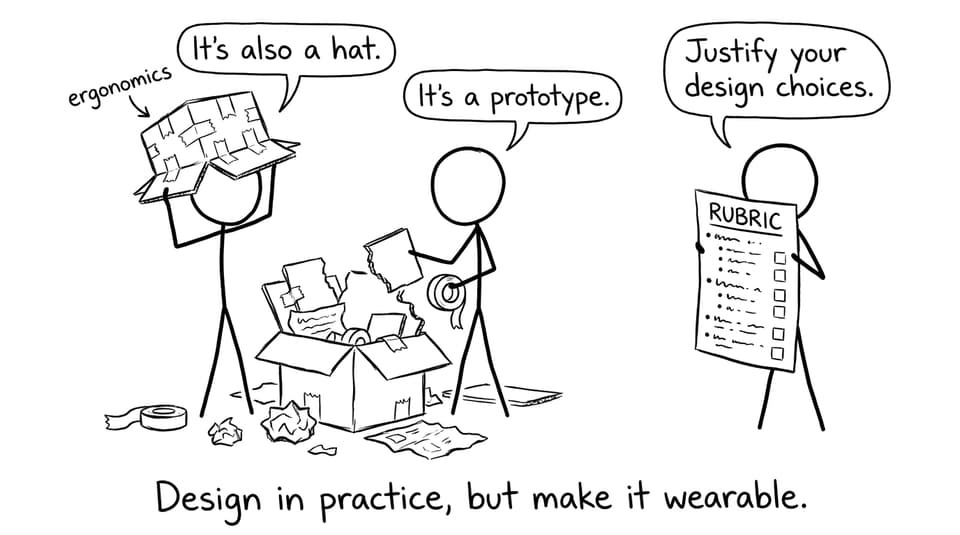
Communicating design ideas
Sketching, annotation, diagrams, and clear written rationale matter because DT is assessed through communication. A simple rule: if a stranger can’t follow your thinking, an examiner probably can’t award your marks.
If your notes feel messy, this guide on how to create IB Design Technology revision notes is a strong reset.
Design in context in IB Design Technology SL
“Design in context” is where IB Design Technology becomes bigger than the product.
Responsibility of the designer
You’ll consider consequences: safety, user wellbeing, and how design choices affect communities. Exams often ask you to evaluate trade-offs rather than claim there is a perfect answer.
Inclusive design
Accessibility is not an add-on. It’s a lens: can diverse users interact with the product, understand it, and benefit from it? This links back to ergonomics and user research immediately.
Sustainability and impact
At SL, sustainability is taught conceptually: material choice, lifecycle thinking, waste, and responsible production. For production-related thinking, RevisionDojo’s syllabus-aligned notes like 10.1 JIT and JIC notes help you tie “context” to real systems.
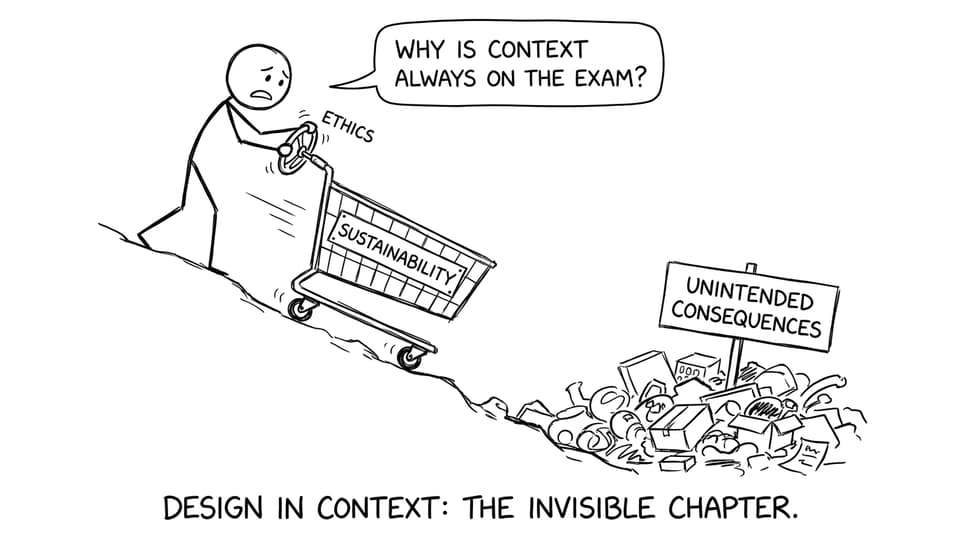
How IB Design Technology SL topics show up in exams
In IB Design Technology, questions rarely reward isolated recall. More often, an exam prompt gives you a product or scenario and asks you to:
-
apply theory (ergonomics, research quality, materials reasoning)
-
propose or critique a design step (modelling, prototyping, iteration)
-
evaluate impact (ethics, inclusivity, sustainability)
That’s why timed practice matters. RevisionDojo’s Mock Exams and Predicted Papers (plus the exam builder inside the Questionbank) help you rehearse connections under pressure, then refine with AI Chat feedback.
Mini-checklist: how to revise IB Design Technology SL efficiently
-
Learn definitions, then use them in short scenario answers (RevisionDojo Flashcards make this fast).
-
For every topic, keep one real product example you can reuse.
-
Do weekly timed questions from the Design Technology (DT) Questionbank.
-
Improve your IA writing with the Grade your IA/EE tools and compare against strong approaches like this post on IB Design Technology IA examples.
Closing thought: turn the syllabus web into your advantage
The students who enjoy IB Design Technology most aren’t the ones who “know everything.” They’re the ones who can connect one idea to another: user needs to ergonomics, ergonomics to materials, materials to sustainability, and sustainability back to evaluation.
If you want that connection to feel natural before exams, build your routine inside RevisionDojo: start at the DT hub, drill with the Questionbank, lock in terminology with Flashcards, ask AI Chat for markscheme-style phrasing, and tighten your coursework using the Coursework Library and Tutors when you need human feedback.
In IB Design Technology, clarity is a competitive advantage. Make it yours.