
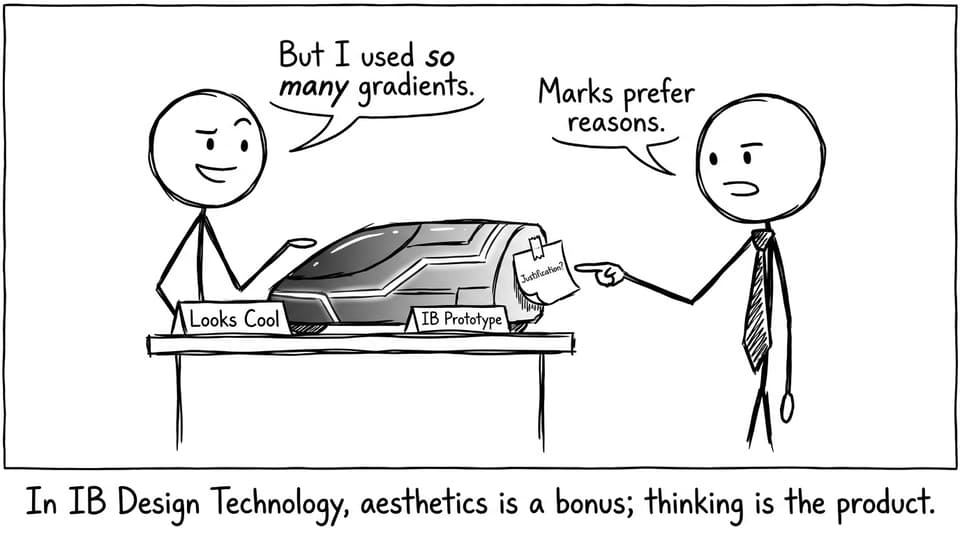
Your first IB Design Technology draft often feels like this: you build something that looks impressive, you write a lot, and you still don’t know where the marks actually came from.
That uncertainty gets louder in the new 2027 syllabus (first assessment 2027). Not because the subject suddenly becomes unrecognizable, but because expectations are sharper: justification has to be visible, evaluation has to be honest, and design thinking has to be traceable from problem to solution.
If you want a calm advantage in IB Design Technology, learn the assessment logic early. It changes what you practice, how you write, and what you stop wasting time on.
IB Design Technology assessment at a glance (2027)
Use this quick checklist to keep your work aligned with what IB Design Technology actually rewards:
-
You are assessed through external exams and the internal assessment (design project).
-
Exams reward application, analysis, and evaluation, not just memorized definitions.
-
The design project rewards user-centred evidence, iteration, and justified decisions.
-
SL focuses on solid, accurate application; HL demands deeper synthesis and longer justification.
For a syllabus-aligned starting point, anchor your revision from the IB Design Technology hub, then build outward into practice and feedback.
External assessment: how the exams award marks
In IB Design Technology, exam questions are rarely asking “what is this?” for long. They’re asking, “can you use this idea to make a judgement in an unfamiliar situation?”
That is why command terms and structure matter so much. If you answer with description when the question asks you to evaluate, you can be capped even if your facts are correct. A strong companion read is What command terms appear most in IB Design Technology exams?.
What examiners look for in IB Design Technology exams
Across papers, strong responses typically show:
-
Correct DT terminology used with control, not sprinkled randomly
-
Clear reasoning chains (“because X, therefore Y, which leads to Z”)
-
Trade-offs (benefit vs limitation) instead of one-sided claims
-
Links to users, sustainability, manufacturing, and feasibility where relevant
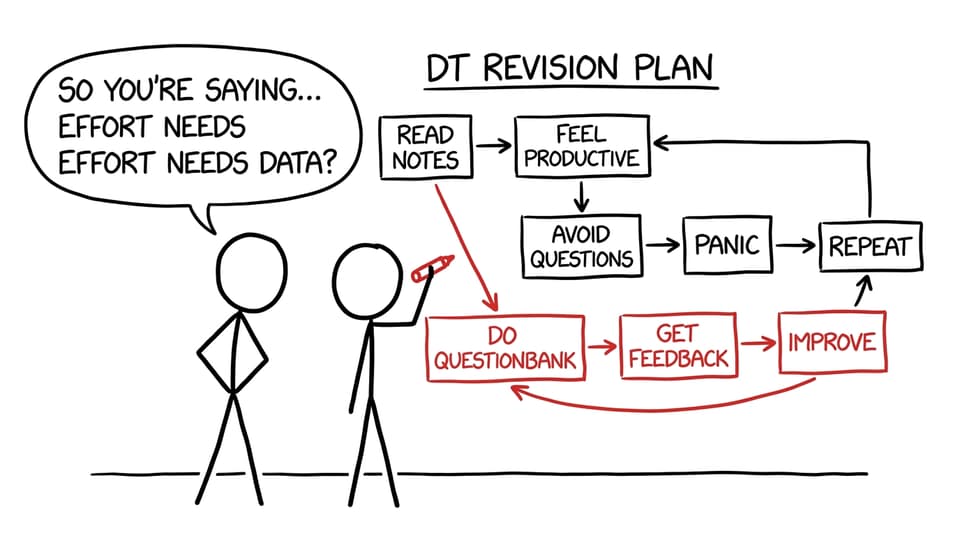
A practical way to train this is to do short sets of exam-style questions, then fix only what the markscheme rewards. RevisionDojo makes that loop quick with the Questionbank and instant feedback. You can start drilling directly from topic pages like B2.2 Modelling and Prototyping Questionbank.
SL vs HL: what changes in assessment
The assessment philosophy stays consistent, but the depth changes:
-
SL: demonstrate clear understanding and apply concepts accurately.
-
HL: extend, connect, and justify across contexts with more sustained analysis.
HL students in IB Design Technology usually gain marks by showing synthesis: connecting materials, manufacturing, user needs, and environmental impact into one argument rather than listing them separately.
Internal assessment: the design project (and what earns high marks)
The internal assessment is where many students either steadily build a high score or quietly leak marks for months.
In the IB Design Technology design project, complexity is not the goal. Traceable thinking is.
What the design project needs to show
High-scoring projects tend to make these elements impossible to miss:
-
A real, specific user or client with a clear problem
-
Focused research that directly shapes design requirements
-
Idea development that compares options, not just presents one “final” concept
-
Testing that produces evidence (data, feedback, performance results)
-
Iteration that responds to evidence (not last-minute cosmetic changes)
-
Evaluation that judges success against requirements and admits limitations
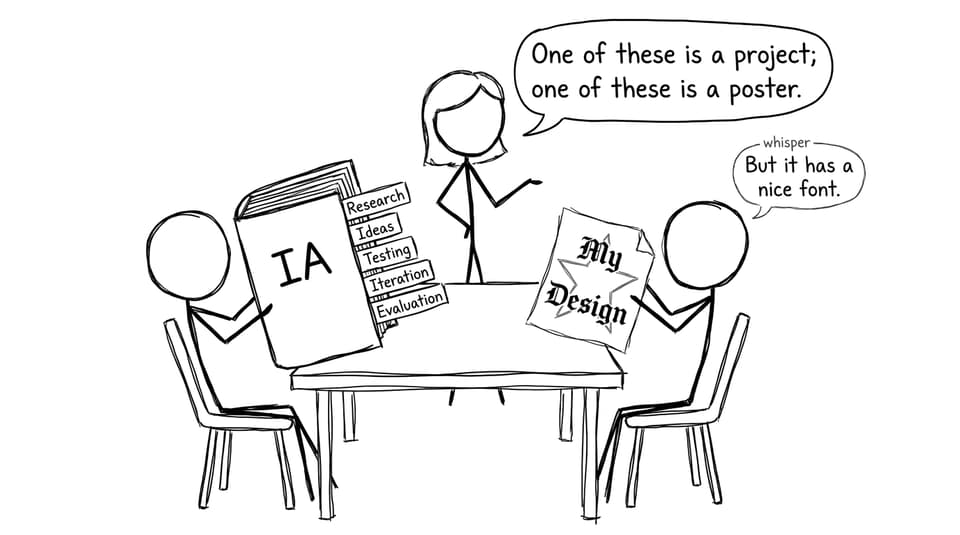
If your IA feels like a slideshow, that’s a warning sign. The project is an investigation into decisions.
For students who want an assessment-focused workflow, RevisionDojo supports the whole cycle: Study Notes for clarity, Flashcards for recall, AI Chat when you’re stuck, and Grading tools when you need to see how an examiner would react to your writing. The IB Coursework Grader is especially useful for catching “looks good” sections that don’t actually prove anything.
The most common assessment mistakes (and the simple fixes)
Most students don’t lose marks in IB Design Technology because they’re incapable. They lose marks because their effort is pointed at low-return tasks.
Mistake: aesthetics replaces justification
Fix: For every major choice, add one sentence that answers: What evidence made me choose this? Then add a second sentence: What downside did I accept?
Mistake: long description, little evaluation
Fix: Use a “claim, evidence, implication” structure. It forces you to move beyond storytelling into assessment language.
Mistake: iteration happens too late
Fix: Schedule micro-tests early. Even a rough prototype can generate evidence that leads to meaningful iteration.
If you want a practical system for avoiding these traps, borrow the routine in Best study strategies for IB Design Technology students and adapt it to your school deadlines.
How to prep efficiently for IB Design Technology (2027)
Here’s a simple plan that matches assessment realities:
-
Learn the content fast: use IB Design Technology resources and topic notes to get fluent.
-
Lock in recall: use Flashcards daily for definitions and processes.
-
Practice under marks: use the Questionbank and review mistakes by command term.
-
Simulate pressure: use IB Design Technology Predicted Papers and Mock Exams to build timing and stamina.
-
Get unstuck immediately: use AI Chat to translate feedback into a next step.
A helpful mindset shift: in IB Design Technology, your grade grows when feedback is fast and specific, not when your notes become prettier.
Closing: make assessment your strategy, not your surprise
The new 2027 model doesn’t ask you to be louder or more decorative. It asks you to be clearer.
If you treat IB Design Technology as a subject where marks come from visible reasoning, the whole course becomes calmer: you research with purpose, you test earlier, you write less fluff, and you practice the exact exam skills that score.
Start from the IB Design Technology hub, then build a simple loop: Questionbank for application, Study Notes for clarity, Flashcards for recall, AI Chat for quick unblocking, and Predicted Papers plus Mock Exams for realism. That’s the RevisionDojo way: fewer guesses, more evidence, better marks in IB Design Technology.