



If you have ever watched a classmate choose subjects like they are drafting a fantasy team, you already know the quiet pressure behind the question: Is IB Design Technology worth taking in the IB Diploma?
On paper, IB Design Technology looks like the perfect blend: creativity with structure, real-world products with academic writing, and a subject where thinking matters as much as remembering. But “worth it” in the IB rarely means “easy.” It usually means aligned with your strengths, your university plans, and the kind of work you can sustain when deadlines start stacking.
A quick checklist: when IB Design Technology is “worth it”
Use this fast filter. IB Design Technology is usually a strong choice if you:
-
Enjoy solving messy, real problems (not just neat textbook ones)
-
Can explain decisions clearly (your “why” matters)
-
Don’t mind long-term coursework and documentation
-
Like linking theory to products, users, and context
-
Want a subject that rewards understanding over pure memorisation
If you want to explore the syllabus and resources in one place, start with the IB Design Technology hub.
What “worth it” really means for IB Design Technology students
In the IB, a subject becomes worth it when it consistently does three things: protects your grade, builds skills you can reuse, and keeps you engaged enough to show up on the hard days.
IB Design Technology tends to score well on engagement because it feels tangible. You are not only learning terms; you are learning how designers think, justify, evaluate, and iterate. That matters in exams too: DT papers reward students who can connect concepts to purpose, context, and evidence.
For exam prep, the fastest way to see what the course expects is to practise questions early using a real bank like RevisionDojo’s Questionbank. It trains you to write in markscheme language, which is where many grades quietly disappear.
The biggest reasons IB Design Technology is worth taking
It teaches “adult thinking” in a student-friendly way
A lot of IB subjects build knowledge. IB Design Technology builds judgment.
You practise:
-
Defining a problem from a user’s perspective
-
Generating options, then choosing with criteria
-
Testing, analysing, and improving based on evidence
-
Evaluating trade-offs (cost, sustainability, performance)
That’s why many students find DT unexpectedly useful across the Diploma: it makes “evaluation” feel less like a buzzword and more like a habit.
If you want a structured overview of how the course fits together, read The Complete Guide to IB Design Technology.
The Design Project builds independence (if you start early)
The internal coursework is demanding, but it is also one of the clearest training grounds for university-style work: long timeline, ambiguous choices, and constant reflection.
Students who thrive in IB Design Technology often treat the project like a slow weekly practice, not a last-minute sprint. RevisionDojo supports that workflow with tools that feel made for coursework-heavy subjects: the Coursework Library (IA/EE exemplars), Grading tools for draft feedback, and AI Chat when you are stuck rewording evaluation or aligning to criteria.
If you want a practical workflow, see How to Use RevisionDojo for IB Design Technology Success.
It can be more “scoreable” than you expect
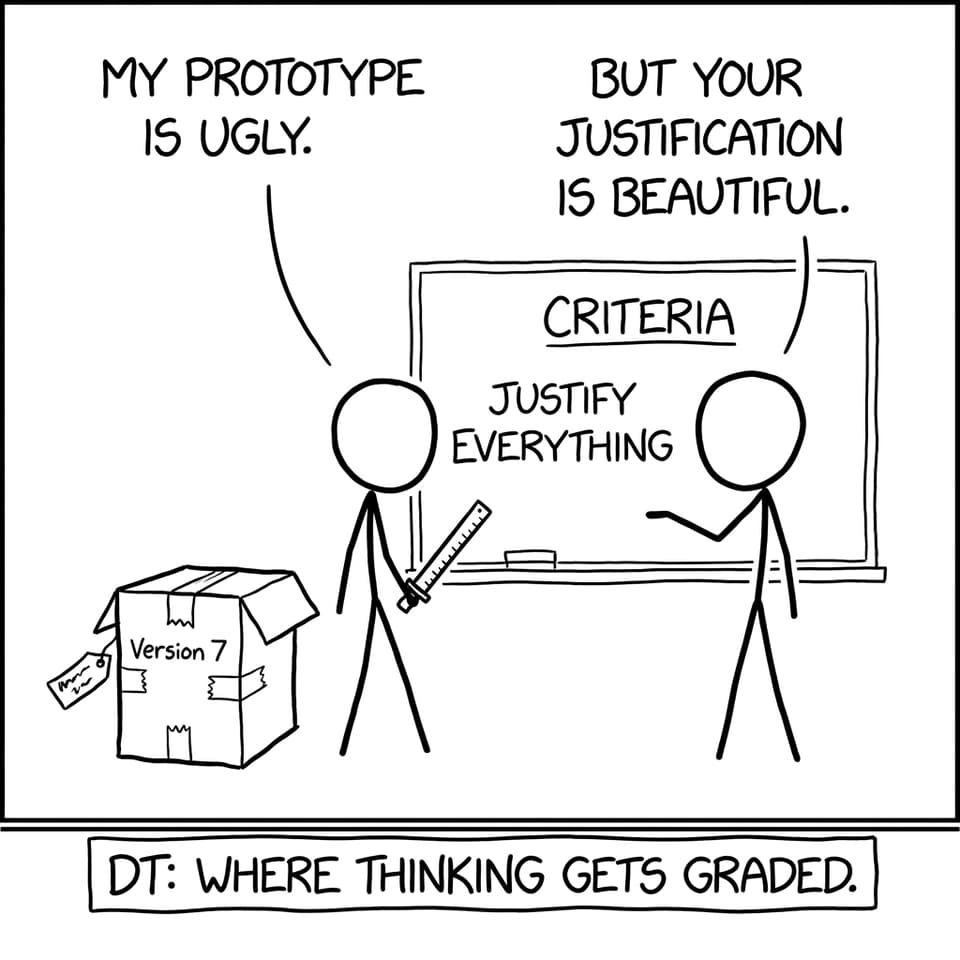
For the right student, IB Design Technology is predictable because it is criteria-driven. When you understand what earns marks, clear definitions, applied examples, justified decisions, evaluation with evidence, you can steadily improve.
This is where RevisionDojo’s Study Notes, Flashcards, and topic-by-topic practice become a simple loop: learn, recall, apply, then review.
Good starting points:
When IB Design Technology might not be worth it
IB Design Technology can feel brutal if you dislike open-ended work. It may not be the best fit if you:
-
Want clear right-or-wrong answers most of the time
-
Strongly dislike reflective writing and documentation
-
Struggle with long-term time management
-
Avoid asking “why” and prefer memorising “what”
DT is not “arts and crafts.” It is reasoning under constraints. If you procrastinate, the subject punishes you slowly, then all at once.
HL vs SL: is IB Design Technology worth it at higher level?
Choosing HL is worth considering if you genuinely enjoy explanation and evaluation, because HL tends to demand more depth in how you connect ideas and justify decisions.
But the honest rule still applies: a strong SL score usually helps more than a weak HL score. If your overall Diploma load is heavy, SL can be the smarter play.
A practical way to test fit is to attempt a short set of exam-style questions and compare how you feel writing DT responses versus other subjects. Use a focused practice section like A. Design in theory Questionbank and see whether the thinking feels energising or draining.
How to make IB Design Technology worth taking (especially for exams)
Here is the approach that makes IB Design Technology feel manageable:
-
Build a tiny glossary early, then maintain it with spaced repetition using Flashcards and your own examples
-
Practise exam responses weekly using the Questionbank
-
Keep your project simple, but your justification rich
-
Learn one topic deeply enough to explain it from multiple angles (user, sustainability, manufacturing)
-
Use Predicted Papers, Mock Exams, and the Exam builder on RevisionDojo when you shift into final exam mode
If you want a central home base, the IB Design Technology hub is the cleanest way to connect notes, practice, and revision routines.
Final verdict: is IB Design Technology worth taking?
IB Design Technology is worth taking when it matches the way you think: curious, practical, and willing to justify decisions like they matter. It is not the easiest subject, but it is one of the clearest for building transferable skills while still aiming for a strong grade.
If you want IB Design Technology to feel less overwhelming and more strategic, RevisionDojo is built for exactly that: Study Notes, Flashcards, Questionbank, AI Chat, Grading tools, Predicted Papers, Mock Exams, a Coursework Library, and expert Tutors when you need a human push. Start at the IB Design Technology hub and build a plan you can actually keep.