
Sometimes the hardest part of IB Design Technology isn’t the sketching, the CAD, or the prototype. It’s the quiet moment at the start, when you have to name the problem clearly enough that the rest of your IA almost writes itself.
A weak problem statement feels harmless. It’s just a paragraph, right? But in IB Design Technology, that paragraph quietly controls everything that comes after: the relevance of your research, the logic of your design requirements, the quality of testing, and the honesty of evaluation. If the start is vague, the middle becomes messy, and the end becomes a scramble.
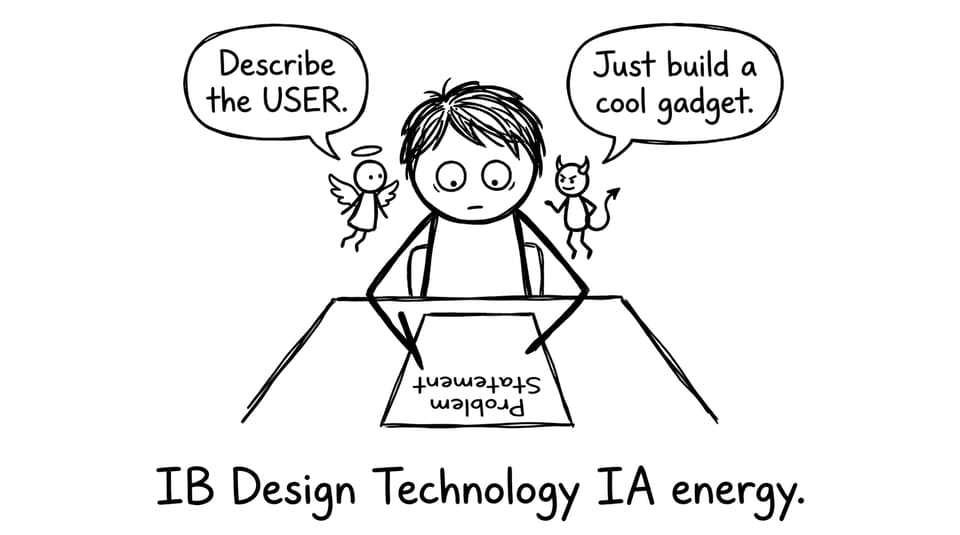
What a problem statement means in IB Design Technology
In IB Design Technology, a problem statement is a short, user-centred description of a real situation that needs to be improved. It should make an examiner think: “Yes, I understand exactly who this is for, what’s going wrong right now, and why solving it would matter.”
A strong statement usually answers four questions:
-
Who is the user (specific, not generic)
-
What difficulty they face (observable, not dramatic)
-
Where/when it happens (context that limits the scope)
-
Why it matters (impact you can later measure)
If you want a quick reference for the wording examiners expect, keep RevisionDojo’s IB Design Technology Key Definitions open while you draft.
A fast checklist before you write
Use this mini-checklist to keep your IB Design Technology problem statement sharp:
-
Names a specific user (realistic and testable)
-
Describes the current situation (what’s not working)
-
Explains impact (time, safety, comfort, accessibility, efficiency)
-
Includes evidence (interview quote, observation notes, short survey)
-
Avoids solution language (no “design/create/build”)
For the bigger picture of how this connects to the whole IA, see What Is the IB Design Technology Design Project?.
Start with the user, not “students in general”
The simplest upgrade you can make is choosing a user you can actually access and observe. “Students” is too broad. “Teenagers” is too broad. Even “IB students” can be too broad.
Try narrowing by:
-
environment (small bedroom, long commute, shared workspace)
-
constraint (limited storage, limited time, limited strength/dexterity)
-
routine (daily study sessions, club training, caring responsibilities)
This is why IB Design Technology rewards user-centred thinking: the more specific the user, the easier it becomes to justify requirements and later test whether you succeeded.
If you’re planning your project timeline around real user access, the guide How to Manage a Large Project in IB Design Technology helps you set checkpoints early.
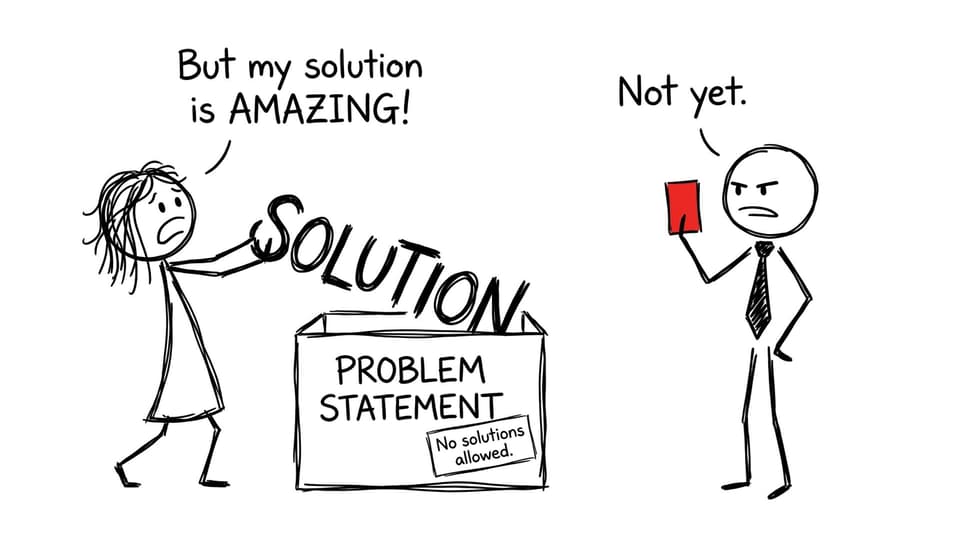
Describe the problem without sneaking in a solution
The most common trap in IB Design Technology is writing a “problem statement” that is actually a product pitch.
Compare the difference:
-
Too solution-led: “The problem is that students need a better desk organiser.”
-
Stronger: “A Year 12 IB student who studies in a small shared bedroom struggles to keep stationery and revision materials accessible during daily study sessions, causing frequent interruptions and wasted time.”
Notice what changed: the second version describes the situation, not the object you want to make. That separation keeps your research honest. It also prevents forced iteration later.
For more common pitfalls like this, read What Are the Most Common IB Design Technology IA Mistakes?.
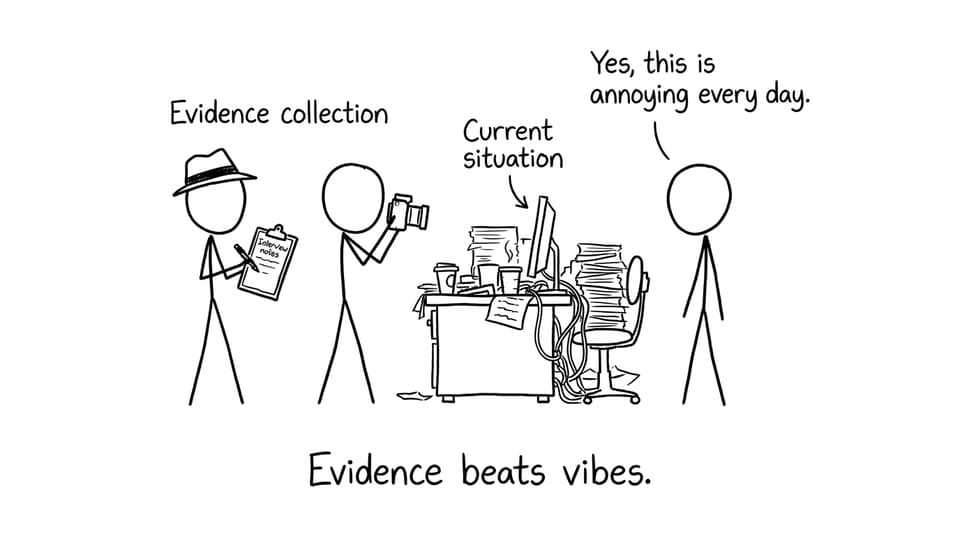
Prove the problem is real with lightweight evidence
Examiners trust evidence more than confidence. In IB Design Technology, you don’t need a massive study. You need a believable one.
Good evidence can be:
-
one short user interview with direct quotes
-
5-question mini survey (keep results simple)
-
observation notes from two study sessions
-
photos of the current situation (mess, clutter, awkward workflow)
The goal is to show you didn’t guess. You checked.
RevisionDojo makes this part easier when you pair your write-up with examples from the IB Design Technology (First Exam 2027) Exemplars, so you can see how top students embed evidence without bloating word count.
Use a simple sentence frame that stays testable
Here’s a practical template you can reuse in IB Design Technology:
[Specific user] in [clear context] experiences [current problem] because [cause/constraint], which results in [measurable impact].
A finished version might sound like:
“A left-handed IB student who takes notes in fast-paced classes experiences wrist discomfort and smudging when using standard gel pens on coated paper, which reduces writing speed and legibility during timed practice.”
That last phrase matters: timed practice hints at measurable testing later. And it naturally links your IA thinking to exam thinking, which is exactly the mindset behind Best Study Strategies for IB Design Technology Students.
How RevisionDojo helps you turn a paragraph into marks
A good IB Design Technology problem statement isn’t just writing. It’s alignment.
On RevisionDojo, students usually build that alignment by:
-
checking terminology with the IB Design Technology Resources hub
-
using AI Chat to stress-test whether the statement contains solution language
-
turning evidence into requirements with Study Notes and Flashcards for key DT vocabulary
-
practising justification skills with the Questionbank and exam-style prompts
-
running their draft through Grading tools like the IB Design Technology HL IA Grader to see what’s missing
-
reviewing structure using Mock Exams, Predicted Papers, and support from Tutors when deadlines get close
That mix matters because IB moderation rewards visible thinking, not just a polished final product.
Closing: make the first paragraph do the heavy lifting
A strong IB Design Technology problem statement doesn’t try to impress. It tries to make the rest of your work inevitable.
When the user is specific, the context is clear, and the impact is measurable, your research stops being random, your requirements become testable, and your evaluation becomes honest. That’s not just better writing. It’s easier project management, and calmer revision.
If you want to build that foundation quickly, start with RevisionDojo’s Study Notes and Coursework Library, pressure-test your wording with AI Chat, then validate your alignment with the Grading tools and exemplar support. In IB Design Technology, the best projects usually don’t begin with a product. They begin with one clean paragraph that tells the truth about a real problem.
