
The tiny detail that can sink a great IA
You can spend weeks perfecting a prototype in IB Design Technology. You can iterate, test, photograph every stage, and write reflections that feel genuinely insightful. Then, right near the end, something small tries to undo all that work: referencing.
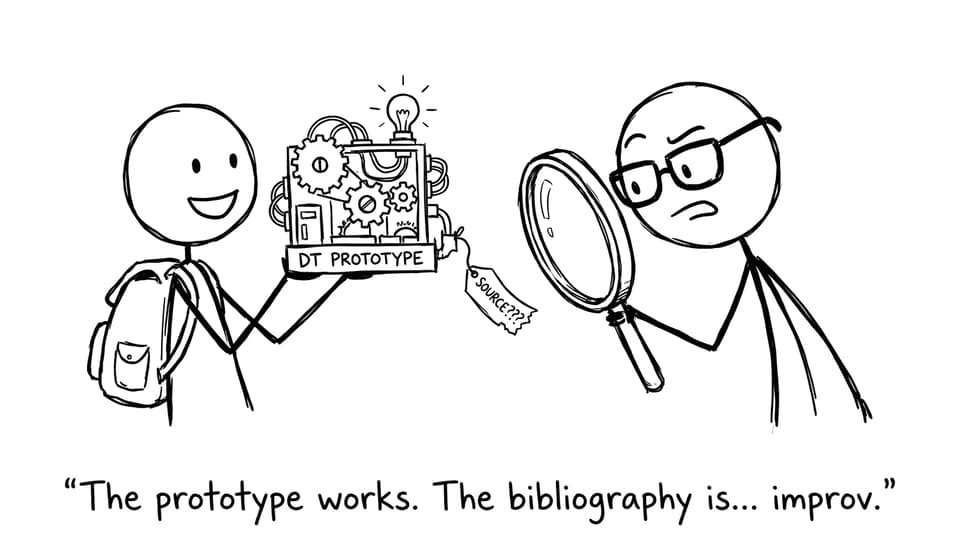
Referencing in the IB Design Technology IA is rarely “hard” in the technical sense. It’s hard because it’s easy to forget until you’re tired, rushing, and convinced that changing a few words means the idea is now yours. Examiners don’t need perfection. They need clarity. They need to see what came from you, and what came from somewhere else.
If you’re building your IA workflow, it helps to keep your IA support and exam prep in one place. The IB Design Technology hub is a solid starting point, especially when you want your research habits to match the way the course is assessed.
Quick checklist: what good referencing looks like
Use this checklist as your baseline for IB Design Technology IA referencing:
-
Cite any borrowed idea, not just copied wording.
-
Add in-text citations where you use information, not only in a bibliography.
-
Cite images, diagrams, tables, and product photos that are not yours.
-
Use one consistent style (any recognized one is fine).
-
Make it easy for an examiner to find the original source.
-
Keep a “source log” while researching so you don’t backtrack later.
For broader citation habits that apply across subjects, see How to Cite Sources Correctly in Your IA.
Why referencing matters in IB Design Technology
In IB Design Technology, you’re rewarded for justified decision-making: why this material, why that form, why this manufacturing method, why this test. Research is the backbone of that justification.
When you reference properly, you’re doing two quiet but powerful things:
-
Protecting yourself from academic honesty issues.
-
Making your thinking believable by showing the evidence trail behind your design choices.
And yes, even unintentional mistakes can become academic honesty concerns. If you want a clear overview of integrity expectations, read How to Uphold Academic Integrity in IB Assessments.
What you must reference (and what you don’t)
A useful rule for IB Design Technology is: if you couldn’t have written it without seeing it somewhere, cite it.
You should reference
-
Secondary research: websites, textbooks, journals, reports
-
Design theory explanations that are not your own reasoning
-
Product analysis details taken from brands, reviews, or catalogues
-
Statistics and data sets (even if you turn them into your own chart)
-
Images/diagrams you didn’t create (including screenshots)
You usually do not need to reference
-
Your own sketches, CAD, photos, and drawings
-
Your own test data and evaluation notes
-
User interviews you conducted (though you should document them clearly)
-
Original ideas you can genuinely show came from your own iteration
If you’re unsure how examiners separate “impressive” from “well evidenced,” it helps to read How Is the IB Design Technology IA Graded?.
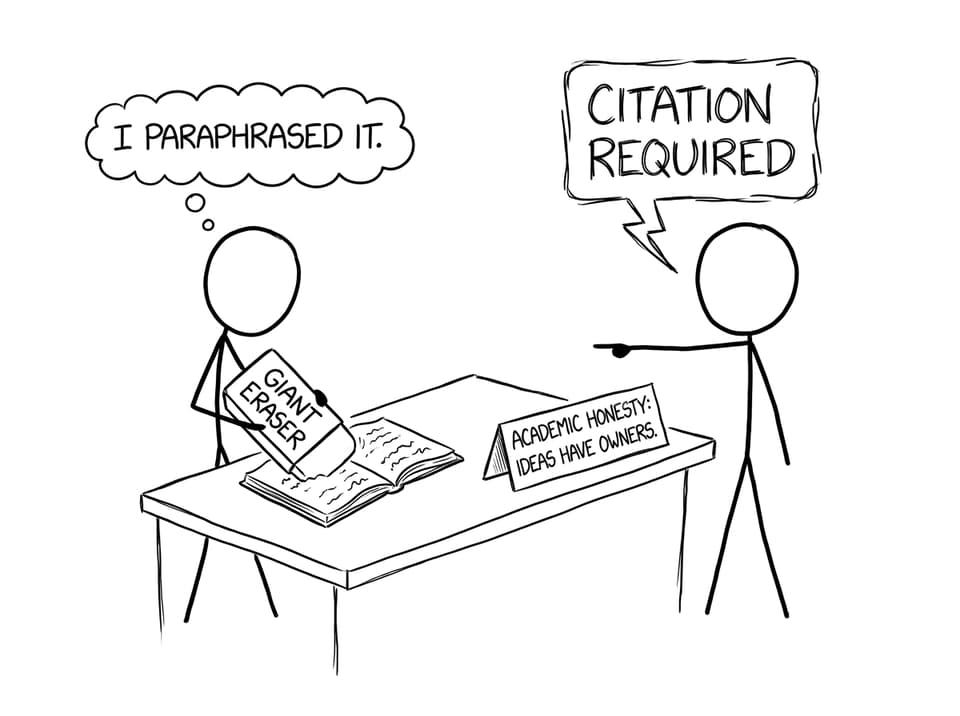
The most common mistake: “I paraphrased it”
Students often think paraphrasing is a magic trick: swap a few words, change the order, and the source disappears. But in IB Design Technology, the issue isn’t just phrasing. It’s ownership of ideas.
If you paraphrase a definition of ergonomics, a sustainability claim, or a material property explanation, you still cite the source. If a diagram inspired your mechanism layout, you still cite the source. Paraphrasing changes wording, not origin.
A good habit is to research with a split screen: one side your notes in your own words, the other side the source, and you drop a citation immediately. This approach also pairs well with structured research stages like those described in Step-by-Step Guide to Writing a Winning IB Design Technology IA.
What referencing style should you use in IB Design Technology?
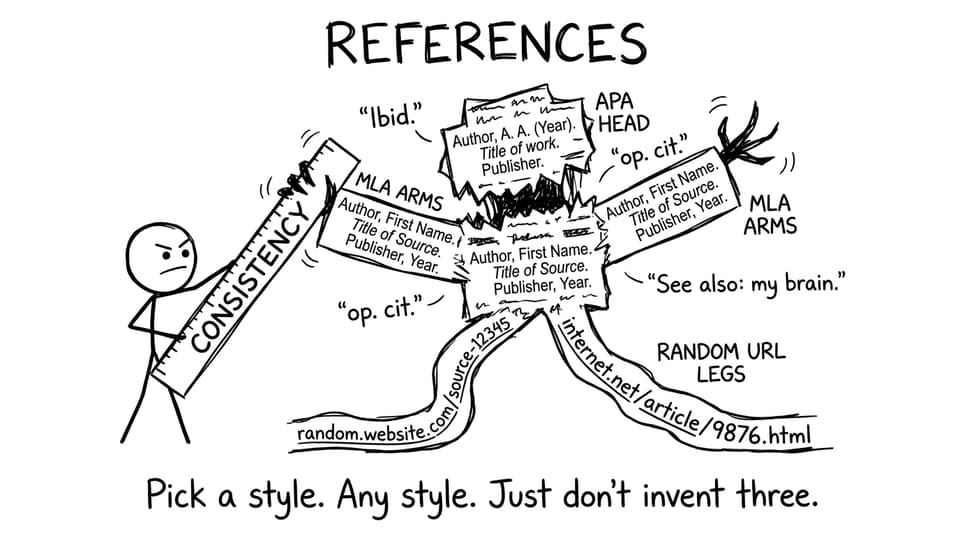
The IB does not force one specific citation style for IB Design Technology. Your school might have a preference, but the key expectation is consistency.
Pick a recognized style (APA, MLA, Chicago, etc.) and apply it the same way throughout. A complete reference typically includes:
-
Author or organization
-
Title of page/article
-
Site or publication
-
Date (published if available)
-
Date accessed
-
Link (for online sources)
If your IA is already drafted and you’re cleaning up the final version, referencing is part of submission readiness. The final polish matters: How Do You Finalise and Submit the IB Design Technology IA.
In-text citations vs bibliography (you want both)
A bibliography alone can feel like a vague confession: “I read things.”
In-text citations show exactly where research influenced your IB Design Technology thinking. They also help an examiner trust that your specifications and decisions are grounded.
A practical approach:
-
Use in-text citations for every claim, data point, or external idea.
-
Keep a bibliography at the end with full details.
If you want examples of what polished sourcing looks like, browse IB Design Technology (DT) Exemplars.
Referencing existing products and inspiration
Product inspiration is normal in IB Design Technology. The problem is pretending inspiration is invention.
When you analyze existing products:
-
Name the product and company (if known)
-
Cite the page where you got the images/specs
-
Explain what you learned and how you adapted it
This actually strengthens originality because your work becomes a visible evolution rather than a mystery.
If you’re still building your IA plan, the article IB Design Technology IA Examples: What Top Projects Look Like is a helpful reference point.
A calm finish: referencing is a design skill
The funny thing about IB Design Technology is that referencing is basically design thinking applied to knowledge: you’re mapping inputs, documenting decisions, and making your process legible.
If you want the whole system to feel simpler, build your IA and exam routine inside RevisionDojo: use the Coursework Library to see what strong sourcing looks like, the Grading tools (like the IB Design Technology SL IA Grader and IB Design Technology HL IA Grader) to self-check criteria, AI Chat to clarify citation edge cases, and keep exam prep moving with Study Notes, Flashcards, the Questionbank, plus Mock Exams and Predicted Papers when timing matters.
Reference as you go. Stay consistent. And let your IB Design Technology thinking get the credit it deserves.