
The myth that scares good students away
A lot of people walk into IB Design Technology with a quiet fear: I’m not creative, so I’ll fall behind. It’s the same feeling you get when someone hands you a blank page and calls it “ideation.” Your brain doesn’t produce fireworks. It produces questions.
Here’s the reassuring twist: in IB Design Technology, questions are often more valuable than fireworks.
Examiners aren’t secretly waiting for a once-in-a-generation invention. They’re looking for clear thinking, evidence-based decisions, and a design process you can defend. If you’re the type of student who likes structure, logic, and checklists, IB Design Technology can be a surprisingly fair subject.
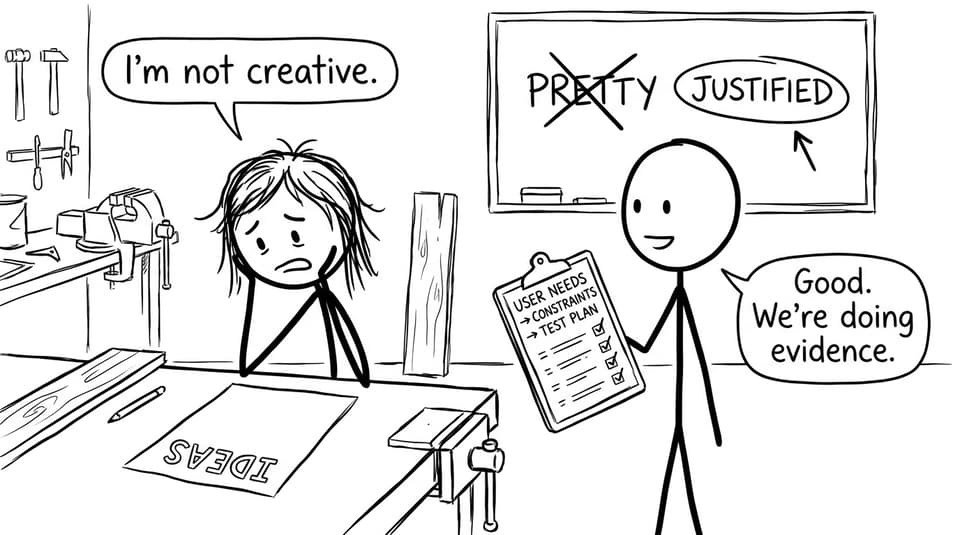
Quick checklist: how to do well without “being creative”
If you want to score highly in IB Design Technology without relying on artistic talent, keep returning to this:
-
Define a real user and a real problem (not a vague “I want to redesign a chair”)
-
Research constraints (materials, ergonomics, sustainability, cost, safety)
-
Generate multiple plausible options (variation beats “genius”)
-
Justify choices with evidence and criteria
-
Prototype, test, and iterate (and document it cleanly)
-
Evaluate honestly, including what failed and what you’d change
That’s not “creative personality.” That’s disciplined process.
What “creativity” actually means in IB Design Technology
In IB Design Technology, creativity is less “art class” and more “useful decisions under constraints.” You can be creative by:
-
Improving an existing product for a specific user
-
Combining known features in a more user-centered way
-
Spotting a trade-off and choosing deliberately
-
Simplifying a design so it becomes more reliable
Notice what’s missing: beautiful sketching, fancy aesthetics, or originality for its own sake.
If your strength is analysis, you’re already close to what the course rewards. And if you want a clear map of the syllabus areas this kind of creativity shows up in, start with the IB Design Technology hub.
What examiners reward (and what they ignore)
Students often think a “cool-looking” final product is the main thing. But the scoring reality in IB Design Technology is different.
Examiners reward:
-
Clear problem definition and user focus
-
Research that actually influences decisions
-
Logical development (not random changes)
-
Testing with measurable outcomes
-
Evaluation tied back to criteria
Examiners mostly ignore:
-
Artistic flair by itself
-
“Unique” ideas with weak justification
-
Complex builds that aren’t explained well
If you want a broader sense of how the course is assessed and why it’s more thinking-heavy than people expect, read The Complete Guide to IB Design Technology.
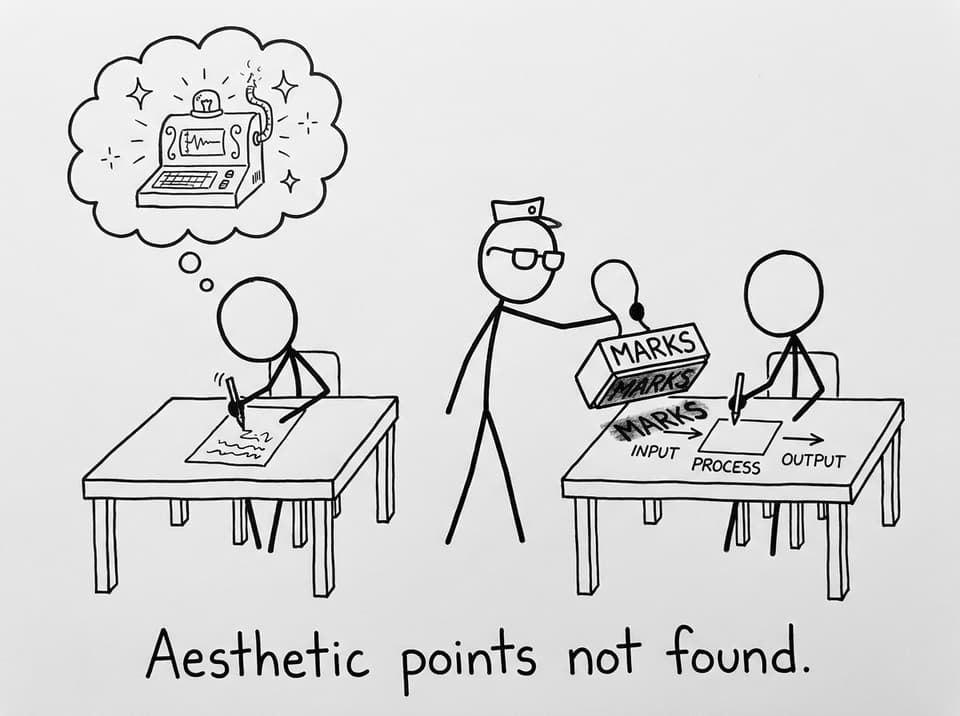
Why “not creative” students often score higher
The students who say “I’m not creative” often do these things naturally:
-
They follow criteria closely.
-
They explain decisions in full sentences.
-
They prefer measurable tests over vague opinions.
-
They’re willing to simplify instead of showing off.
That combination is quietly powerful in IB Design Technology. It turns the subject into something you can execute reliably.
If you want a practical workflow for that kind of student, Best Study Strategies for IB Design Technology Students is a solid next read.
Your design project doesn’t need originality (it needs honesty)
A common worry is that your project must be a brand-new invention. In real design, most progress is iterative: you take something that exists, identify a weakness, and improve it for a user.
That approach is not only allowed in IB Design Technology -- it’s often where the best projects live.
If you’re unsure how far you can lean on existing products, use Can You Reuse Products or Ideas in IB Design Technology? to avoid the common traps.
And when you’re stuck for a realistic starting point, IB Design Technology Project Ideas for Students can help you choose something manageable.
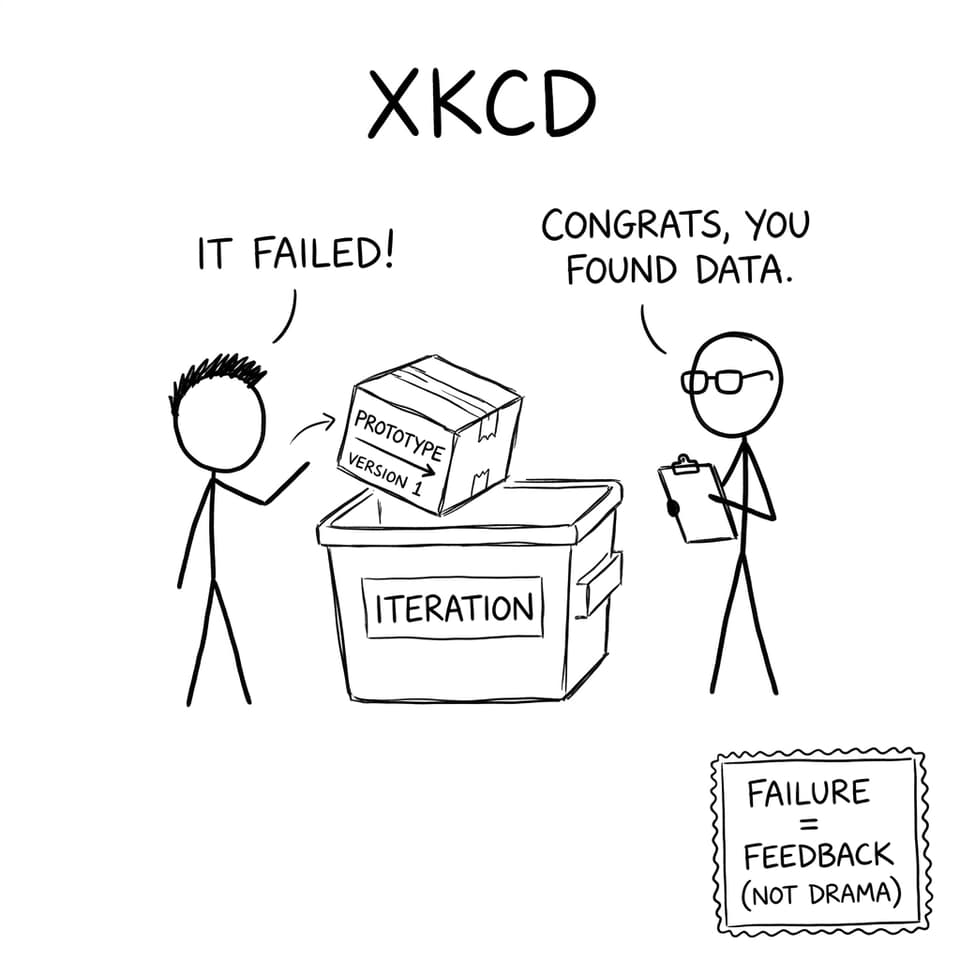
Exam performance: structured thinking beats “imagination”
In the exams, IB Design Technology rewards application: using concepts to explain choices, evaluate trade-offs, and link design decisions to users and contexts.
This is where RevisionDojo becomes a practical advantage. You can:
-
Drill exam-style practice using the Design Technology Questionbank
-
Patch weak theory quickly with targeted notes like 1.1a Anthropometrics Notes and 4.1 Properties of Materials Notes
-
Build recall with Flashcards
-
Ask AI Chat when you’re stuck on terminology or evaluation
-
Use Grading tools to learn what markbands actually want
-
Practise realism with IB Design Technology Predicted Papers
-
Reduce IA anxiety by studying exemplars in the Coursework Library for IB Design Technology
Conclusion: you don’t need inspiration, you need a system
You can do very well in IB Design Technology without being naturally creative, because the subject rewards how you think, not how artistic you feel. Build a simple, user-centered idea. Research honestly. Test methodically. Explain everything.
If you want that system in one place, RevisionDojo is built for IB Design Technology students who prefer structure: Questionbank practice, Study Notes, Flashcards, AI Chat, Grading tools, Predicted Papers, Mock Exams, the Coursework Library, and Tutors when you need a human diagnosis.
Start with the IB Design Technology hub and turn “I’m not creative” into “I’m consistent.”
