



A few minutes into fieldwork, IB ESS teaches you something textbooks rarely say out loud: nature doesn’t care what result would look “nice” on a graph.
Your transect line will cross the one patch of ground that makes your averages messy. Your water sample will smell fine but show a surprising reading. Your classmate will get a different value and swear they did it “the same way.”
That moment is where IB ESS becomes more than a subject. It becomes a practice in integrity: telling the truth about complex systems even when the truth is inconvenient. And because ESS sits at the intersection of science and society, your honesty doesn’t just protect your grade. It protects the quality of the environmental story you’re telling.
If you’re an IB student preparing for exams, this guide breaks down what integrity looks like in IB ESS: ethical fieldwork, transparent data handling, careful citation, and responsible technology use, all in ways that directly strengthen exam performance.
Integrity in IB ESS: a quick checklist you can actually use
Use this before you submit an IA draft, write a case study paragraph, or sit a timed paper:
-
Collect data ethically (permission, minimal disturbance, safety).
-
Record raw results honestly (including “ugly” outliers).
-
Show uncertainty (limitations, reliability, and method issues).
-
Separate evidence from opinion (especially in sustainability debates).
-
Cite everything non-original (ideas, figures, statistics, maps, definitions).
-
Use AI and digital tools transparently (support learning, don’t outsource thinking).
In IB ESS, integrity is not a moral add-on. It’s a scoring strategy because good answers depend on credible evidence and balanced evaluation.
What “integrity” means in IB ESS (and why it scores marks)
Integrity in IB ESS is the habit of being accurate when it would be easier to be impressive.
That matters because ESS questions reward students who can:
-
reason using systems thinking (inputs, outputs, flows, storages),
-
handle uncertainty rather than hiding it,
-
compare environmental value systems and stakeholder perspectives fairly,
-
evaluate trade-offs in sustainability (winners, losers, time scale, and unintended consequences).
If you want a structured home base for the course while you revise, start with the IB Environmental Systems and Societies (ESS) resources hub. It’s built so your learning stays traceable: notes, practice, flashcards, and exam-style feedback in one place.
Ethical fieldwork in IB ESS: learn like a scientist, behave like a guest
Fieldwork is one of the most distinctive parts of IB ESS. You’re not just studying ecosystems; you’re stepping into them.
Practical ethics you can apply immediately:
-
Get permission for public/private land and respect local rules.
-
Minimize harm: avoid trampling habitats, over-sampling, or disturbing wildlife.
-
Collect only what you need (and dispose of waste properly).
-
Record conditions (weather, time, anomalies, equipment limits).
-
Keep a clean method trail: photos of setup, rough notes, and repeated trials.
This isn’t just “being nice.” Ethical fieldwork strengthens reliability and evaluation, which are high-value skills in IB ESS coursework and exam responses.
When you’re revising sustainability ethics, it also helps to anchor ideas in syllabus-aligned content like Notes for 1.4 Sustainability and the broader ESS revision notes index.
Honest data in IB ESS: stop trying to “win” against randomness
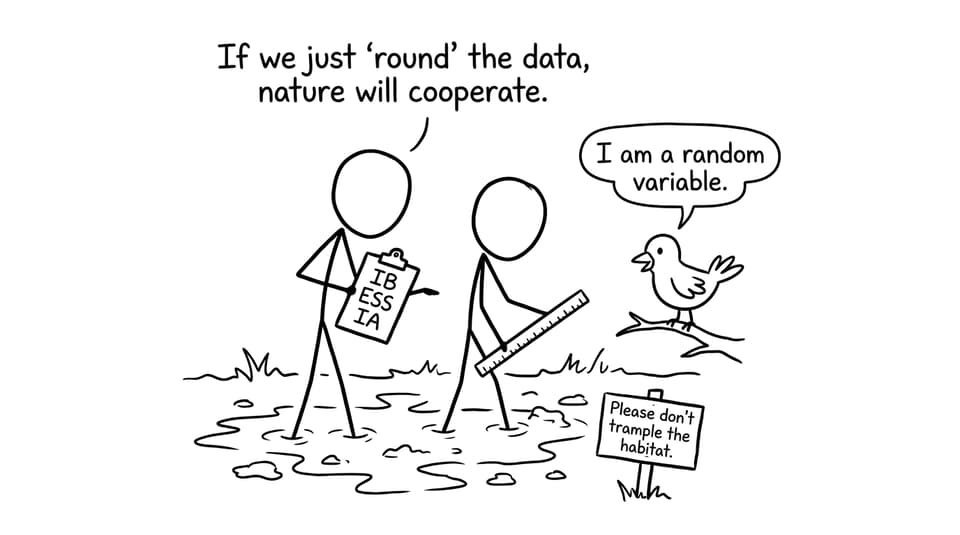
A quiet temptation in IB ESS is to treat data like a performance. But environmental data is naturally variable. Integrity means your analysis explains that variability instead of erasing it.
What honest data handling looks like
-
Don’t fabricate numbers to match a hypothesis.
-
Don’t delete outliers unless you justify it transparently (and often you should discuss them rather than remove them).
-
Use averages carefully: mean vs median can matter if data is skewed.
-
Discuss reliability: sample size, replication, control of variables, and measurement error.
-
Explain anomalies using environmental reasoning (microclimates, patchiness, human disturbance, instrument limits).
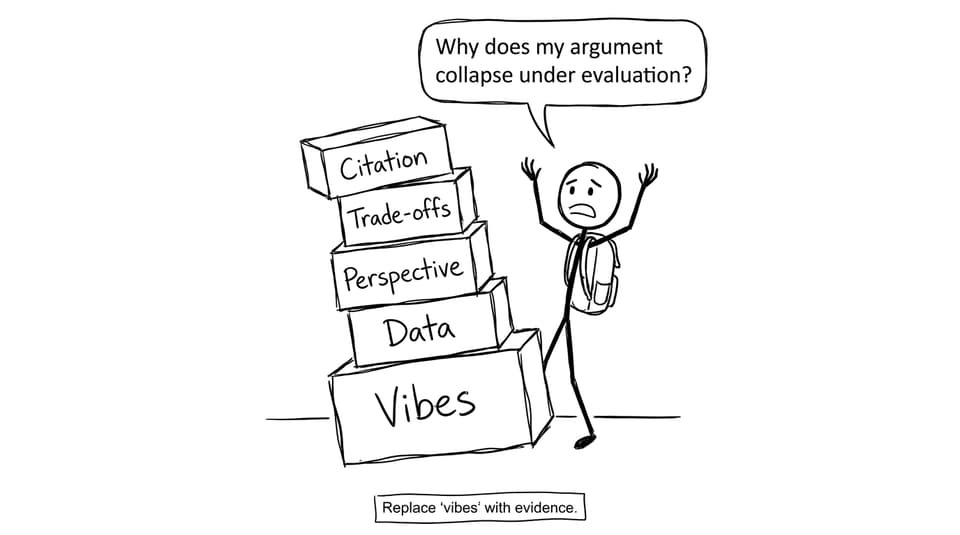
A useful mindset shift for IB ESS: messy results are not failure; they’re information about the system.
If you need extra practice applying this logic under exam conditions, RevisionDojo’s Questionbank feature helps you drill exam-style prompts with fast feedback. You can also work topic-by-topic with the ESS-specific question banks, like Topic 1: Foundation Questionbank to build accuracy early.
Ethical analysis in IB ESS: fairness is a method, not a personality trait
Because IB ESS sits between natural science and social science, you’re often writing about contested decisions: dams, conservation areas, urban planning, energy transitions, or water allocation.
Integrity here means you don’t write propaganda, even if you have strong views.
How to evaluate sustainability without bias
-
Name stakeholders (local communities, governments, businesses, future generations, ecosystems).
-
Compare perspectives using environmental value systems rather than stereotypes.
-
Use evidence first, then interpretation.
-
Admit trade-offs (economic benefits can coexist with ecological costs).
-
Avoid certainty theatre: “This will solve it” usually needs qualifiers.
If you’re building revision around real examples, it helps to study case studies in a way that’s flexible for exams. RevisionDojo’s post on IB ESS case studies for 2026 is a useful model for what to remember and how to apply it.
Citing sources in IB ESS: the fastest way to look like a serious student
In IB ESS, citation isn’t just a rule. It’s a signal: you can trace claims back to evidence.
Cite:
-
specific statistics (emissions, biodiversity loss rates, water access figures),
-
adapted diagrams, maps, or tables,
-
definitions and frameworks (models, sustainability concepts, economic terms),
-
datasets used for secondary analysis.
A practical habit: build a “source log” while you read, not after you write.
For a clean, cross-subject citation system that still works for IB ESS, use RevisionDojo’s guide: 10 best practices for citing sources properly in IB EE and IA. If you’re anxious about originality, this one is calming and specific: How do I ensure my IA is original and not plagiarized?.
Responsible AI and tech use in IB ESS: assistance is allowed, outsourcing isn’t
Most students don’t start unethical. They start tired. And tired students are vulnerable to tools that promise speed.
In IB ESS, you can use technology well while keeping your thinking authentic.
Use digital tools to:
-
visualize your own data (graphs, mapping, basic stats),
-
organize sources and citations,
-
quiz yourself with spaced repetition,
-
clarify a concept you don’t understand yet.
Avoid using AI to:
-
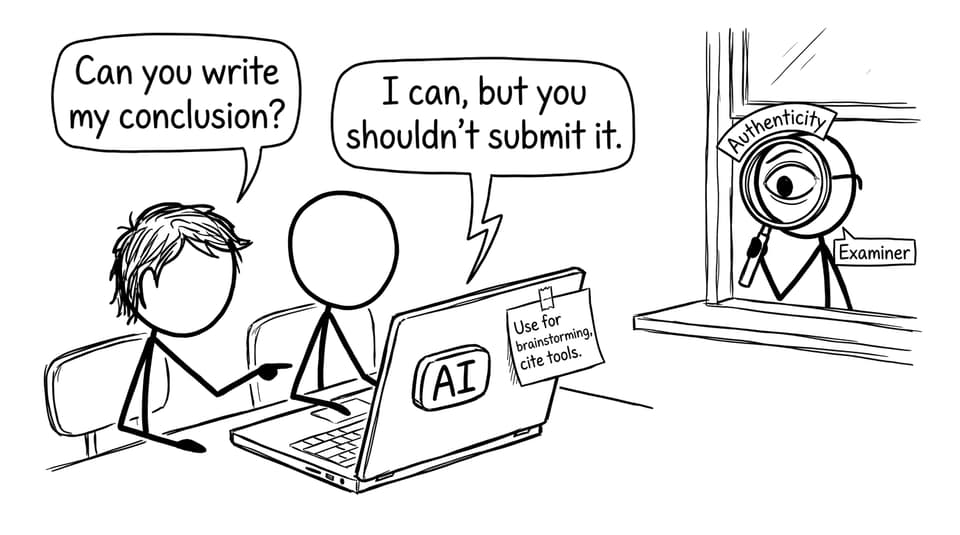
write your final analysis or conclusion,
-
interpret results you haven’t understood yourself,
-
generate “ready-to-submit” paragraphs.
When in doubt, follow this principle: if your teacher asked you to explain your work out loud, you should be able to.
RevisionDojo’s stance is built around exactly that: real understanding. The platform’s guide to studying with academic integrity gives a practical standard for using support tools without crossing the line.
How to revise IB ESS with integrity (and still move fast)
Integrity doesn’t mean slow revision. It means traceable revision.
Here’s a simple loop many students use for IB ESS exam preparation:
-
Study Notes: learn one concept clearly (not broadly).
-
Flashcards: turn it into recall prompts the same day.
-
Questionbank: apply it in exam-style questions until your errors repeat less.
-
AI Chat: use it to unblock confusion, not replace writing.
-
Grading tools: check if your evaluation actually earns marks.
-
Predicted Papers + Mock Exams: rehearse timing and stamina.
You can build that loop inside RevisionDojo using the Questionbank, Study Notes, Flashcards, AI Chat, Grading tools, Predicted Papers, Mock Exams, Coursework Library, and Tutors when you need human help.
If you want a realistic practice plan, RevisionDojo’s breakdown of IB predicted vs specimen papers helps you use practice papers strategically, without superstition. And when you’re ready for full-paper rehearsal, start at the IB Predicted Papers hub.
FAQ: Integrity in IB ESS
What counts as misconduct in IB ESS?
Misconduct in IB ESS usually comes down to misrepresenting work as yours when it isn’t. That includes fabricating or altering data, copying analysis from another student, or presenting someone else’s wording as your own without quotation and citation. It also includes collusion, where collaboration becomes shared writing, shared calculations, or shared “final answers” rather than shared discussion. Another common issue is reusing large parts of someone else’s method write-up or evaluation language, even if you collected your own data. The safest rule is this: if the thinking, wording, or numbers didn’t originate from you, you must either cite it clearly or rebuild it in your own authentic way. Integrity in IB ESS protects both your grade and the credibility of your environmental conclusions.
Can I use secondary data in my IB ESS work?
Yes, secondary data can be completely appropriate in IB ESS, especially when primary data collection is limited by time, access, or safety. The integrity requirement is that you cite the dataset properly, explain why it is suitable, and evaluate its limitations (sampling method, scale, possible bias, and uncertainty). You should also make your own analysis visible: process the data, compare it to another source, or connect it directly to your research question. Another strong integrity move is to explain what you would ideally collect as primary data, and why that might change the confidence of your conclusion. Secondary data should support your argument, not replace your reasoning. If you treat secondary evidence like something you can question, not just something you can paste, you’re thinking the way IB ESS wants.
How do I handle errors or strange results in IB ESS?
First, report them honestly, because ESS examiners and teachers are trained to value transparency over perfection. Then, separate measurement error (equipment limits, observer variation, timing issues) from natural variability (patchy habitats, microclimates, human disturbance). After that, explain how the issue affects reliability: does it weaken the conclusion, narrow it, or suggest you need more trials? A strong IB ESS evaluation doesn’t hide problems; it shows how you thought about them and how you would improve the method next time. You can also discuss whether the “strange” result might be the most interesting signal in the whole dataset. Integrity here is a skill: it turns uncertainty into analysis.
Can I use AI tools while studying IB ESS?
You can use AI tools to support learning, but integrity depends on how you use them and what your school allows. For IB ESS study, AI can be helpful for brainstorming questions to test yourself, explaining a definition in a simpler way, or suggesting how to structure a response using command terms. Where students get into trouble is submitting AI-generated writing as if it were their own thinking, especially for analysis, evaluation, and conclusions. Another risk is trusting AI-produced facts without checking, which can quietly introduce misinformation into your work. If you use AI, keep your voice central and verify claims with reliable sources. And if AI meaningfully shaped your work process, disclose tool use according to school guidance.
Conclusion: IB ESS integrity is sustainability in practice
The point of IB ESS isn’t to sound certain. It’s to be honest in uncertainty, and still make decisions.
When you collect data ethically, report it transparently, cite sources carefully, and evaluate perspectives fairly, you’re practicing the kind of thinking sustainability requires. That’s why integrity isn’t separate from success in IB ESS exams. It is success.
If you want a revision system that rewards real understanding (not shortcuts), build your IB ESS routine inside RevisionDojo: learn with Study Notes, lock it in with Flashcards, prove it with the Questionbank, and rehearse confidently with Predicted Papers and Mock Exams, backed by AI Chat, Grading tools, the Coursework Library, and Tutors when you need them.