

Coral reefs don’t start as continents of limestone. They start as a decision--a larva drifting in warm water, finding one rough surface, and settling down.
That quiet moment matters in IB Biology because it connects so many syllabus themes at once: abiotic limiting factors, symbiosis, nutrient cycling, and ecosystem resilience. If you can explain reef formation clearly, you can usually pick up marks on data analysis and extended responses too.
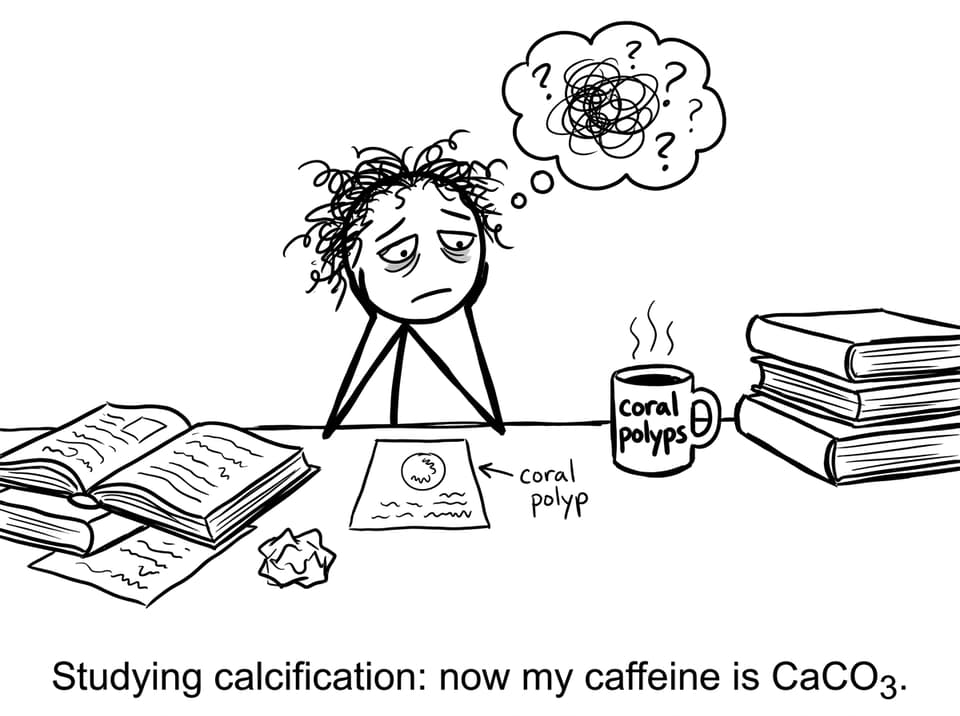
Quick exam checklist (IB Biology)
-
Define a coral reef as a calcium carbonate (CaCO3) structure built by colonial coral polyps
-
Describe reef growth as layering: old skeletons + new polyps on top
-
Explain zooxanthellae mutualism and why it boosts calcification
-
Link reef distribution to light, temperature, salinity, pH, turbidity as limiting factors
-
Name reef types: fringing, barrier, atoll
-
Connect threats to mechanism: warming --> bleaching; CO2 --> acidification --> slower calcification
For the syllabus-aligned version of the conditions, see Conditions required for coral reef formation.
How coral reefs form: from polyp to limestone city
In IB Biology, the core idea is simple: reefs are built by tiny animals called coral polyps (phylum Cnidaria). Polyps live in colonies and secrete calcium carbonate (CaCO3), creating a hard skeleton. When polyps die, that skeleton remains. New polyps grow on top. Repeat this for thousands of years and you get a reef.
Here’s the formation sequence you can write in a clean, mark-friendly way:
Settlement and colonization
Coral begins as free-swimming larvae. When a larva finds a suitable hard surface (rock, dead coral, stable substrate), it settles and metamorphoses into a polyp. This step is why reefs don’t form well on shifting sand.
Calcification and upward growth
Polyps deposit CaCO3, thickening the base. As the colony expands by asexual reproduction, the reef grows upward and outward. This “build on the past” structure is what makes reefs both sturdy and vulnerable--damage today removes the platform for tomorrow.
To practise how examiners phrase questions on this, use the IB Biology resources hub and filter to ecology topics in the Questionbank.
The hidden partnership: zooxanthellae and mutualism
Most reef-building corals rely on microscopic algae called zooxanthellae living inside their tissues. In IB Biology, you should label this as mutualism:
-
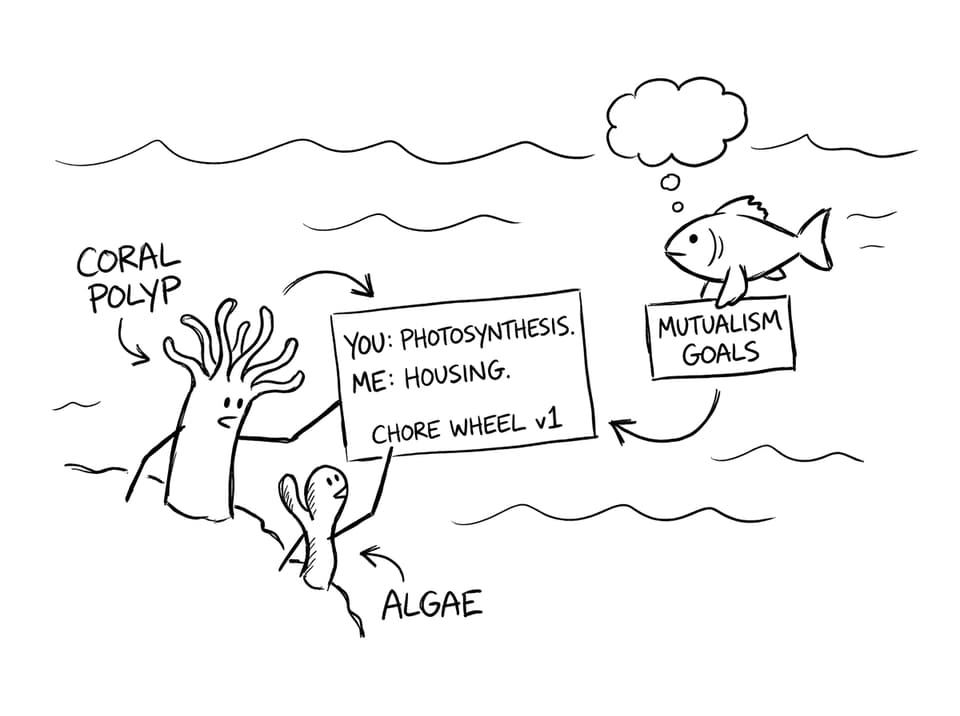
The algae photosynthesise and provide organic molecules (like glucose) and oxygen, which can supply a large proportion of the coral’s energy budget.
-
The coral provides CO2, nutrients from waste, and protection inside its tissues.
That energy matters because it supports calcification--the coral can afford to build more CaCO3 when the symbiosis is stable.
If you want a tight definition and examples that match IB wording, see Mutualism notes (including corals and zooxanthellae).
Where reefs can form: abiotic limiting factors you can list fast
Reefs aren’t “picky” by personality. They’re constrained by physics and chemistry--classic IB Biology limiting-factor logic.
Key conditions:
-
Light: zooxanthellae need sunlight, so reefs are usually in shallow water (often <50 m).
-
Temperature: generally warm, stable seas (commonly around 23°C to 29°C).
-
Water clarity (low turbidity): sediment blocks light and can smother polyps.
-
Salinity: relatively stable seawater conditions; big drops (e.g., near river mouths) stress corals.
-
pH / carbonate availability: lower pH reduces carbonate ions, slowing CaCO3 deposition.
For exam revision, pair that list with Photosynthesis notes so you can connect light limitation to productivity.
Types of coral reefs (know the trio)
In IB Biology, these are quick marks if you define them clearly:
-
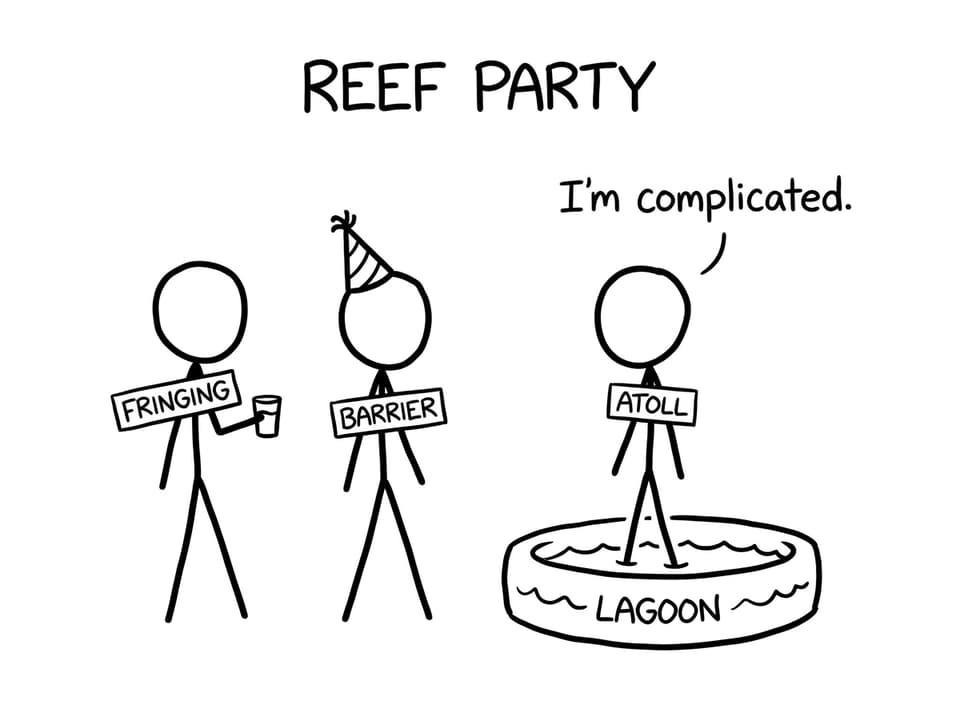
Fringing reefs: attached to a coastline.
-
Barrier reefs: separated from land by a lagoon.
-
Atolls: ring-shaped reefs around a lagoon, often linked to subsiding volcanic islands.
Why reefs matter (and why they fail)
Reefs support immense biodiversity and provide coastal protection. But the same tight conditions that allow reefs to form also make them sensitive.
Two high-yield mechanisms for IB Biology answers:
-
Bleaching: heat stress disrupts the coral-zooxanthellae relationship; corals expel algae, losing both colour and a major energy source.
-
Ocean acidification: increased CO2 lowers pH and reduces carbonate ions, making calcification harder.
Use Threats to coral reefs (ecosystem collapse example) to get examiner-style phrasing, then test yourself with timed prompts in the Questionbank.
Conclusion: learn the story, then practise the marks
Coral reefs form when tiny polyps turn chemistry into architecture--CaCO3 layer by CaCO3 layer--powered by a mutualism that only works within narrow environmental limits. That full chain is exactly what IB Biology examiners reward: process, conditions, and consequences.
To lock it in, revise the key conditions in B4.1 Adaptation to environment notes, then use RevisionDojo’s Questionbank, Study Notes, Flashcards, AI Chat, Grading tools, Predicted Papers, Mock Exams, Coursework Library, and Tutors to turn understanding into consistent exam marks.