
For M28 students: IB exams in May 2028, started DP1 in August 2026.
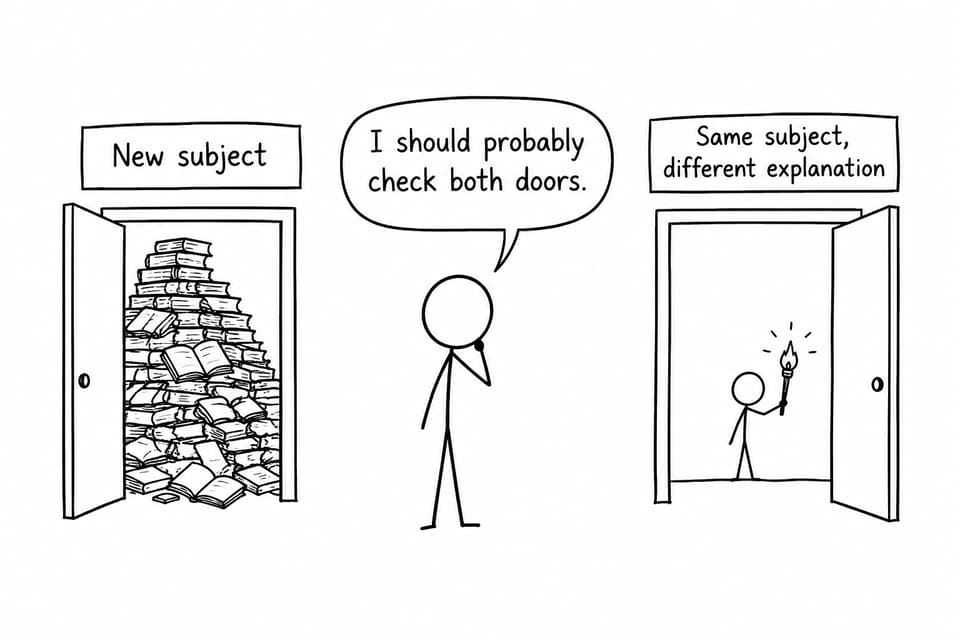
An IB teacher or subject problem is best separated by testing whether you can understand and tolerate the subject when the explanation, study method and setting change. If a different explanation helps but the core work still feels wrong, the subject may be the problem; if the work becomes manageable, teacher fit is more likely.
The first weeks of DP1 can make ordinary adjustment feel like evidence that something is broken. A fast class feels like the wrong level. One confusing unit feels like the wrong subject. An unfamiliar teaching style feels permanent.
Sometimes switching is sensible. But a good IB subject decision should come from evidence, not the emotional weather of one difficult week.
A quick checklist before considering a switch
Before requesting a subject or level change, ask:
- Can I explain what specifically feels wrong: pace, content, assessment, workload or classroom communication?
- Have I tried learning the same topic through another reliable explanation?
- Do I dislike the subject itself, or do I dislike feeling behind?
- Are my difficulties mainly with HL depth rather than the subject's core ideas?
- Does my preferred replacement meet university prerequisites?
- Can my school fit the replacement into my timetable?
- How much content would I need to catch up?
- What is my school's deadline and approval process?
Subject and level changes require school approval. Schools also set their own deadlines, availability rules and administrative arrangements, so advice from another IB student may not apply to you. Confirm deadlines, timetable availability and any fees directly with your DP coordinator.
For a wider view of timing, read Can You Change Subjects Mid-DP1 or Start of DP2?.
Run a seven-day teacher-versus-subject test
A decision becomes clearer when you turn discomfort into observations. Use one representative topic from your current course for a short diagnostic week.
Change the explanation first
Review the topic using your textbook, a classmate's explanation and structured resources such as RevisionDojo Study Notes or AI Chat. Then answer several topic-specific questions in the IB Questionbank.
Do not judge the experiment by whether everything suddenly feels easy. Ask whether the ideas become more coherent and whether you can begin questions independently. If comprehension rises sharply after the explanation changes, you may have a teacher-style mismatch rather than a subject mismatch.
Test the actual work of the subject
Understanding is not the same as fit. Consider the recurring tasks the subject demands: interpreting texts, writing arguments, manipulating equations, analysing data, learning vocabulary or designing investigations.
Ask yourself, “Could I accept doing this kind of thinking for two years?” You do not need to enjoy every lesson. You do need enough interest, capability or strategic reason to sustain the course when novelty disappears.
Compare evidence, not moods
Keep a small log for seven days:
| Evidence to record | What it may reveal |
|---|---|
| Topic and task attempted | Whether one unit is distorting your judgment |
| Resource or explanation used | Whether teaching format changes comprehension |
| Independent questions completed | Whether understanding transfers into performance |
| Frustration before and after studying | Whether difficulty falls with structured practice |
| Interest in the underlying task | Whether the subject itself remains tolerable |
This is not a scientific trial. It is simply better than deciding from memory, which tends to preserve the worst lesson and forget the ordinary ones.
Signs the teacher fit may be the issue
A teacher-fit problem becomes more plausible when:
- You understand the material through Study Notes, another teacher or a textbook.
- You like the subject's questions when you can work at your own pace.
- Your main difficulty is unclear instruction, limited feedback or classroom pace.
- You can demonstrate knowledge after studying independently.
- The same subject previously interested you.
This does not mean blaming the teacher. A capable teacher and a capable student can still have mismatched communication styles. Your practical question is whether the mismatch can be managed through office hours, clearer questions, peer study, RevisionDojo Flashcards, AI Chat or occasional support from IB Tutors with flexible schedules.
If those supports make the course workable, switching may create more disruption than it solves.
Signs the subject may be the issue
A subject mismatch is more likely when the problem survives different explanations and study methods. You can understand what to do, yet the subject's central tasks remain consistently unsuitable.
Look for patterns such as:
- The course conflicts with an important university prerequisite or future direction.
- You strongly dislike the recurring work, not merely the current topic.
- Your assumed background knowledge is substantially weaker than the course requires.
- Independent explanations improve clarity but not your willingness to continue.
- A realistic alternative fits your goals better and has a manageable catch-up load.
Regret alone is not proof that you chose badly. It is a signal to investigate. The guide to IB subject selection regret can help you distinguish early discomfort from a durable mismatch.
Check whether the level is the real problem
Sometimes the subject is right and the level is wrong. You may enjoy the ideas but struggle with HL breadth, depth, pace or workload. In that case, an HL-to-SL change could preserve the subject while reducing pressure, provided another subject can move to HL and your school approves the new combination.
The reverse deserves equal caution. Moving from SL to HL adds content and may require catching up quickly. Use the considerations in Can You Switch SL to HL Midway in IB? before treating an HL move as a simple timetable edit.
A useful distinction is:
| Pattern | Most likely question |
|---|---|
| Different explanations solve the confusion | Can I manage the teacher fit? |
| Core tasks remain a poor fit | Should I change the subject? |
| Core subject is suitable, but HL demand is not | Should I change the level? |
| Difficulty appears across most subjects | Do I need a better DP1 study system? |
Protect the IB Diploma structure
A proposed DP1 switch must still produce a valid diploma programme. Under the current general IB framework, diploma students normally study six subjects and choose at least one from each of Groups 1 to 5. The sixth subject is generally an arts subject from Group 6 or another permitted subject from Groups 1 to 4.
Students take three or four subjects at higher level, with the remaining subjects at standard level. Environmental Systems and Societies is interdisciplinary and can satisfy both the Group 3 and Group 4 requirements. That flexibility does not mean every combination is available at every school.
For a broader explanation, see How Many Subjects Do You Take in the IB?.
Before changing anything, ask your DP coordinator to confirm:
- Whether the new combination meets diploma requirements
- Whether the subject and level are offered
- Whether the timetable permits the move
- Which HL and SL adjustments would follow
- How missed content and coursework will be handled
- Whether the change affects university prerequisites
- The school's deadline, approval steps and any fees
Make the DP1 switch decision with evidence
Bring your coordinator a short decision sheet containing your current subject and level, proposed change, seven-day test results, catch-up estimate and academic reason. This creates a better conversation than saying the class simply feels wrong.
If a move remains sensible, create a catch-up plan before final approval. Identify missed units, internal deadlines and the first assessment in the new class. The student plan for switching IB subjects provides a useful framework.
RevisionDojo can then support both paths. The platform brings together Questionbank practice, Study Notes, Flashcards, AI Chat, Grading tools, Predicted Papers, Mock Exams, a Coursework Library and Tutors, so you can test your current subject fairly or rebuild momentum after an approved switch. If you want to examine what is available without committing, review the RevisionDojo free features.
The goal is not to make DP1 comfortable at all times. It is to make difficulty informative. Today, create a free RevisionDojo account, choose one current subject, and record seven days of completed notes, flashcards and Questionbank practice in a simple progress tracker before requesting a switch.