

A few weeks into the IB, a subject can feel like a door you walked through too quickly.
Maybe it looked right on the open day. Maybe it sounded “useful.” Then the homework piles up, your confidence slips, and you start thinking: What if I switched?
If you’re an IB student preparing for exams, this question matters because it’s not just emotional. It’s logistical. A switch can be a relief, or it can quietly multiply your workload at the worst possible time. The good news is that you can approach it like an IB problem: define constraints, test options, and choose the path that protects both your grades and your wellbeing.
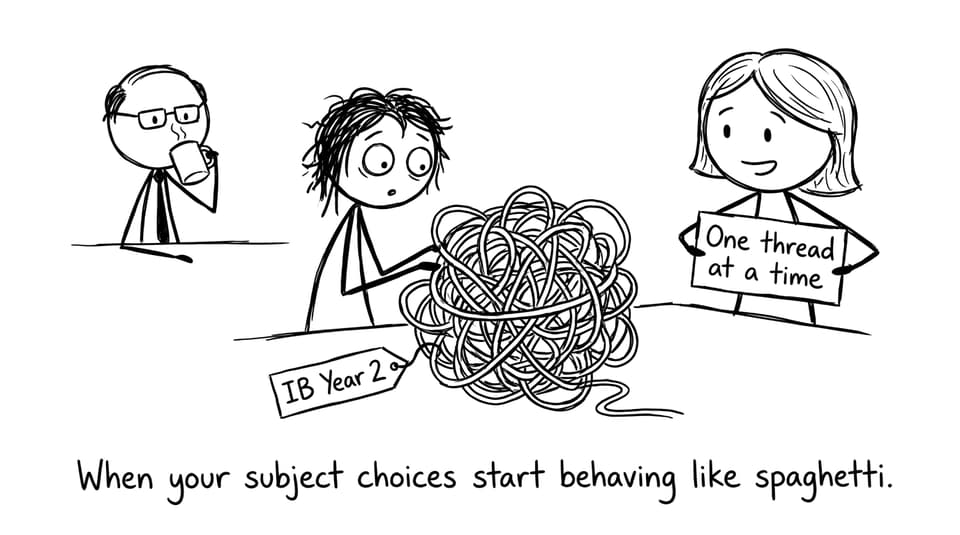
The quick IB switch checklist (read this before you email anyone)
Use this checklist as your fast “reality filter” for an IB subject change:
-
Name the real reason: skills mismatch, interest, teacher fit, or university prerequisites.
-
Check timing: early DP1 is flexible; late DP1/DP2 is expensive in time.
-
Ask about timetable blocks: your school may simply not be able to schedule it.
-
Map what you must redo: internal assessments often restart when you switch.
-
Draft a catch-up plan: weekly topics, hours, and practice targets.
-
Decide on a backup: level changes (HL to SL) can sometimes solve the problem.
If you want context on how schools typically handle changes, read Can You Change Subjects Mid-DP1 or Start of DP2? (IB) and Can You Change IB Subjects After Year 1?.
Why IB students want to switch (and what each reason really means)
A switch usually starts as a feeling, but it ends as a trade-off.
You’re fighting the subject, not learning it
If you’re consistently lost (not just challenged), that’s a signal. In IB, some struggle is normal. But “I never know what’s going on” after sustained effort is different. Before you switch, prove it with data: do a targeted set from the Questionbank and see whether errors come from content gaps, command terms, or timing.
Your future pathway changed
Sometimes IB subject prerequisites become clearer later. If a university path needs a specific HL, switching can be rational. Just don’t confuse a vague fear (“medicine sounds impressive”) with an actual requirement. Use your coordinator and teachers to confirm.
The teacher relationship is draining your motivation
It happens. But switching subjects to escape one adult can backfire if the new subject doesn’t fit your strengths. If the content still suits you, consider alternative support first: structured self-study with IB Subject Note Collections or targeted help via Tutors.
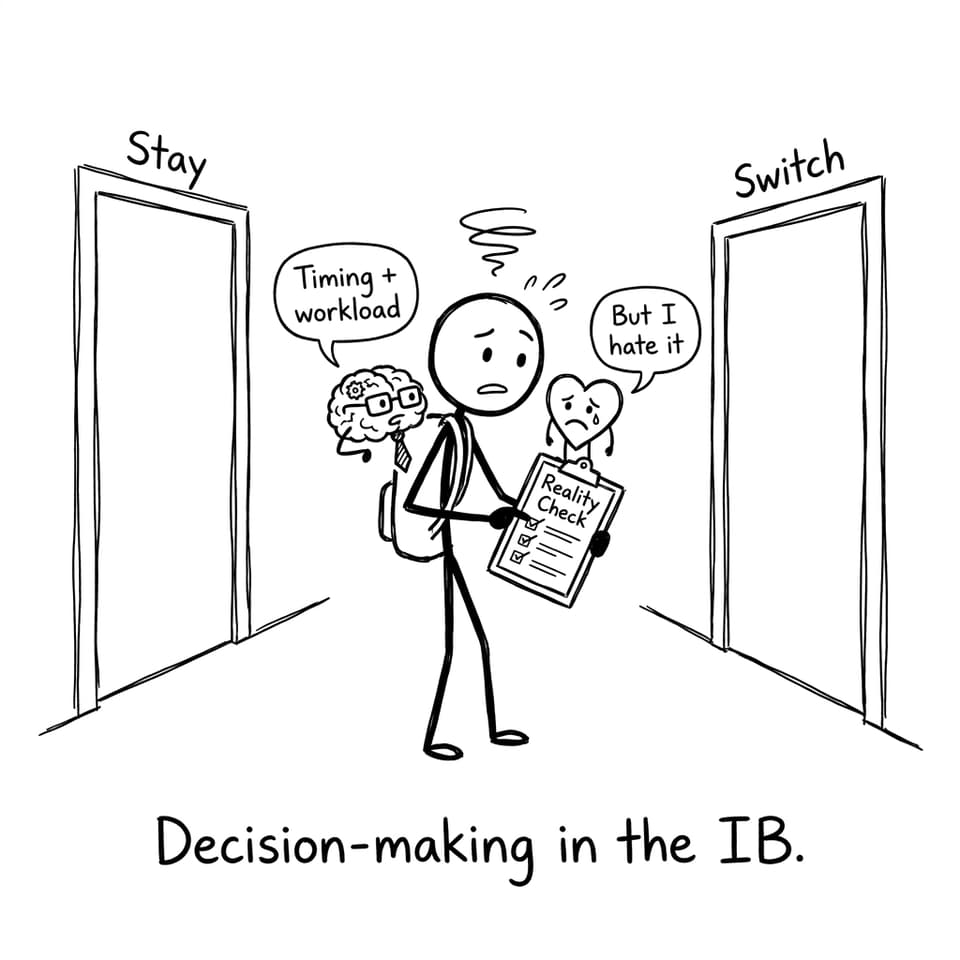
A calm decision plan that protects your IB grades
Talk to the IB coordinator early (so “possible” doesn’t become “impossible”)
In many schools, the real gatekeeper is scheduling and registration deadlines. Ask two direct questions: (1) Can the timetable accommodate this? (2) What coursework resets if I move? For a wider view of how changes are handled, scan All Subject Selection Posts.
Compare three options: switch subject, switch level, or stay with a better system
A full IB switch is one solution, not the only one.
-
Switch subject if your goals/prereqs demand it or the mismatch is severe.
-
Switch level (HL to SL or SL to HL) if the content is fine but the intensity isn’t. See Can You Switch from SL to HL Midway Through the IB Program?.
-
Stay, but change your method if the issue is mainly study structure. This is where a platform loop helps: RevisionDojo App: The Smarter Way to Prep for IB Exams.
Build a catch-up sprint (not a vague promise)
If you do switch, catching up needs a system that’s boring and repeatable.
On RevisionDojo, you can compress the ramp-up by combining Study Notes, Flashcards, AI Chat, and the Questionbank into one loop, then pressure-test with Mock Exams and Predicted Papers.
Start here for the IB overview hub: International Baccalaureate (IB). Then add exam rehearsal using IB Predicted Papers and targeted practice through the Questionbank.
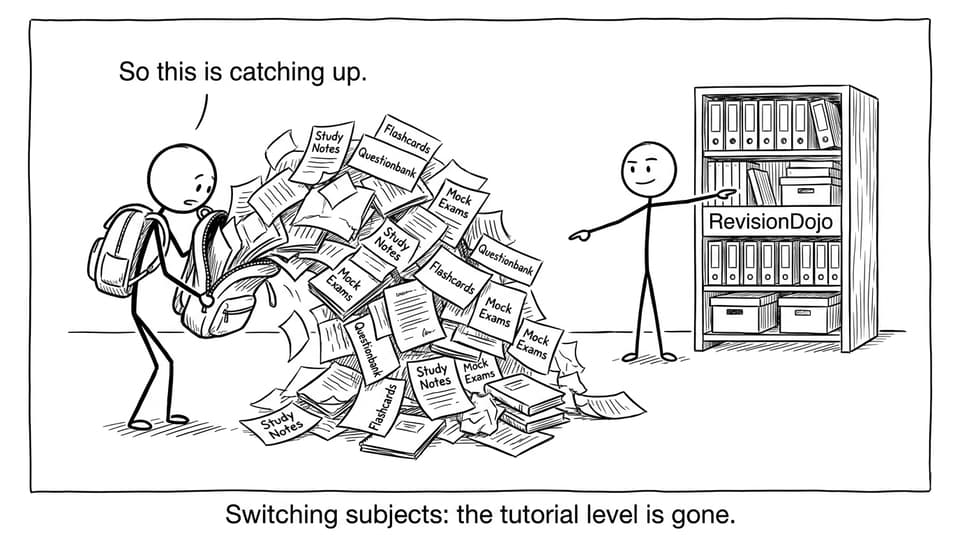
Closing: treat the IB switch like a strategic reset
Switching IB subjects mid-programme isn’t automatically a disaster. It’s a trade: short-term disruption for long-term fit. Your job is to price that trade honestly, then execute it with a plan.
If you decide to switch (or even if you decide to stay), RevisionDojo helps you stabilize fast: Questionbank for targeted practice, Study Notes for clarity, Flashcards for daily recall, AI Chat for quick explanations, Grading tools for better responses, Predicted Papers and Mock Exams for exam stamina, plus a Coursework Library and Tutors when you need deeper support. The IB rewards students who adapt early, practice deliberately, and keep moving.