
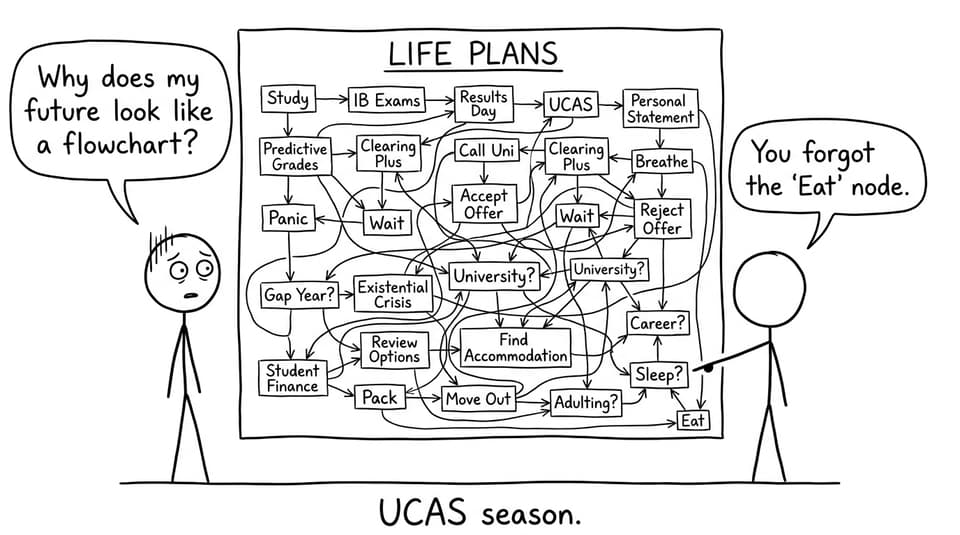
If you’ve ever revised an IB topic so hard that your brain starts narrating your life in exam-style command terms, you’ll recognise the feeling on results day: describe your emotions, analyse your options, evaluate your next move.
That’s exactly the moment UCAS Clearing Plus is built for. It’s not magic, and it’s not a guarantee. But it can reduce the noise by surfacing realistic options quickly, so you spend less time scrolling and more time acting.
UCAS Clearing Plus in one minute
Here’s the simple model of UCAS Clearing Plus:
-
You become eligible for Clearing (for example, you don’t hold a confirmed place).
-
UCAS shows you Clearing Plus in your Hub.
-
The tool suggests courses that may suit your profile.
-
You click “I’m interested” on courses you’d genuinely consider.
-
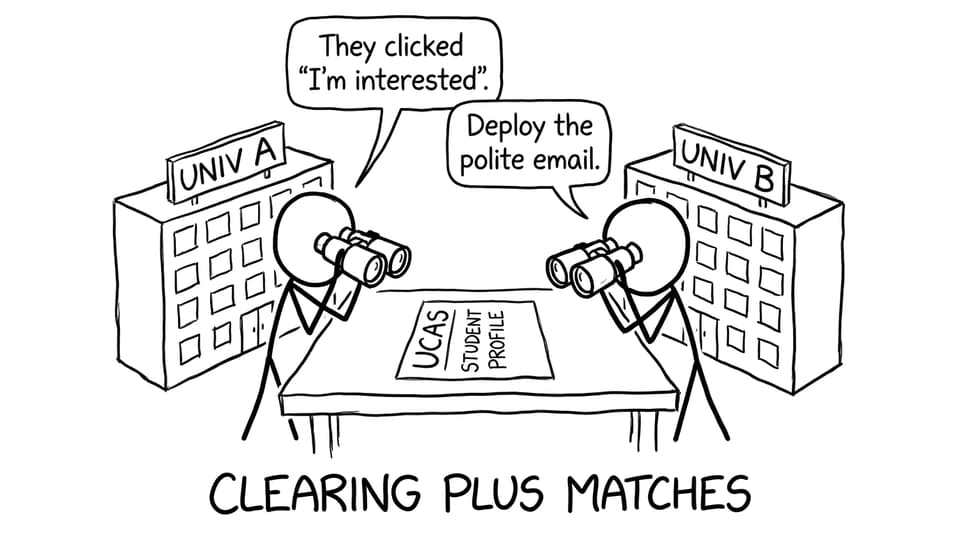
Universities can review your profile and may contact you.
-
You still choose and confirm your final option inside UCAS Hub.
For the wider Clearing process, keep UCAS Clearing explained step-by-step open in another tab.
How UCAS Clearing Plus works (and what it’s really doing)
Think of UCAS Clearing Plus as a two-way introduction, not an application. Instead of you searching everything manually, the system uses what it knows (your application details and what universities are currently looking for) to generate a shortlist.
For IB students, that matters because results day can feel like speed chess. Your grades land, vacancies shift, phone lines fill, and suddenly “I’ll decide later” becomes a risky strategy.
Clearing Plus helps you start with a focused list. But you still need judgement: course fit, location, accommodation, finances, and whether the entry requirements make sense for your IB combination.
If your Hub setup is messy, fix it first using How to use UCAS Hub effectively so you’re not troubleshooting under pressure.
The UCAS Clearing Plus steps IB students should follow
Check you can see Clearing Plus in UCAS Hub
If you’re eligible, UCAS will show Clearing Plus in your Hub. Eligibility depends on your Clearing status and your current application situation.
If you’re unsure what happens when offers don’t go to plan, read What happens if you don’t meet your firm choice.
Treat “I’m interested” like a signal, not a commitment
When you click “I’m interested,” you’re raising your hand. You are not accepting anything yet. Universities may contact you if they like the match, but you remain in control.
To stay sharp, keep a tiny log: course, uni, when you clicked, and what you’ll ask if they call.
Combine UCAS Clearing Plus with proactive searching
Some vacancies won’t appear in your matches. So use Clearing Plus as your warm start, then expand outward.
A practical pairing is:
-
Clearing Plus matches for speed
-
manual search + calls for range
Your calm-and-organised companion piece: UCAS Clearing checklist 2025.
How to prepare now (so UCAS feels less dramatic later)
Clearing is a decision sprint, but your preparation can be slow and steady.
Use RevisionDojo like a pre-results “stability plan”:
-
Questionbank to tighten weak topics before exams
-
Study Notes to remove confusion fast
-
Flashcards for daily recall when motivation dips
-
AI Chat to turn messy understanding into clear explanations
-
Predicted Papers and Mock Exams to practise timing and pressure
-
Grading tools to see what examiners reward (not what you hope they reward)
-
Coursework Library to reduce background stress from deadlines
-
Tutors when you need a human who can diagnose your gaps quickly
If your nerves spike near the finish line, keep How to stay calm during IB exams bookmarked.
Closing: use UCAS Clearing Plus like a tool, not a verdict
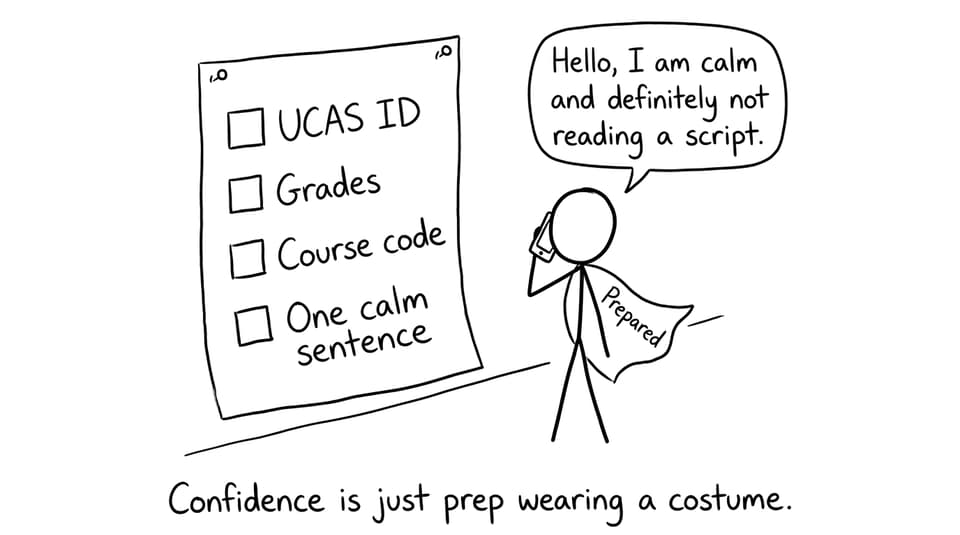
UCAS Clearing Plus works best when you treat it like a smart shortlist generator, not a final answer. It can point you toward realistic courses quickly, but your outcome still depends on how calmly you act, how prepared you sound, and how clearly you know what you want.
And that’s where RevisionDojo quietly pays off. The more you build exam confidence with Questionbank practice, Study Notes, Flashcards, AI Chat, Grading tools, Predicted Papers, and Mock Exams, the easier it is to face UCAS decisions with a steady head. When results day arrives, you won’t be improvising your future; you’ll be executing a plan.