
Trying to talk to teachers while feeling awkward is one of the quieter challenges of starting the IB Diploma. You know you should ask for help, but the moment after class arrives and suddenly your question feels too basic, too complicated, or strangely difficult to say aloud.
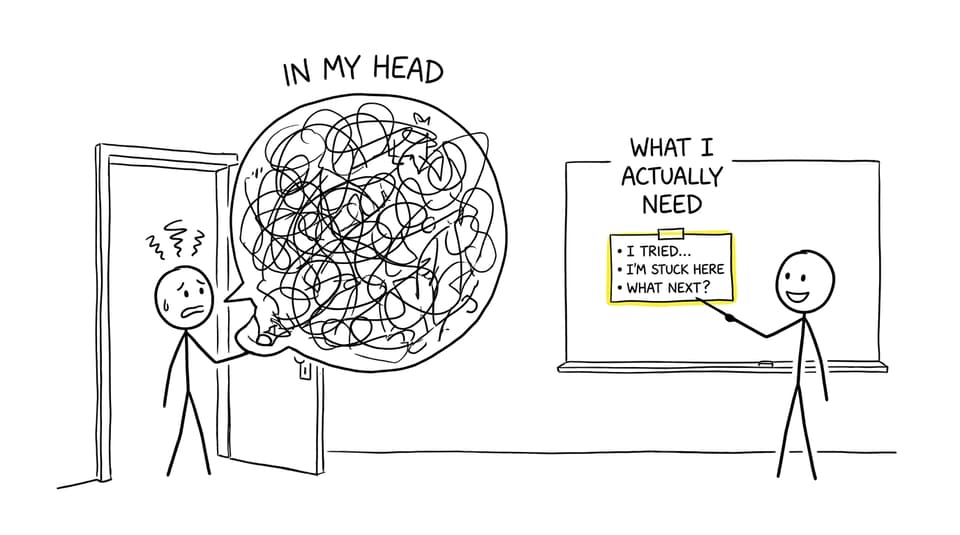
The practical answer is not to wait until you become more confident. Make the conversation smaller. Give your teacher brief context, show what you have attempted, and ask one specific question. A useful opening is: “I tried this approach, but I became stuck at this step. Could you help me see what I should do next?”
You are not delivering a speech or proving that you belong in the course. You are helping your teacher identify the next useful action.
Your quick conversation checklist
Before approaching a teacher:
- Choose a reasonable moment rather than interrupting another conversation.
- Describe the issue in one sentence.
- Bring the question, assignment, rubric, or feedback involved.
- Explain one thing you have already tried.
- Ask for one clear next step.
This is especially valuable during the IB DP1 fall term, when unfamiliar subjects and assessment language can make ordinary confusion feel more serious than it is. If the transition feels uncertain, this guide to starting IB DP1 with a manageable routine can help you establish the academic side of your first term.
Why talking to teachers feels awkward
Awkwardness often comes from uncertainty, not inability. You may not know whether your teacher is busy, whether your question is sensible, or whether asking for help will make you look unprepared.
New DP students can also imagine that everyone else understands the system. A classmate may appear calm while privately wondering what “evaluate” means, how much detail a response needs, or whether an assignment is formative. Visible confidence is weak evidence of actual understanding.
Your teacher also has information that a general online explanation cannot provide. They know what your class has covered, how your school applies deadlines, and what they intended when setting a task. RevisionDojo can clarify academic material, but your teacher remains the authority on classroom instructions and school-specific expectations.
Use the context, attempt, question method
When nerves rise, structure can do the talking for you.
Give context
Name the task or moment briefly:
“I’m reviewing the feedback from Friday’s economics response.”
Explain your attempt
Show where you engaged with the problem:
“I compared my answer with the criterion and rewrote the evaluation, but I’m still unsure whether I’m discussing the consequence clearly enough.”
Ask one question
Finish with something your teacher can answer:
“Could you point out the first place where my reasoning becomes too descriptive?”
Specificity turns a vulnerable moment into a solvable problem. If you are worried about your broader performance, the preparation steps in this guide to talking to IB teachers about progress can help. Bring one marked task and ask what to improve next rather than trying to discuss your entire academic future at once.
Useful scripts for common DP1 situations
A prepared sentence is still an honest sentence.
When you did not understand the lesson
“I followed the explanation until this step, but I lost the connection here. Could you explain what changes between these two stages?”
When feedback feels vague
“You wrote that I need more analysis. Could you show me one sentence that is descriptive and explain what analytical move is missing?”
Comments become valuable when they change your next attempt. This guide to making formative assessment useful explains how to convert feedback into an action and test it quickly.
When you need more time
Ask before the deadline whenever possible:
“I’m concerned that I will not complete this to an appropriate standard by Thursday because of these commitments. Could we discuss what options are available under the school policy?”
Do not assume an extension will be granted. Be factual, accept the decision, and ask how to prioritize if the deadline remains unchanged.
When you disagree with a mark
“Could you help me understand how this response was matched to the criterion? I thought this section demonstrated evaluation, but I may be interpreting the descriptor incorrectly.”
Focus on the evidence rather than another student’s result. The aim is understanding, not winning.
When you feel overwhelmed
“I’m keeping up with individual tasks, but the combined workload is becoming difficult to manage. Could you help me identify what should take priority this week?”
A practical IB study planner can help you arrive with your deadlines mapped, making the actual pressure points easier to see.
Choose the right moment and channel
Timing influences how a conversation feels. A teacher beginning another lesson or helping a different student may not be able to give a thoughtful answer. That does not mean your question is unwelcome.
Try one of these openings:
- “Is now a good time for a quick question?”
- “Could I speak with you for five minutes after tomorrow’s lesson?”
- “Would you prefer that I email this question?”
For a simple clarification, asking during or after class may be enough. For concerns involving grades, workload, repeated confusion, or personal circumstances, request a private meeting. Keep emails concise, state the issue and question clearly, and follow your school’s communication rules. Teachers may not answer immediately, particularly outside school hours.
Build the habit during your first term
Begin with low-stakes contact. Ask where resources are stored, clarify one command term, or confirm how work should be submitted. Small exchanges make later conversations feel less dramatic.
As assessments arrive, bring evidence. Use a marked response, quiz result, or rubric line to ask where your technique needs work. You can then review the concept through RevisionDojo IB Study Notes and subject resources, practise with the Questionbank, and use Flashcards for essential recall. AI Chat can help you identify what remains unclear, but your question to the teacher should refer to your own attempt.
RevisionDojo works best as a feedback loop. Study Notes clarify the idea, the Questionbank tests application, and Grading tools help you inspect criteria. Predicted Papers and Mock Exams support timed practice later in the course. The Coursework Library makes unfamiliar structures easier to understand, while Tutors provide human support when a difficulty persists. Explore how these tools connect on the RevisionDojo IB study features page.
What to do if the conversation goes poorly
A teacher may seem rushed, misunderstand your question, or give an answer that still feels unclear. Do not treat one imperfect exchange as proof that asking was a mistake.
Restate the question more narrowly:
“Just to make sure I understand, should I focus first on my evidence or on explaining how it supports the claim?”
If the problem continues, note the relevant dates, instructions, and academic impact, then request a scheduled meeting. If you still cannot access necessary support, speak calmly with your DP coordinator, year adviser, counsellor, or another appropriate member of staff. This guide to handling an unhelpful IB teaching situation outlines a measured escalation process.
For bullying, discrimination, harassment, safety concerns, or serious effects on your wellbeing, tell a trusted adult and use your school’s safeguarding or reporting process.
Make the next conversation smaller
Confidence often arrives after the action, not before it. The useful measure is whether you asked clearly enough to leave with a next step.
Start with one teacher, one piece of work, and one question. Then act on the answer. You can also learn from connecting with experienced DP2 students, while remembering that official classroom guidance comes from your teachers and coordinator.
The goal is not to become the student who always knows what to say. It is to notice confusion, name it without shame, and take the next sensible step. RevisionDojo gives that step somewhere to go, connecting questions with focused notes, practice, feedback, coursework support, and expert help throughout the IB journey.