
When your grades dip, it rarely feels like a gentle slide.
It feels like a trapdoor.
One week you are “fine,” the next you are doing mental math in the hallway: If I get a 6 here, can I still pull a 7 there? That is usually when a parent gets worried too. But in IB, the most useful conversations with teachers are not the ones that prove someone is right. They are the ones that produce a plan.
This guide is built for IB students preparing for exams who want calm, practical Studying Tips for talking to teachers (and for coaching a worried parent through it). The goal is simple: turn anxiety into evidence, and evidence into next steps.
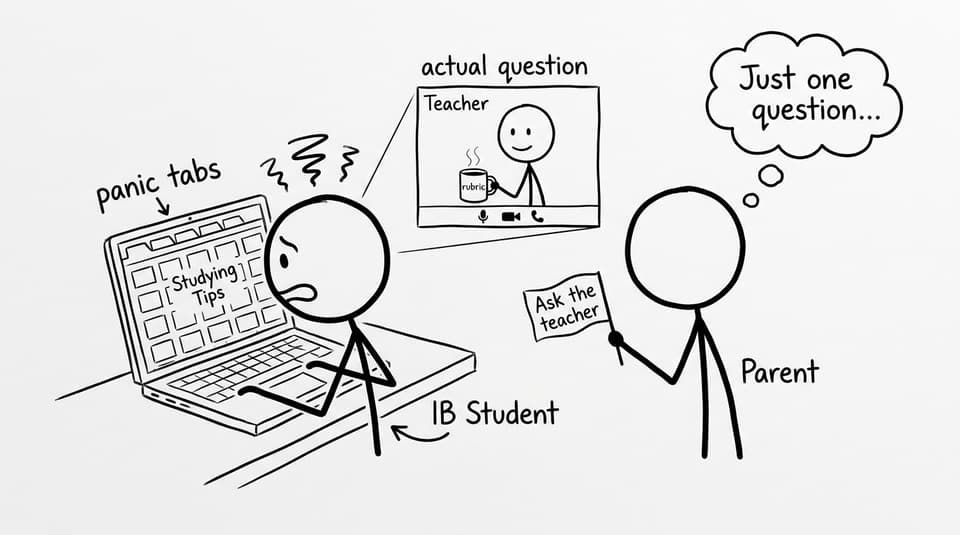
A quick checklist before you talk to a teacher
Use this as your “pre-flight” so the meeting stays productive.
-
Name the concern in one sentence. Example: “My Paper 2 responses are stuck at 10/20 and I do not know why.”
-
Bring two pieces of evidence. Recent task feedback, a rubric line, or one marked response.
-
Prepare 3 open questions. Avoid yes/no questions.
-
Decide what you want by Friday. A retest plan, extra practice, or a clear skill focus.
-
End with an action plan. Who does what, and by when.
If you want more exam-system structure, borrow the routine from How to Study for IB Exams: Step-by-Step Guide and treat the teacher meeting as part of that routine.
Why teacher conversations matter more in IB than you think
IB is designed to reward independent thinking. But independence does not mean isolation.
Teachers see patterns you cannot easily see from inside your own stress: whether you are losing marks on command terms, drifting off-topic, skipping evaluation, or running out of time. A good conversation surfaces the pattern and shrinks it into something trainable.
This is where Studying Tips become real: the best tip is not “study harder,” it is “study more accurately.” When a teacher tells you, “Your knowledge is fine, but your explanation chain breaks after step two,” you finally know what to practice.
To turn that clarity into reps, pair feedback with targeted practice on RevisionDojo: use the Questionbank to drill the exact skill your teacher flags, then mark, reflect, and repeat.
How to start the conversation (without making it awkward)
Most students delay the meeting because they are trying to avoid a feeling: embarrassment. So make the first 20 seconds scripted.
Try this:
“Hi [Name]. I’m worried about my progress in [topic/paper]. I want to improve, and I’d like your help identifying the biggest thing to fix next.”
You are doing three important things here:
-
You are naming the concern.
-
You are showing ownership.
-
You are asking for diagnosis, not comfort.
If the worry is tied to stress or burnout, you can borrow language from How Can I Talk to My Teachers About My Mental Health Struggles? and keep it factual: what is happening, how it affects work, and what support would help.
The best questions to ask (so you leave with a plan)
Teachers can give vague advice if you ask vague questions. Instead, ask questions that force specificity.
Questions that unlock actionable feedback
-
“What is the one skill that would raise my mark fastest?”
-
“Where do I lose marks most often: content, structure, or timing?”
-
“Can you show me one example from my work where I did it well, and one where I missed it?”
-
“What should my practice look like this week: how many questions, what type, and what timing?”
Questions that translate feedback into daily routines
-
“What does ‘evaluate’ look like in a 6-mark answer in this subject?”
-
“Which command terms am I misreading?”
-
“If I bring you one timed response next week, can you tell me if my structure is improving?”
These are Studying Tips disguised as conversation prompts: they turn the teacher into a coach and your revision into a training block.
If a parent is worried: how to keep support without losing independence
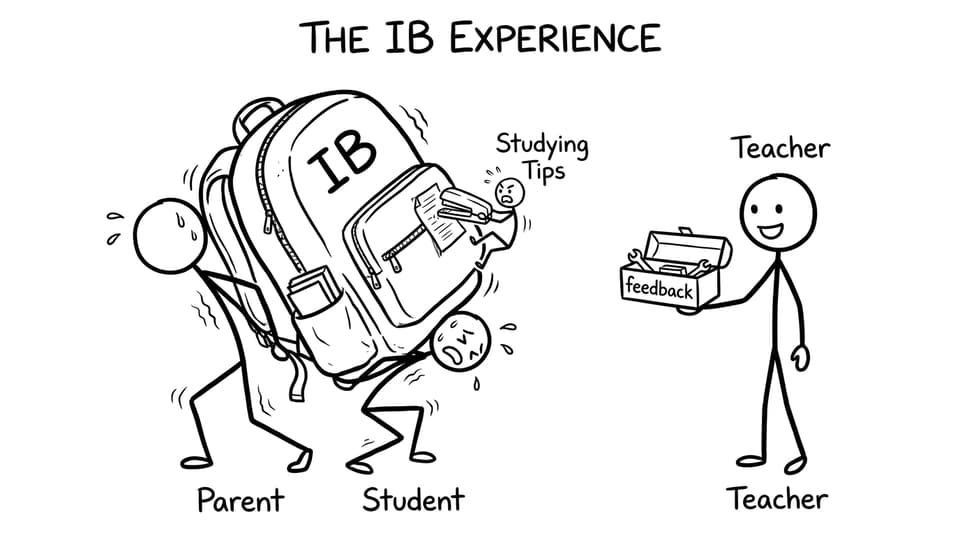
You might be reading this as a student thinking, My parent wants to email everyone. The healthiest middle ground is a three-step handoff.
A simple “support without takeover” plan
-
Step 1 (student): You draft the email and lead the meeting.
-
Step 2 (parent): They help you choose the questions and keep the tone calm.
-
Step 3 (teacher): They confirm priorities and offer the next measurable target.
This protects your autonomy while still using your parent’s concern as fuel for better habits.
For practical scheduling support, it can help to adopt a time system like the one in Best Time Management Techniques for IB Students in 2025 so everyone can see what “enough effort” actually looks like on a calendar.
Common mistakes that make teacher meetings go nowhere
Most unhelpful meetings fail for predictable reasons.
-
Making it about the grade instead of the evidence. “Why is this a 4?” is weaker than “Which rubric row is limiting me?”
-
Arriving with no work. Teachers can coach patterns, but they need a sample.
-
Asking for reassurance instead of a training plan. Reassurance fades fast. Practice compounds.
-
Leaving without next steps. If nothing changes on your timetable, nothing changes in your results.
If you want a reality check on what actually moves marks, read You’re Not Lazy: Your IB Study Method Is Broken. It pairs well with teacher feedback because it turns advice into a repeatable loop.
Turn the meeting into a 7-day revision loop (using RevisionDojo)
A teacher meeting is only valuable if it changes what you do tomorrow.
Here is a tight loop you can run immediately:
-
Clarify (10-15 min): Patch the exact confusion with RevisionDojo Study Notes.
-
Recall (10 min daily): Build or review Flashcards for the mistakes you keep repeating.
-
Apply (25-45 min): Drill that skill using the Questionbank.
-
Feedback (10 min): Use AI Chat to explain why a mark is lost, or to generate a mini-quiz on your weak spot.
-
Simulate (weekly): Do a timed block with Mock Exams or Predicted Papers.
-
Mark smarter: Use Grading tools to understand what the rubric rewards.
If coursework pressure is also draining your exam prep, use the Coursework Library to reduce background uncertainty, then consider Tutors for a human diagnostic when you need one.
For more exam-season resilience, pair your plan with Exam Stress Management Tips for IB Candidates so your body does not sabotage your brain.
Closing: your next teacher conversation is a revision tool
If you are worried about progress, do not wait for motivation to arrive first. In IB, motivation often shows up after the plan.
Walk into the conversation with evidence, leave with one priority skill, and run seven days of focused practice. That is what mature Studying Tips look like: small, repeatable actions that stack.
When you want that system in one place, RevisionDojo gives you the full workflow: Questionbank, Study Notes, Flashcards, AI Chat, Grading tools, Predicted Papers, Mock Exams, Coursework Library, and Tutors. Use the teacher meeting to find the target, then use RevisionDojo to hit it until it stops being a weakness.