



A week before Paper 2, most IB English students do the same thing: they reread a few chapters, highlight a few quotes, and hope the exam question “matches” what they revised.
It feels productive. It’s also the easiest way to land in the 5-6 range.
A 7 in IB English Paper 2 isn’t about having the “right” quotes or predicting the perfect prompt. It’s about walking into the exam with a repeatable method: you can turn any broad question into a sharp, comparative argument that stays focused for 1 hour 45 minutes.
The Paper 2 7-score checklist (save this)
Use this quick checklist to keep your IB English revision practical, not aspirational:
-
Choose a question you can argue, not just “answer.”
-
Build a thesis that names both texts and the authorial choices you’ll analyze.
-
Plan 3 comparative body paragraphs with a paired structure (Text A + Text B + link).
-
Use evidence as short, precise references (not long memorized blocks).
-
Write comparative links that explain so what? after each pairing.
-
Leave 10-15 minutes to edit for clarity, transitions, and language control.
For a broader overview of what Paper 2 expects, keep this open while you practice: Understanding the IB English A Literature Paper 2 Exam Structure.
What examiners reward in IB English Paper 2
The jump from “good” to “7-level” in IB English often comes down to one quiet shift: you stop proving you read the books and start proving you can interpret how writers build meaning.
That means your essay consistently shows:
Knowledge that turns into interpretation
Top responses don’t list events. They select moments (scenes, images, patterns, turning points) and explain what those moments reveal about ideas in the question.
Analysis that lives in authorial choices
If your paragraph mostly says what a character does, it’s drifting toward summary. If it explains how characterization, structure, narrative voice, symbolism, tone, or setting shapes meaning, you’re in the right lane.
Comparison that stays balanced
A 7 response doesn’t write “Text A paragraph” and “Text B paragraph” and add one sentence of comparison at the end. It compares throughout: similarly, differently, more intensely, more ironically, with different consequences.
If you want targeted Paper 2 practice built around this style of thinking, use the IB English A Lang & Lit English Paper 2 Questionbank to drill prompts and get repetition without randomness.
How to build a 7-level thesis in IB English
A Paper 2 thesis in IB English should do two jobs: answer the question and promise a method of comparison.
A strong thesis usually includes:
-
The shared idea (what both texts explore)
-
The difference in method (how each writer crafts it)
-
The effect or implication (why that difference matters)
If you want a model for technique-first claims, the HL Essay world trains the same muscle: Crafting a Strong HL Essay Thesis.
A quick thesis template you can reuse
Try this structure:
Although both texts explore X, Text A uses (choice 1/choice 2) to suggest Y, whereas Text B uses (choice 1/choice 2) to reveal Z, ultimately shaping the reader’s understanding of X in contrasting ways.
This kind of thesis keeps your IB English essay comparative from the first sentence.
The paragraph structure that consistently scores higher
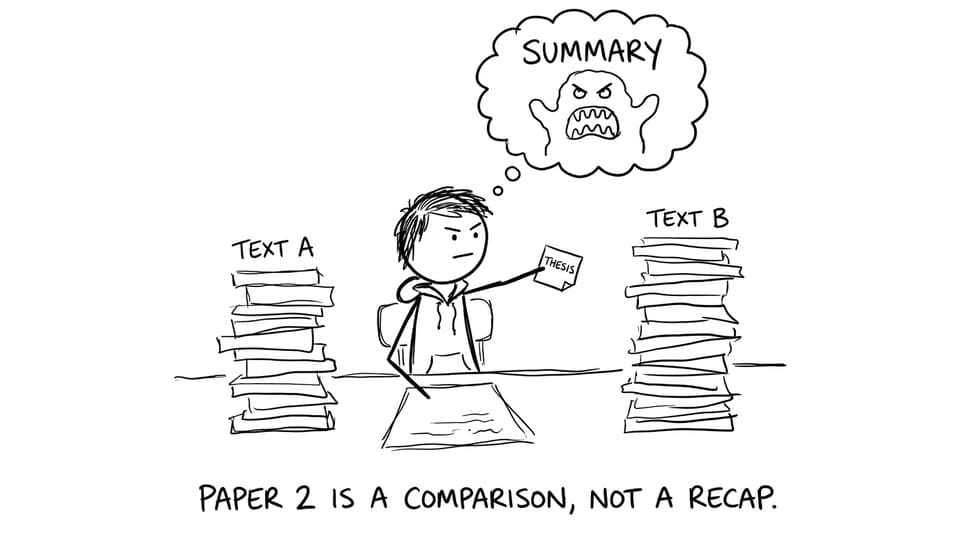
Most students lose marks in IB English Paper 2 because their paragraphs behave like two mini-essays taped together.
Instead, use a “woven comparison” paragraph:
The woven comparison paragraph
-
Claim: one arguable point answering the question
-
Text A: evidence + technique + effect
-
Text B: evidence + technique + effect
-
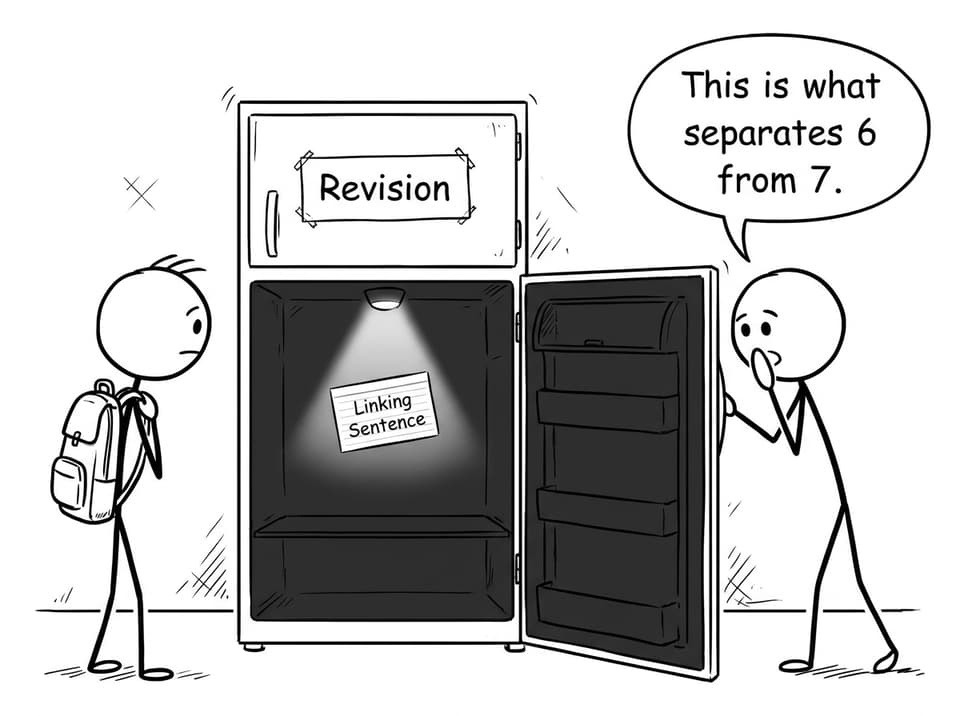
Link: why the difference/similarity matters for the question
That last line is the hidden lever. It’s where your insight shows up.
If you want a clear routine for building these paragraphs under time pressure, pair this article with: Effective Study Techniques for IB English A: Language and Literature.
Evidence: stop memorizing “big quotes” and start collecting “flexible proof”
High-scoring IB English Paper 2 responses use evidence efficiently. You’re not rewarded for length of quotation; you’re rewarded for precision of interpretation.
Aim to revise:
-
8-12 micro-quotes (2-6 words) per text that travel across themes
-
6-8 key moments per text (turning points, symbolic objects, structural shifts)
-
3-5 technique clusters per text (for example: narrative voice + irony + motif)
RevisionDojo helps here in a very practical way: turn recurring quotes and technique effects into Flashcards, then test them until recall becomes automatic. That’s also where Study Notes can keep your understanding organized around themes instead of plot.
Timing: a calm 1 hour 45 minutes plan
A 7 in IB English Paper 2 is partly a thinking skill and partly a pacing skill.
Try this split:
-
10 minutes: pick question, build thesis, outline 3 body paragraphs
-
80 minutes: write (intro + 3 comparative paragraphs + conclusion)
-
15 minutes: edit (comparison words, topic sentences, clarity, grammar)
During practice, use RevisionDojo’s English Paper 2 hub to keep your drills aligned with the exam style and to scale from single-paragraph practice to full Mock Exams.
The most common Paper 2 mistakes (and how to fix them)
These patterns show up constantly in IB English Paper 2 scripts:
Mistake: choosing a question that invites summary
Some prompts tempt you into retelling the plot with theme labels.
Fix: choose the question where you can talk about methods (voice, structure, imagery, characterization), not just messages.
Mistake: “Text A then Text B” paragraphs
Even good analysis can score lower if comparison is delayed.
Fix: compare every paragraph, and include a linking sentence that explains the significance of the pairing.
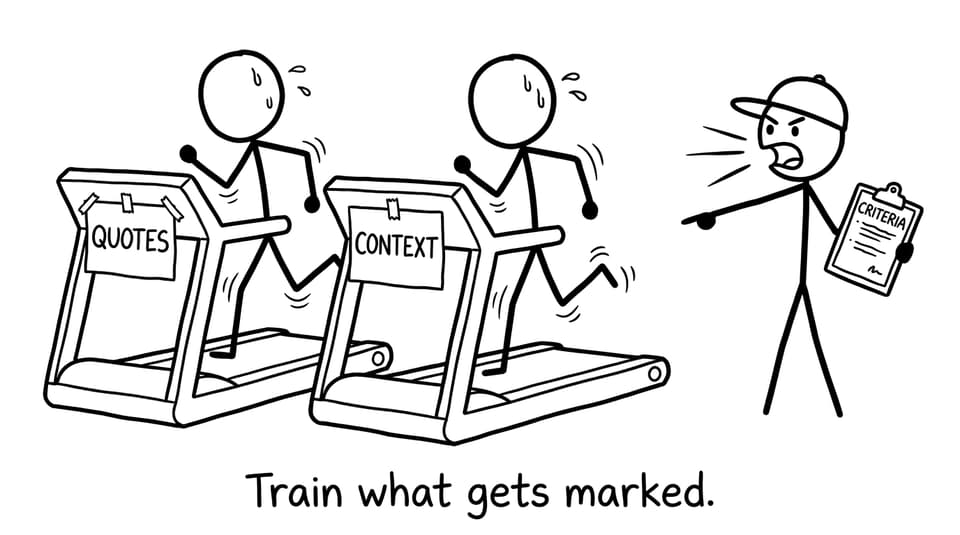
Mistake: context becomes biography
Context is useful, but only when it sharpens interpretation.
Fix: use context as a lens, not a detour: one sentence that explains what it changes about meaning, then back to technique.
For students juggling different course paths, this explainer can help you align revision methods to your course: IB English: Literature vs Language & Lit (Choose Well).
Closing: the calm path to a 7
A 7 in IB English Paper 2 is rarely a miracle on exam day. It’s the result of a simple habit repeated until it feels normal: thesis first, woven comparison, evidence with purpose, and links that explain significance.
If you want a single place to practise that habit, RevisionDojo is built for it: use the Questionbank to drill prompts, Study Notes to keep themes organized, Flashcards to lock in flexible evidence, AI Chat to generate outline variations, and the Grading tools plus Mock Exams to make feedback routine. Start with one timed outline tonight, then one woven paragraph tomorrow. In IB English, consistency is the quiet advantage that adds up to a 7.