
In the week before an exam, most IB English students do the same thing: they reread. Then they reread again. It feels responsible, like watering a plant.
But rereading is quiet. It doesn’t argue with you.
Peer editing does.
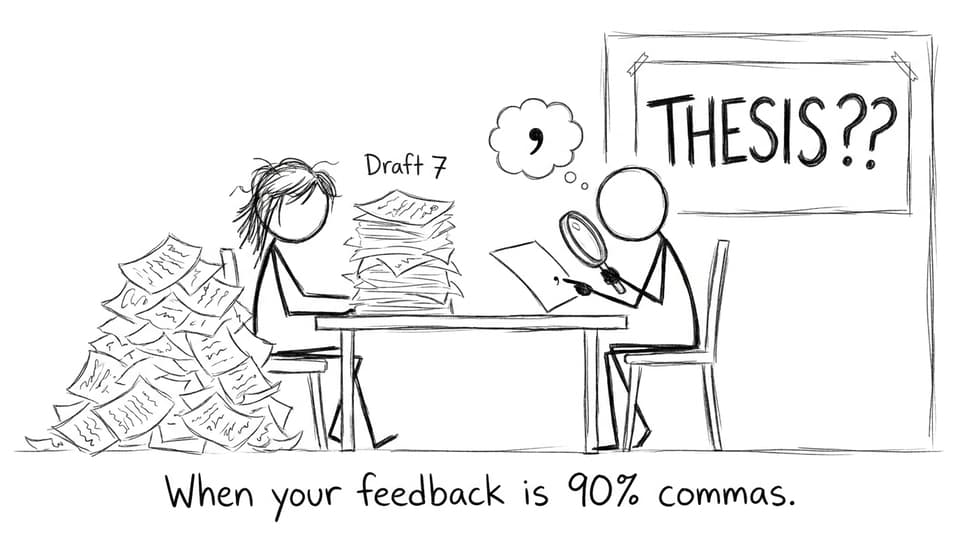
When you swap essays with someone else, you borrow their eyes for 20 minutes. You notice what’s missing. You see where the paragraph drifts. You feel when a quote lands with force, and when it just decorates the page. For IB English, that outside perspective is one of the fastest ways to build examiner-ready writing.
The peer editing checklist (save this before every swap)
Use this short loop every time you peer edit an IB English essay. It keeps feedback focused on marks, not mood.
-
Read once without commenting (get the argument)
-
Write the thesis in your own words (test clarity)
-
Check paragraph purpose (does each one earn its place?)
-
Trace evidence to analysis (is meaning explained?)
-
Align with criteria language (understanding, analysis, organization, language)
-
Give 3 upgrades and 3 keep-doing notes (actionable and balanced)
If you want models for what strong structure looks like, keep How to Write a Good Essay for IB English Literature open while you edit.
Why peer editing works for IB English (even if your friend isn’t “top set”)
Peer editing works because it turns writing into reading, and reading into judgment. In IB English, marks come from controlled judgment: what matters, what supports it, and how meaning is constructed.
When you read someone else’s essay, you can spot the classic traps more easily than in your own draft:
-
a thesis that summarizes instead of argues
-
paragraphs that repeat the same point with new quotes
-
technique spotting with no effect or meaning
-
“context” that never connects back to the passage or prompt
Over time, you internalize a simple examiner instinct: “Show me the choice. Show me the effect. Show me the meaning.” For more on that chain, review IB English: Common Essay Mistakes to Avoid.
How to peer edit an IB English essay, step by step
Read like an examiner first, not a friend
On the first pass, don’t mark anything. Just ask: what is this essay trying to prove?
Then write one sentence:
- “This essay argues that… because…”
If you can’t write that sentence confidently, the thesis is either unclear or too broad. At that point, your best feedback isn’t about wording. It’s about focus.
To sharpen thesis habits, steal frameworks from How to Write the Perfect IB English Essay (Without Losing Originality).
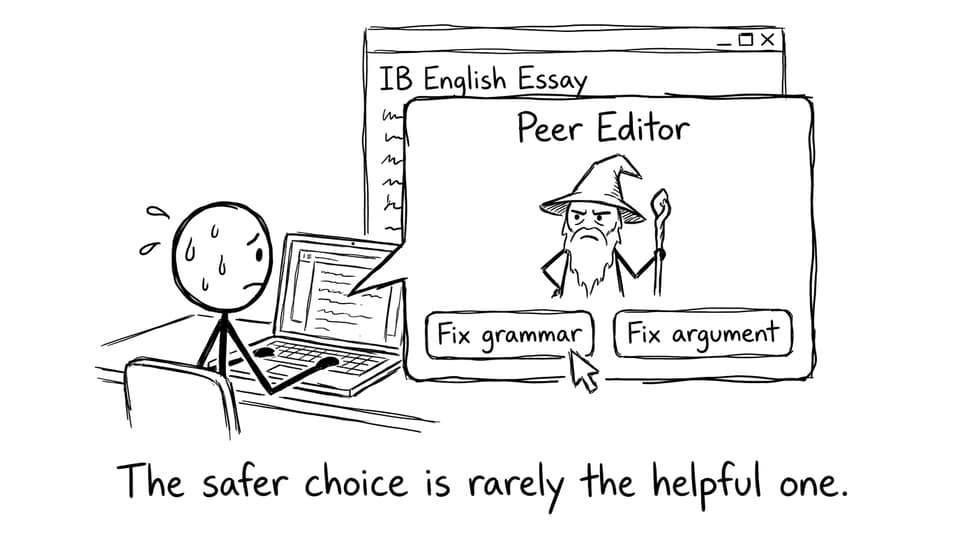
Stress-test the thesis (specific, arguable, technique-based)
A strong IB English thesis is usually:
-
specific (not “the author explores love”)
-
arguable (someone could disagree)
-
grounded in authorial choices (voice, structure, imagery, contrast, pacing)
Peer editor move: circle the thesis and write one question next to it:
- “Where do you show how meaning is constructed?”
That single question forces the essay out of summary mode.
Check paragraph engineering: purpose, evidence, analysis
Each paragraph should do one job. You’re looking for a clean chain:
-
claim (topic sentence)
-
evidence (short, precise)
-
analysis (effect and meaning)
-
link (back to thesis and question)
If a paragraph has lots of quotation but thin explanation, suggest a simple rule: keep the quote, double the analysis.
For Paper 1-specific structure reminders, pair this with Mastering IB English Paper 1: A Complete Guide or Step-by-Step Guide to Revising IB English Paper 1.
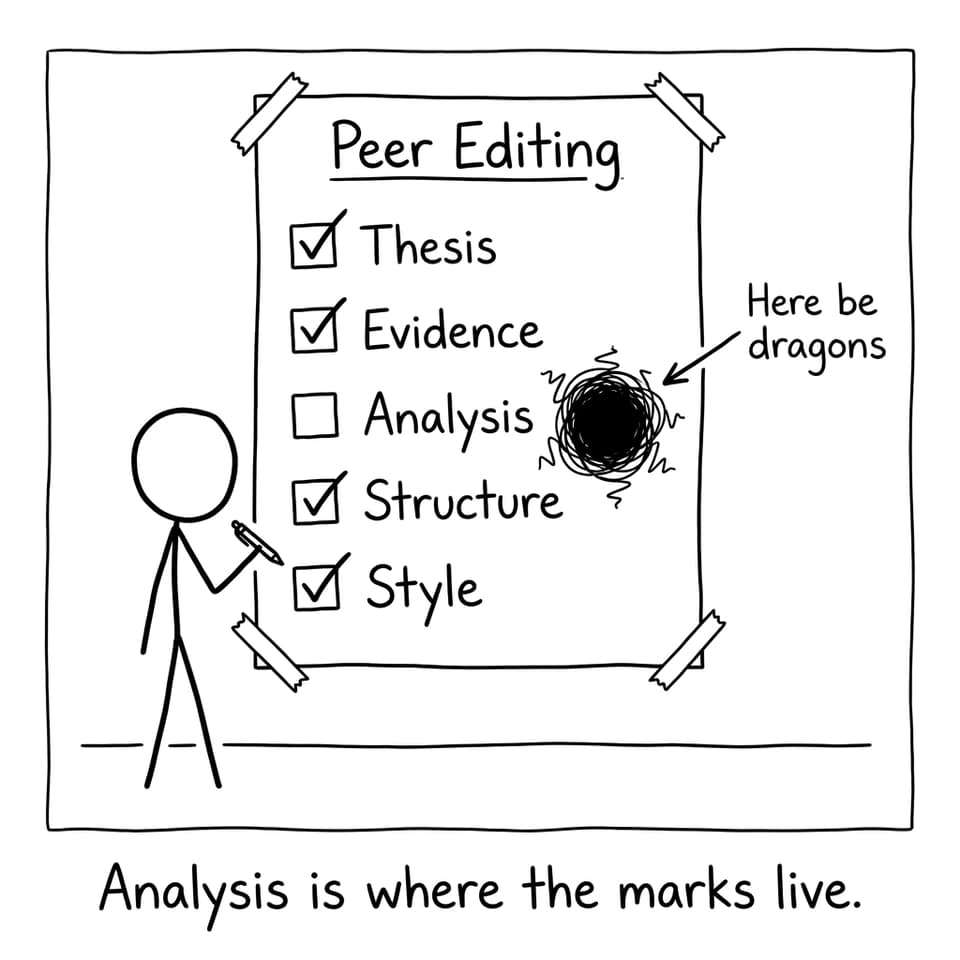
Mark the “analysis gap” (the place marks go missing)
Most IB English essays don’t fail because students lack techniques. They fail because students don’t explain consequences.
When peer editing, highlight one moment where the writer names a technique and ask for:
-
effect on reader
-
connection to theme or idea
-
link to the prompt
If you want a fast way to practice analysis under time pressure, build a mini set using the IB English A Lang & Lit Questionbank and write one paragraph per question, then peer edit only the analysis lines.
Align feedback with how IB English is assessed
Peer editing gets dramatically better when you use criteria language. Instead of “This is good,” try:
-
“Your interpretation is clear, but your evaluation of effects could be more explicit.”
-
“Organization is strong; add signposting to make comparisons easier.”
-
“Language is precise, but sentence variety could improve flow.”
If you want structured, rubric-aligned feedback between teacher cycles, use RevisionDojo’s Grading tools like the IB Coursework Grader, then compare what the tool flags with what your peer noticed. That combination trains your instincts quickly.
Using RevisionDojo to make peer editing easier (and less awkward)
Peer editing can feel personal. The fix is to make it procedural.
Here’s a simple system many IB English students use with RevisionDojo:
-
Use Study Notes to agree on what “good” looks like before you swap drafts: start at IB English A Lit Revision Notes (SL/HL).
-
Create targeted drills in the Questionbank to practice weak areas (thesis, paragraphing, comparison): IB English A Lang & Lit Paper 1 Questionbank.
-
Turn common teacher comments into Flashcards (for example, “link technique to effect,” “avoid summary,” “make comparisons explicit”).
-
Use AI Chat to brainstorm alternative thesis wordings, then choose the most defensible one.
-
Run a draft through Grading tools to catch structural patterns.
-
Build one timed set with Mock Exams and Predicted Papers to simulate pressure, then peer edit the result.
-
If you’re stuck, use the Tutors feature for a second opinion that’s calm and criterion-based.
For broader workflow thinking, How to Use Feedback to Improve Your IB English Assignments connects peer feedback to a repeatable improvement loop.
Conclusion: Make peer editing your quiet advantage
The best part of peer editing is that it makes progress visible. You don’t just “study” IB English. You test your thesis, tighten your paragraphs, and turn evidence into meaning on purpose.
Build a simple routine: swap one timed response a week, use the checklist above, and anchor feedback in criteria language. Then use RevisionDojo to keep the loop moving: Questionbank for targeted practice, Study Notes and Flashcards for retention, AI Chat for idea testing, and Grading tools for fast, examiner-style direction.
If you want a clean starting point for your course resources, open IB English A Lit Resources and set up your next peer editing session like it matters, because in IB English, it does.