
Power is rarely announced. It arrives quietly: who speaks first, who gets believed, who gets forgiven. Corruption is quieter still: a small compromise that becomes a habit, then a personality.
That quietness is exactly why IB English rewards students who can prove where power sits in a text and how it rots. Examiners aren’t looking for grand moral slogans. They’re looking for authorial choices: language, structure, symbolism, tone, and perspective.
This guide shows you how to explore power and corruption with a method you can reuse in Paper 1, Paper 2, the IO, and the HL Essay--without drifting into plot summary.
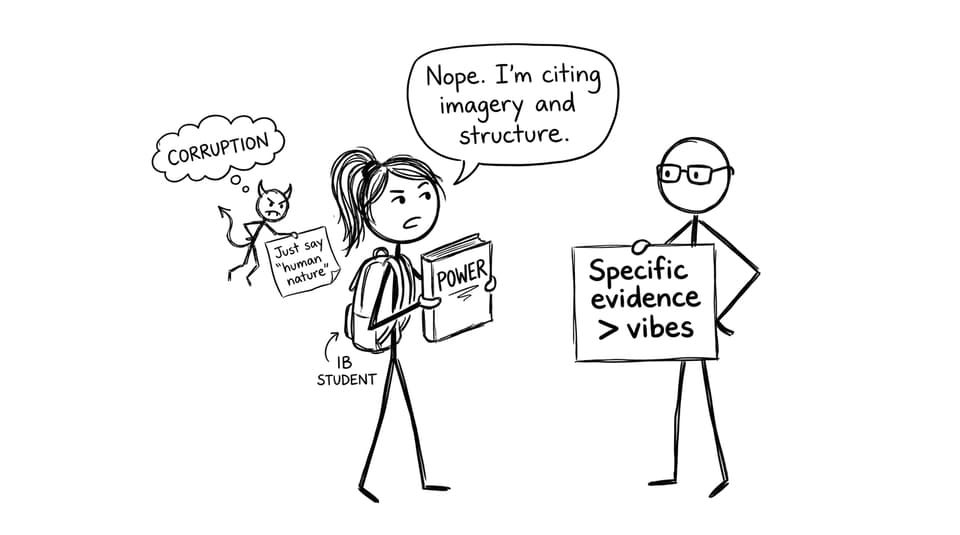
A quick IB English checklist for power and corruption
Before you write a single paragraph in IB English, do this 60-second scan:
-
Power map: Who has authority (status, money, education, gender, institutional backing, narrative voice)?
-
Access control: Who is silenced, interrupted, excluded, or forced to translate themselves?
-
Corruption pathway: What is the first compromise, and what does it normalise?
-
Technique proof: Which 2--3 methods carry the theme (diction, imagery, structure, narration, tone)?
-
Turning points: Where does power shift, and how does the text make you feel that shift?
If you want a theme-first revision approach, pair this with Key Themes in IB English Literature to keep your essay plans exam-shaped.
Start by mapping power, not naming it
A common IB English mistake is to declare the theme (“This shows power is corrupting”) and stop there. A stronger move is to treat power like a system with rules.
Visible power
Visible power is the obvious kind: titles, laws, wealth, uniforms, official spaces (courts, palaces, classrooms). Your analysis job is to show how the text stabilises or undermines that authority.
Ask:
-
Does the narrator describe authority with certainty, irony, fear, or admiration?
-
Does the setting make domination feel routine or fragile?
-
Who controls decisions in key scenes (not who is “important,” but who changes outcomes)?
For practice prompts that force technique-based evidence, use RevisionDojo’s IB English A Lit Resources alongside timed planning.
Invisible power
Invisible power is harder (and often richer): shame, ideology, internalised obedience, social norms, propaganda, “common sense.” In literature, this is where corruption thrives because it doesn’t look like villainy. It looks like normal.
In IB English, invisible power often appears through:
-
Focalisation: whose mind you inhabit, and what that mind cannot question.
-
Motifs: recurring images that make moral decay feel ordinary.
-
Syntax and rhythm: long, hypnotic sentences that soften a hard truth; sharp fragments that mimic panic.
To connect power to global issues cleanly, see Studying Power and Politics Themes in English A Texts.
How authors build corruption (and how you can track it)
Corruption in literature is rarely a single dramatic decision. More often it’s a sequence: justification, reward, repetition, denial.
A practical IB English framework is to track corruption as a chain of cause and effect:
-
Motivation: What does the character want that the system withholds?
-
Temptation: What shortcut appears (money, status, protection, belonging)?
-
Language shift: Do they start using euphemisms, passive voice, or moral “math” to excuse harm?
-
Consequence: What relationships, values, or identities get traded away?
If you want a model breakdown built specifically for exam responses, read How to Analyze Themes of Power and Corruption in Literature and imitate its evidence-first pacing.
Power dynamics in relationships (not just governments)
Some of the sharpest power struggles happen in private spaces: marriages, friendships, parent-child relationships, teacher-student dynamics. These scenes matter in IB English because they compress a whole society into one conversation.
Look for:
-
Control of speech: interruptions, imperatives, “jokes” that aren’t jokes.
-
Dependence: who needs approval, money, safety, or access.
-
Performance: who must act smaller to keep the peace.
-
Resistance: sarcasm, silence, refusal to explain, strategic compliance.
When you revise relationship-based power imbalances, it helps to plan like you’re preparing for the IO. RevisionDojo’s tools (like the Coursework Library and Tutors) are useful when you need feedback on whether your chosen extracts actually show power operating, not just characters arguing.
Structure is never neutral in IB English
Structure can be a power technique in itself. The order of information decides what feels “normal,” what feels shocking, and what feels inevitable.
In IB English, structure is often your easiest path to sophistication because it moves you beyond character commentary.
Notice:
-
Flashbacks: do they reveal the origin of corruption or reframe a “hero” as complicit?
-
Multiple perspectives: do they expose inequality (who gets interiority vs who becomes a symbol)?
-
Foreshadowing: does the text warn you, and do characters ignore the warning?
-
Pacing: slow moral erosion vs sudden collapse.
To practise structure-led paragraphs under timed conditions, build sets using RevisionDojo’s Questionbank, then check your writing with AI Chat and the Grading tools.
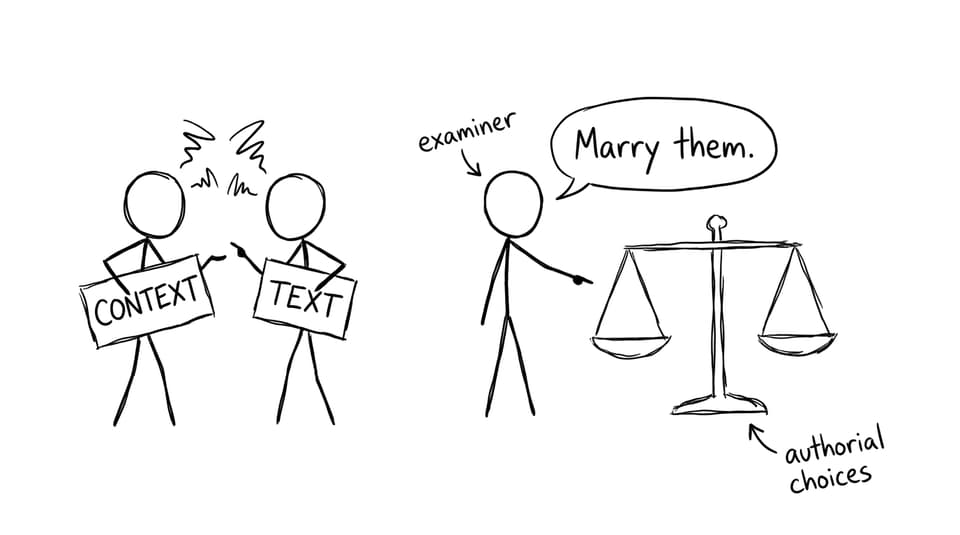
Mini workflow: turning the theme into a Paper 2-ready argument
Use this when you’re stuck:
-
Write the theme as a claim: “Power corrupts” becomes “Power encourages moral shortcuts when institutions reward compliance.”
-
Choose 2 techniques you can prove (imagery + narration, or structure + diction).
-
Collect 3 “pressure moments” where the text forces a choice.
-
Draft a comparative sentence (even for one text): “While authority looks stable, the narration reveals fear underneath.”
For Paper 2 planning support, the IB English A Lit Writing Your Paper 2 Essay notes keep your paragraphs anchored to method, not memory.
Closing: make power visible, make your argument inevitable
Themes like power and corruption matter because they are rarely theatrical. They’re procedural. They operate through language, silence, routines, and rewards.
If you can show how those forces are constructed on the page, you’re already doing top-band IB English: technique-led, evidence-rich, and structurally aware. Build that skill with RevisionDojo’s Study Notes, Flashcards, Mock Exams, Predicted Papers, Questionbank, AI Chat, and Grading tools--then tighten your essay plans with feedback from the Tutors when you need a human eye.
Power hides in patterns. Your job in IB English is to point to the pattern and make it impossible to unsee.


