

Sometimes the hardest part of IB English isn’t the essay. It’s the moment your coordinator asks, casually, which course you want… and you realize you’re picking the kind of reading and thinking you’ll do for two years.
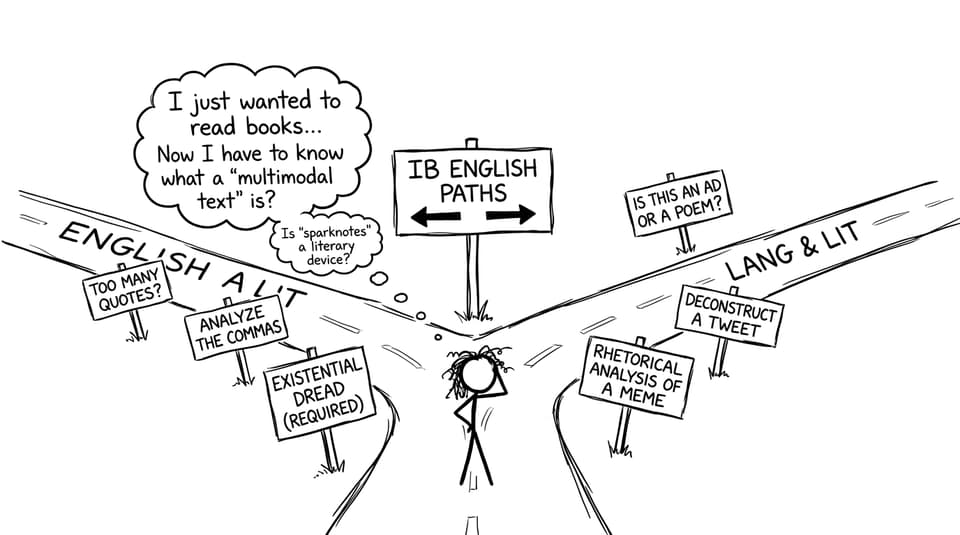
Choose English A: Literature, and you’re saying yes to living inside novels, plays, and poems until you can hear the author’s decisions like footsteps in an empty hallway. Choose English A: Language and Literature, and you’re choosing a wider world: speeches, advertising, journalism, memes-with-intentions, plus literary works too.
This guide breaks down what each option actually feels like week-to-week and how that maps to exam performance in IB English.
Quick decision checklist for IB English
If you want the fast version, use these questions:
-
Do you prefer only literary texts (novels, plays, poetry), or do you like mixing media and real-world texts too?
-
Are you energized by close reading and layers of symbolism?
-
Do you enjoy analyzing tone, rhetoric, audience, and purpose in everyday texts?
-
Are you aiming for a university path heavy in literature, languages, arts, humanities, media, communication, or social sciences?
-
Which skill feels more natural right now: deep interpretation of literature, or flexible analysis across text types?
If you’re also thinking about exam strategy, browse RevisionDojo’s IB English resources for English A: Literature and English A: Language & Literature to see what practice feels most motivating.
What you study in English A: Literature (and why it suits some students)
IB English A: Literature stays committed to one thing: literary works. That focus can feel calm in a busy Diploma schedule. The reading list is still demanding, but the type of thinking becomes familiar.
You’ll probably like IB English Literature if…
-
You genuinely enjoy literary analysis: character, narrative voice, symbolism, structure, genre.
-
You like making arguments that feel a bit like detective work: “Why this word here?” “Why this ending?”
-
You want sustained practice for a literature-heavy degree.
A practical upside: because your practice is concentrated, your revision can become very efficient. You can drill essay moves and close-reading habits repeatedly. RevisionDojo’s Lit-specific practice for IB English helps here, especially the Paper 1 Lit practice where consistency is a superpower.
What you study in English A: Language and Literature (and why it fits others)
IB English A: Language and Literature is built for students who want literature and the world around it. You still analyze literary works, but you also learn to read non-literary texts with the same seriousness.
You’ll probably like IB English Language and Literature if…
-
You enjoy variety: essays, speeches, opinion pieces, advertising, visual texts.
-
You like asking: “Who is the audience?” “What is the purpose?” “What is being left out?”
-
You’re interested in media, politics, culture, communication, or social commentary.
If Paper 1-style analysis feels exciting to you, you’ll likely appreciate the targeted guidance in Mastering IB English Paper 1 and the practical routines in Effective study techniques for IB English A: Language and Literature.
Key assessment differences that matter for IB English exam prep
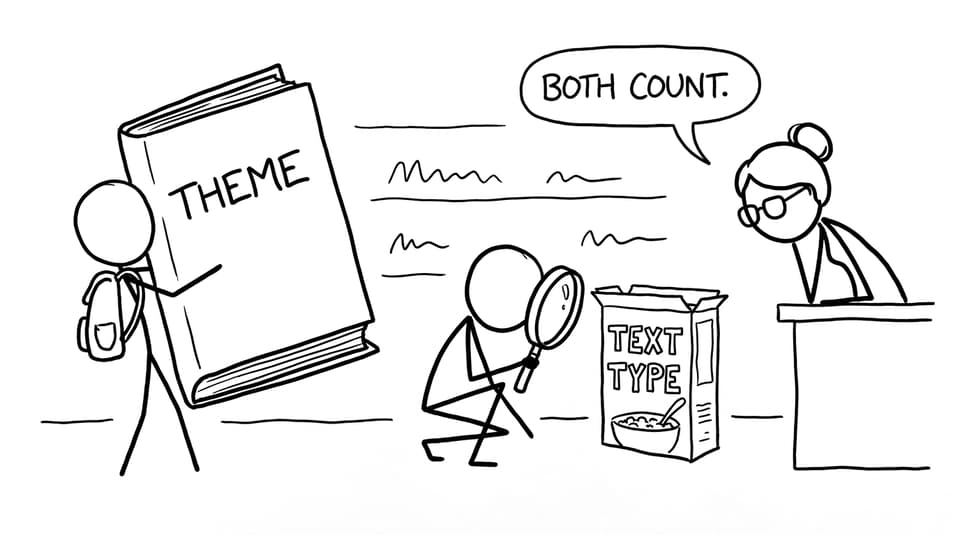
The courses overlap in skills (analysis, organization, language control), but the emphasis shifts.
IB English Literature assessment feel
-
Your analysis is anchored in literary craft.
-
Your written tasks typically reward depth: fewer angles, more intensity.
-
Your oral work centers on literary extracts paired through a global issue.
If you want a grounded overview of how to revise for this path, keep Preparing for IB English A: Literature exams open while you plan your calendar.
IB English Language and Literature assessment feel
-
You need flexibility across literary and non-literary.
-
You’re rewarded for clear thinking about purpose, audience, context, and bias.
-
Your oral work typically pairs a literary and non-literary text through a global issue.
To build confidence with the oral, RevisionDojo’s Comprehensive IO guide and step-by-step IO approach are straightforward and exam-aligned.
How to choose the right IB English course (a realistic approach)
A useful way to decide is to picture a tired Tuesday night in February.
-
If you’d rather re-read a chapter and pull out patterns in imagery, IB English Literature will feel like the better kind of hard.
-
If you’d rather analyze a speech, a campaign poster, and an article, and then connect them to how society builds meaning, IB English Language and Literature will feel like the better kind of hard.
Also be honest about motivation. In IB English, the best course is often the one you’ll practice consistently. That’s where RevisionDojo’s tools make a difference: the Questionbank to keep skills sharp, Study Notes to clarify concepts, Flashcards for terms and techniques, AI Chat for quick explanations, and Grading tools to see what an examiner would reward. Add Predicted Papers and Mock Exams when you need timed stamina, then use Tutors when you want human-level coaching.
Closing: choose the IB English course you’ll practice for
Your IB English course is less about which label looks “better” and more about which kind of thinking you can repeat, calmly, for two years. Pick the option that matches your curiosity, because curiosity is what carries revision when motivation fades.
When you’re ready to turn that choice into exam results, RevisionDojo gives you the full toolkit: Questionbank practice, Study Notes, Flashcards, AI Chat support, Grading tools, Predicted Papers, Mock Exams, a Coursework Library, and Tutors for targeted help. Start with the course hub that matches your path: English A: Literature or English A: Language & Literature.