



Preparing for IB History can feel like trying to hold a whole century in your head while a clock counts down in the corner. You read about revolutions, crises, and ideologies, and then the exam asks you to do something quieter and harder: choose, argue, and evaluate under pressure.
That’s the real Group 3 challenge. In Individuals and Societies, knowledge matters, but selection matters more. The best students aren’t the ones with the biggest pile of notes. They’re the ones with a repeatable method for Paper 1, a reliable essay structure for Paper 2, and a feedback loop that turns mistakes into upgrades.
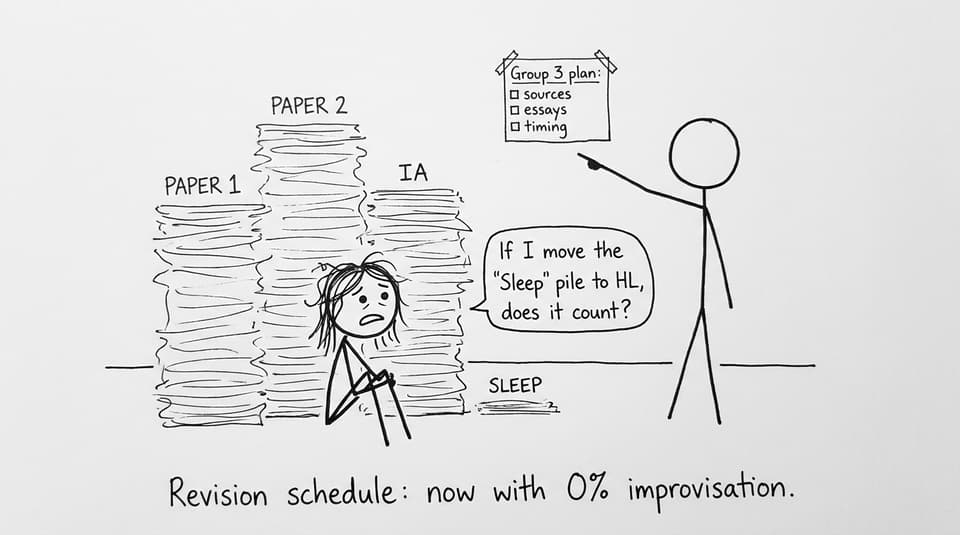
Your Group 3 IB History exam prep checklist
Use this as your quick calibration before you revise another topic:
-
Confirm your assessment map: Paper 1, Paper 2, HL Paper 3 (if applicable), and IA skills.
-
Build one technique per paper (not ten).
-
Practice under time, then review like an examiner.
-
Track recurring errors (argument, evidence, source evaluation, relevance, timing).
-
Use RevisionDojo tools to shorten the feedback cycle: Questionbank, Study Notes, Flashcards, AI Chat, Grading tools, Predicted Papers, and Mock Exams.
If you want everything in one place, start with the IB History Resources hub, then branch out based on what your next practice session is targeting.
Understand what each IB History paper rewards (Group 3 basics)
In Group 3, exams reward “historian behavior” more than “student behavior.” Rereading is student behavior. Making a claim, weighing evidence, and staying brutally relevant is historian behavior.
Paper 1: source work, not vibes
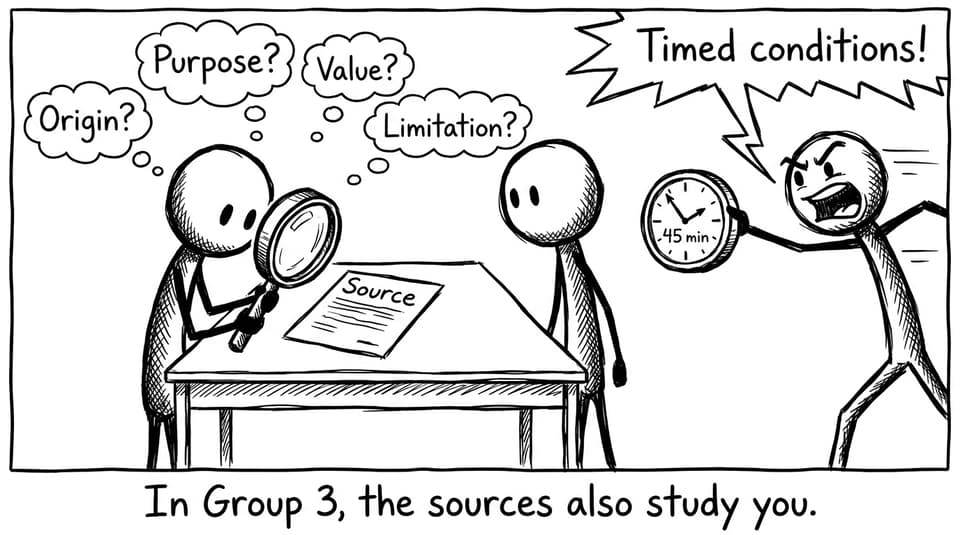
Paper 1 is where good students lose marks by being vague. Your job is to read precisely, analyze origin and purpose, and make careful comparisons. The fastest win is adopting a consistent method and drilling it until it’s automatic.
To sharpen your approach, use How To Ace IB History Paper 1 And Paper 2 Exams as your technique blueprint.
Paper 2: sustained argument under time
Paper 2 punishes a common habit: writing about a topic rather than answering a question. In Group 3, your essay must be question-driven. That means command terms, a clear thesis, and selective evidence chosen for relevance.
A strong structure is worth more than another page of notes. Build yours with Mastering IB History Essay Structure and Planning, then reinforce it with Tips for Writing IB History Essays: A Comprehensive Guide.
Paper 3 (HL): depth, synthesis, and stamina
HL Paper 3 is where Group 3 becomes an endurance sport. You need depth, but also pacing and a plan for selecting examples quickly.
If you’re still fuzzy on how HL expectations differ, compare the demands using Understanding the Differences Between IB History SL and HL and the more updated perspective in IB History HL vs SL: What’s Changed in the New Course (First Assessment 2028).
IA: train the same thinking skills
Even though the IA is coursework, it trains the same skills your Group 3 exams reward: source evaluation, focused investigation, and clear writing.
When you need models of what “good” looks like, browse IB History Exemplars. It’s a fast way to internalize what strong analysis sounds like on the page.
Build a revision system that actually works for Group 3
A good study plan is not a motivational quote. It’s a machine that produces marks.
Use active recall with narrow prompts
Instead of “revise Cold War,” switch to prompts like:
-
“List 5 causes, then rank them by significance.”
-
“Write a thesis for a ‘to what extent’ question.”
-
“Explain one historian debate in 4 sentences.”
On RevisionDojo, this becomes simple:
-
Pull targeted practice from the Questionbank via the IB History Resources hub.
-
Convert weak areas into Flashcards (one claim per card, one piece of evidence per card).
-
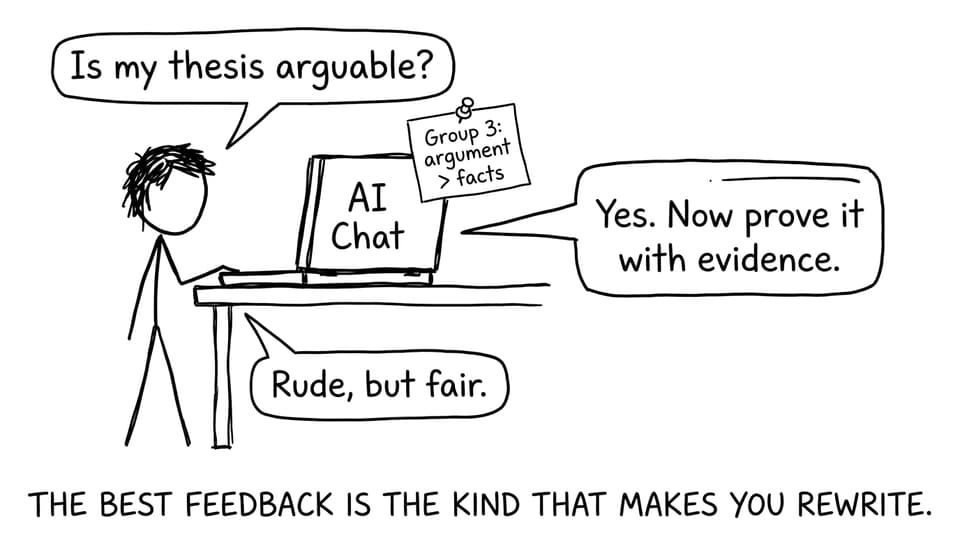
Use AI Chat to test whether your thesis is arguable and whether each paragraph stays relevant.
Practice like an examiner, not like a fan
After every timed response, ask:
-
Did I answer the exact question asked?
-
Did I use evidence that directly proves my claim?
-
Did I evaluate (or just describe)?
-
Did I signpost clearly so marks are easy to award?
This is where RevisionDojo’s Grading tools and AI feedback shine: they shorten the time between attempt and correction, so your next essay is smarter than the last.
Simulate exam pressure early
The most confident students are rarely the most relaxed. They’re the most rehearsed.
Use timed practice to make pressure familiar:
-
Run full-length paper practice with IB History Predicted Papers.
-
Add realism with a monthly mock routine from Preparing for IB History with Mock Exams and Practice Tests.
-
If you want a broader overview of components and how to pace them, keep IB History Assessment Explained: Papers and IA (First Assessment 2028) bookmarked.
Common mistakes that quietly sink Group 3 History grades
Writing everything you know
In Group 3, more information can mean fewer marks if it’s not relevant. Examiners reward selection. Train yourself to choose two to three arguments and prove them cleanly.
Treating OPVL like a template
OPVL is a thinking tool, not a fill-in-the-blanks ritual. Your “value” and “limitation” must connect to the question and the context, not generic lines about bias.
Planning too little (or too long)
Planning is a trade. Five minutes of planning can save fifteen minutes of wandering. But ten minutes of planning can steal the time your conclusion needed.
Conclusion: make Group 3 History feel predictable
The best feeling in IB History isn’t knowing everything. It’s sitting down in the exam and realizing the task is familiar: you’ve practiced the timing, the structure, the source method, and the way you recover when a question feels awkward.
That’s what strong Group 3 preparation looks like. Build a system, practice under pressure, and shorten your feedback loop.
When you’re ready to make revision simpler and more targeted, start at the IB History Resources hub and use RevisionDojo’s Questionbank, Study Notes, Flashcards, AI Chat, Grading tools, Predicted Papers, Mock Exams, Coursework Library, and Tutors to turn practice into consistent marks.