



If you have ever walked out of an IB History practice and thought, I knew the content… so why did it fall apart under time? you are not alone.
History is rarely what sinks you. The exam is. The clock compresses everything: knowledge, writing, judgement, and confidence. Paper 1 punishes vague source comments. Paper 2 punishes beautiful paragraphs that do not answer the question. And both papers reward the same quiet skill: turning pressure into a repeatable method.
This guide breaks down exactly how to ace IB History Paper 1 and Paper 2 with proven routines, common mark-winning structures, and genuinely useful free resources inside RevisionDojo.
The fast checklist (use this before every IB History practice)
-
Know what each paper rewards: Paper 1 = source skills, Paper 2 = sustained argument.
-
Time box aggressively (you are training pacing, not proving intelligence).
-
Use one structure per question type until it becomes automatic.
-
Review like an examiner: identify why marks were lost (technique vs evidence vs relevance).
-
Practise with exam-style materials, not endless rereading.
To keep everything in one place, start at the RevisionDojo IB History hub: IB History Resources.
What Paper 1 and Paper 2 are really testing in IB History
In IB History, both papers look different on the surface, but the underlying test is similar: can you make a claim, support it with precise evidence, and stay relevant under time?
Paper 1 focuses on how historians treat sources. Paper 2 focuses on how historians build explanations. If you study them as two unrelated monsters, revision becomes heavier than it needs to be.
Use this simple translation:
-
Paper 1: “Here is evidence. What can you responsibly conclude?”
-
Paper 2: “Here is a claim. Can you prove it with selective, relevant knowledge?”
IB History Paper 1: a method for every question
Paper 1 is where many IB History students leak marks through habits that feel academic but are not examiner-friendly: summarising sources, writing mini essays, or forgetting to explicitly use the sources.
If your school covers a prescribed topic like Move to Global War, Rights and Protest, or Conflict and Intervention, RevisionDojo has topic spaces where you can build skill with targeted practice:
-
For a quick structural refresher: IB History Paper 1 Notes
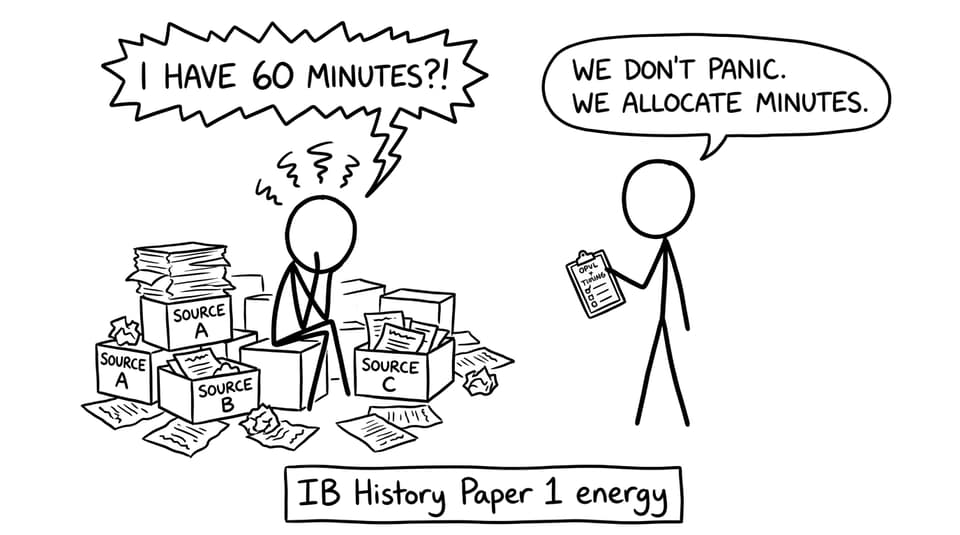
The Paper 1 time plan that protects your best marks
Paper 1 marks are often won or lost on Question 4 because students sprint early and crawl late.
A reliable pacing plan:
-
Q1: 5-6 minutes (retrieve, do not decorate)
-
Q2: 10 minutes (two comparisons + one contrast, all evidence-based)
-
Q3: 12 minutes (OPVL, tightly linked to the question)
-
Q4: 25-30 minutes (synthesis + own knowledge + explicit source use)
Train this weekly using RevisionDojo practice tools, especially the Questionbank and timed Mock Exams workflows in the platform.
Q3 OPVL: stop writing generic “biased” comments
The difference between a 4/6 and a 6/6 in IB History Paper 1 Question 3 is usually specificity.
Instead of:
- “This source is biased because it is propaganda.”
Aim for:
-
Origin: who produced it and when (and what that context implies).
-
Purpose: what it is trying to achieve (and what it might emphasise or omit).
-
Value: what it uniquely reveals because of its origin/purpose.
-
Limitation: what it cannot reveal because of its origin/purpose.
Then link each point back to the question. If it is not linked, it is decoration.
If you want repetitive, exam-style drilling (the kind that actually changes your instincts), use a focused Paper 1 practice set like: Conflict and Intervention Questionbank.
IB History Paper 2: essays that feel inevitable (not improvised)
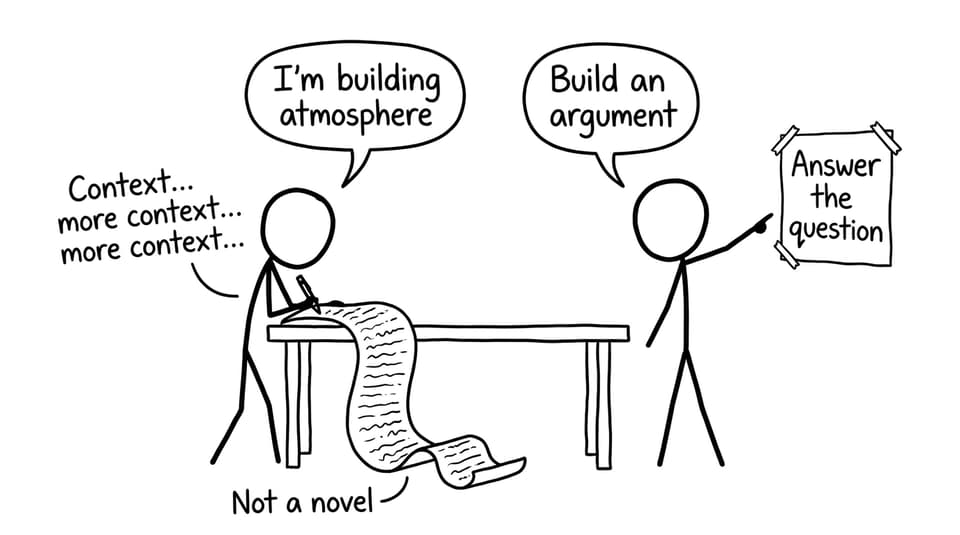
Paper 2 is where IB History students often confuse “writing a lot” with “arguing well.” Under pressure, it is easy to produce fluent paragraphs that drift from the command term.
The goal is not to include everything you know. The goal is to build a case the examiner can follow in one pass.
A high-scoring Paper 2 structure you can reuse every time
Use this template until you could do it half-asleep:
-
Introduction: define terms, set timeframe, thesis that answers the question.
-
Body (3 paragraphs): each paragraph proves one reason, with specific evidence.
-
Counterweight: acknowledge a competing factor briefly, then explain why your thesis still holds.
-
Conclusion: weigh significance (do not just repeat).
Your evidence should be concrete: named policies, leaders, dates (when useful), and outcomes. RevisionDojo’s Study Notes and Flashcards are perfect for turning messy class notes into clean “evidence packets” you can deploy in 45 minutes.
For deeper Paper 2 guidance, especially if you are trying to think more conceptually, this is worth reading: IB History Paper 2 Explained.
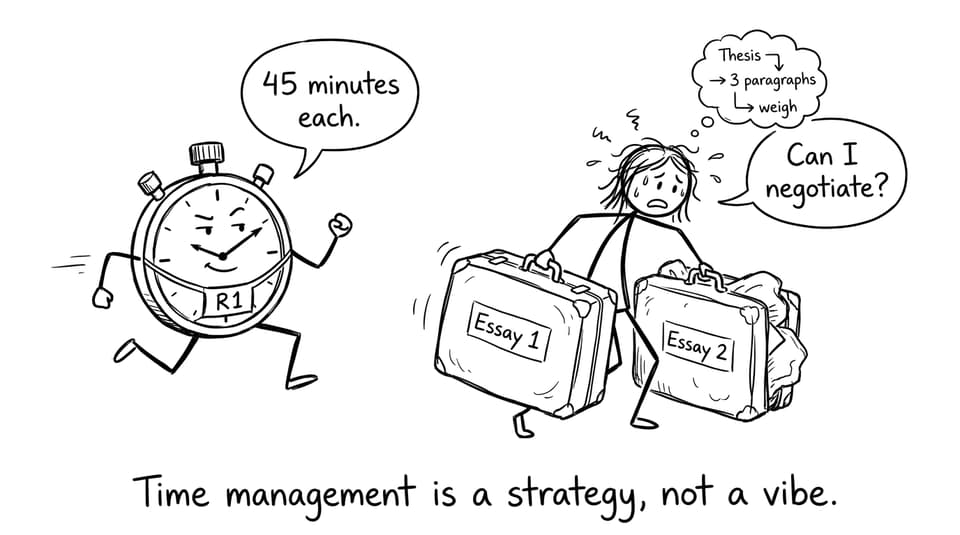
The 45-45 rule (and why it feels harsh)
Paper 2 is 90 minutes for two essays. That means you do not have time to “find the argument while writing.”
A practical split:
-
5 minutes plan Essay 1
-
35 minutes write
-
5 minutes plan Essay 2
-
35 minutes write
-
10 minutes total buffer for micro-fixes (thesis clarity, paragraph topic sentences, conclusion weighing)
Proven revision loop for IB History (that does not rely on motivation)
Most students revise IB History like this: reread notes, highlight, hope.
A higher-return loop looks like this:
-
Study Notes to rebuild one weak slice (not the whole unit)
-
Flashcards to keep key evidence and definitions alive
-
Questionbank to turn knowledge into marks
-
AI Chat to clarify what a question is actually asking
-
Grading tools to tighten your writing and reduce “almost” answers
-
Predicted Papers + Mock Exams for realistic rehearsal
-
Coursework Library to see what strong analysis looks like
-
Tutors when your feedback loop needs a human strategist
For full-paper realism, practise with: IB History Predicted Papers and the free access set here: History Predicted Papers (Free).
Closing: make IB History feel smaller (and more winnable)
The most comforting discovery in IB History is that top performance is not a personality trait. It is a system. Paper 1 becomes manageable when OPVL and source referencing are habits. Paper 2 becomes calmer when you plan arguments, not paragraphs.
If you want one place to run that system, use RevisionDojo: Study Notes and Flashcards for clean evidence, Questionbank for exam repetition, AI Chat and Grading tools for feedback, then Predicted Papers and Mock Exams for realism. Start here: IB History Resources and build your next timed practice around the checklist above.